
Feature
Beyond the Scroll: Dance and Delight among Joseon’s Confucian Nobility
By Kang Myeong-kwan (Professor Emeritus, Pusan National University)
People cannot live by work alone: leisure activities are necessary for a life that is satisfying. Singing, playing an instrument, and dancing when the mood strikes are indispensable features of enjoying ourselves. People during the Joseon era referred to such enjoyment of life’s finer moments as pungnyu, a term that embodies the concept of flowing naturally, like a breeze blowing.
Napryangmanheung, Kansong Art and Culture Foundation, Shin Yun-bok
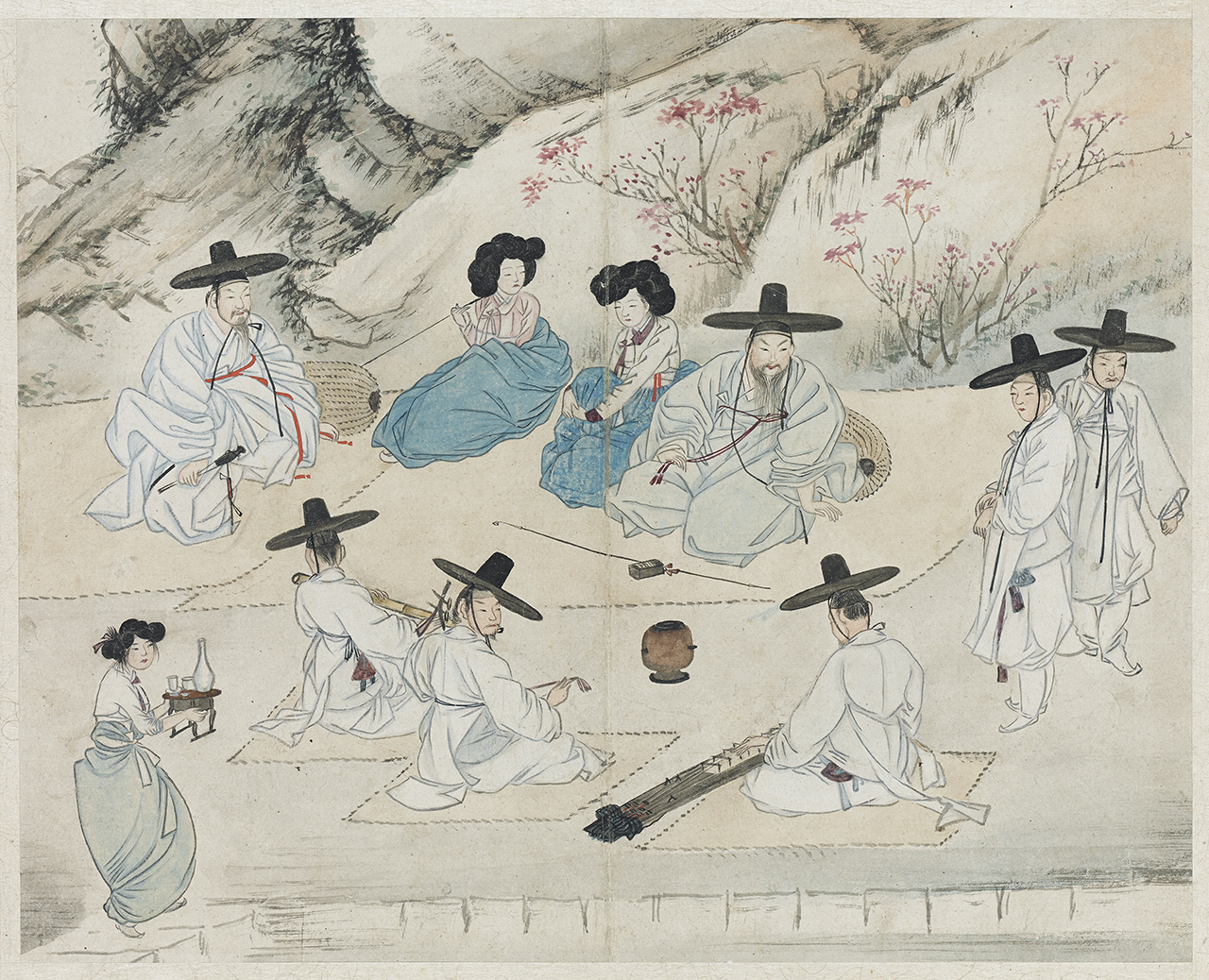
Today, there are several misconceptions about the Joseon era. One is the belief that yangban, the nobility class steeped in Confucian morality, lived strictly refined and decorous lives and shunned leisure activities, especially the enjoyment of pungnyu. However, this is not the case. The yangban of the Joseon era also enjoyed playing music and dancing, and it was not unusual for men and women to dance and otherwise celebrate being alive together. Life cannot always be lived “by the book.” Let us take a closer look at the music and dance of pungnyu during the Joseon era.
Sangchunyaheung, Kansong Art and Culture Foundation, Shin Yun-bok
In 1485, Nam Hyo-on, a renowned early Joseon scholar, documented his travels with friends around Gaeseong, the former Goryeo Dynasty capital. His writings describe vivid scenes of early Joseon yangban enjoying pungnyu. According to his account, a group of four yangban men out on a stroll launched into an impromptu performance when they encountered a gathering of local residents. Plucked string instruments -the bipa and geum- were accompanied by the piri, a double reed instrument, and singing. Their performance quickly drew bystanders into the revelry, and when one yangban danced with the youngest woman in the audience, it brought tears to the eyes of those watching. This record of even strangers singing and dancing together shows that music and dance were commonly enjoyed across all strata of society
Let us examine the genre painting Haeyeongyeollodo (海營宴老圖) from 1529, which depicts a banquet at the Hwanghae Provincial Office. In the painting, when two gisaeng entertainers begin to dance, the elderly gentlemen stand up and join in, dancing together in unison.
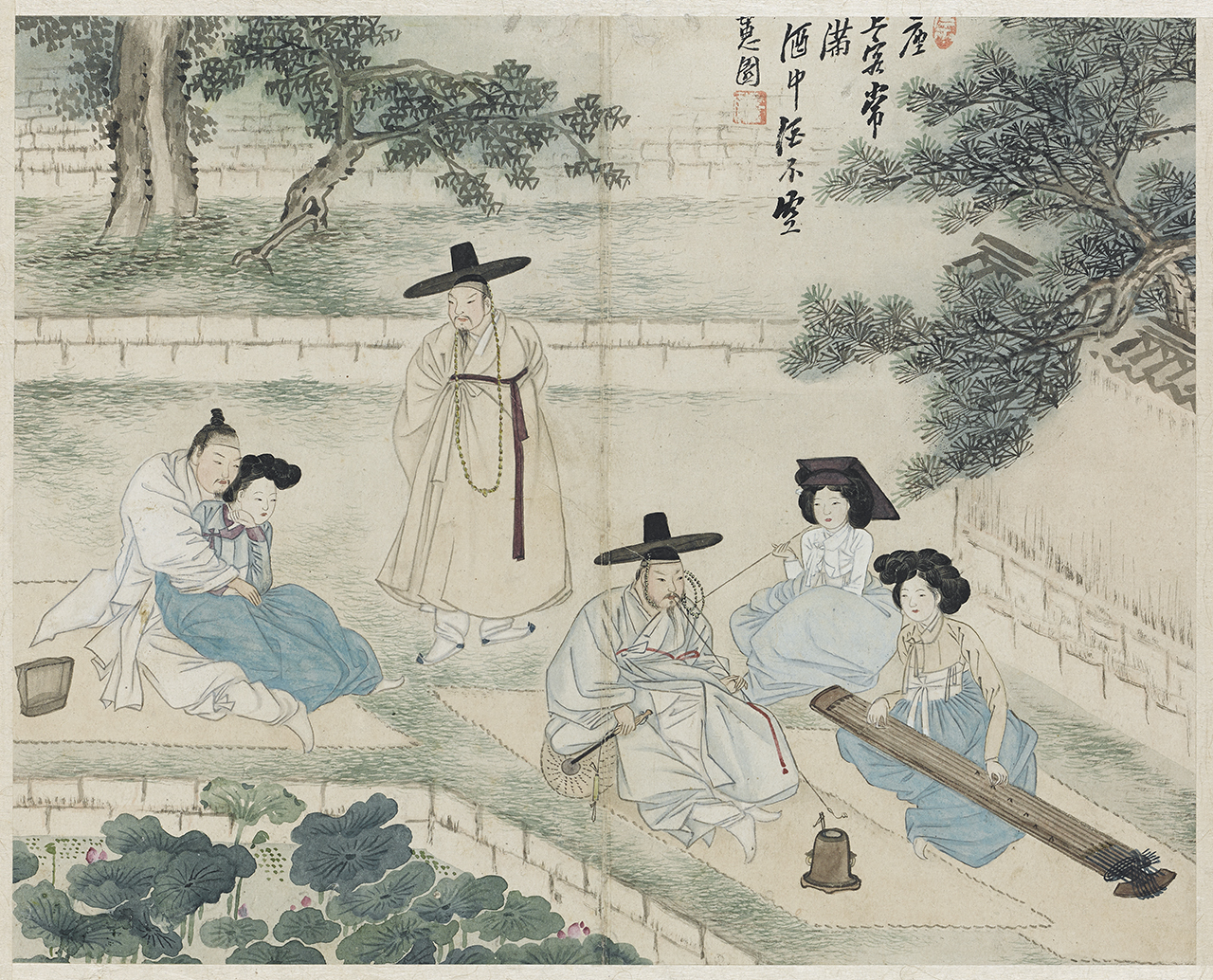
Cheonggeumsangryun (“admiring lotus to the sound of gayageum”), Kansong Art and Culture Foundation, Shin Yun-bok
The yangban of the later Joseon period also enjoyed music and dance; it was not uncommon for them to dance with women. The following account is recorded in Yeongjo sillok, Annals of King Yeongjo, a royal historical document from the reign of the 21st king of Joseon. On September 3 of the 18th year of King Yeongjo’s reign, Song Si-ham, an official from Saganwon (a government office tasked with admonishing the king and censuring courtiers), accused Lee Hwi-jin, a county magistrate from Haman, of playing music with professional musicians of the royal court and dancing with gisaeng. Song urged the king not to appoint Lee to an important official position, with his criticism centering on the fact that Lee was a member of the yangban class and yet was playing music and dancing with gisaeng. However, the king did not consider it immoral for yangban to do such things, as enjoying pungnyu was a common practice. He therefore ignored Song’s complaint.
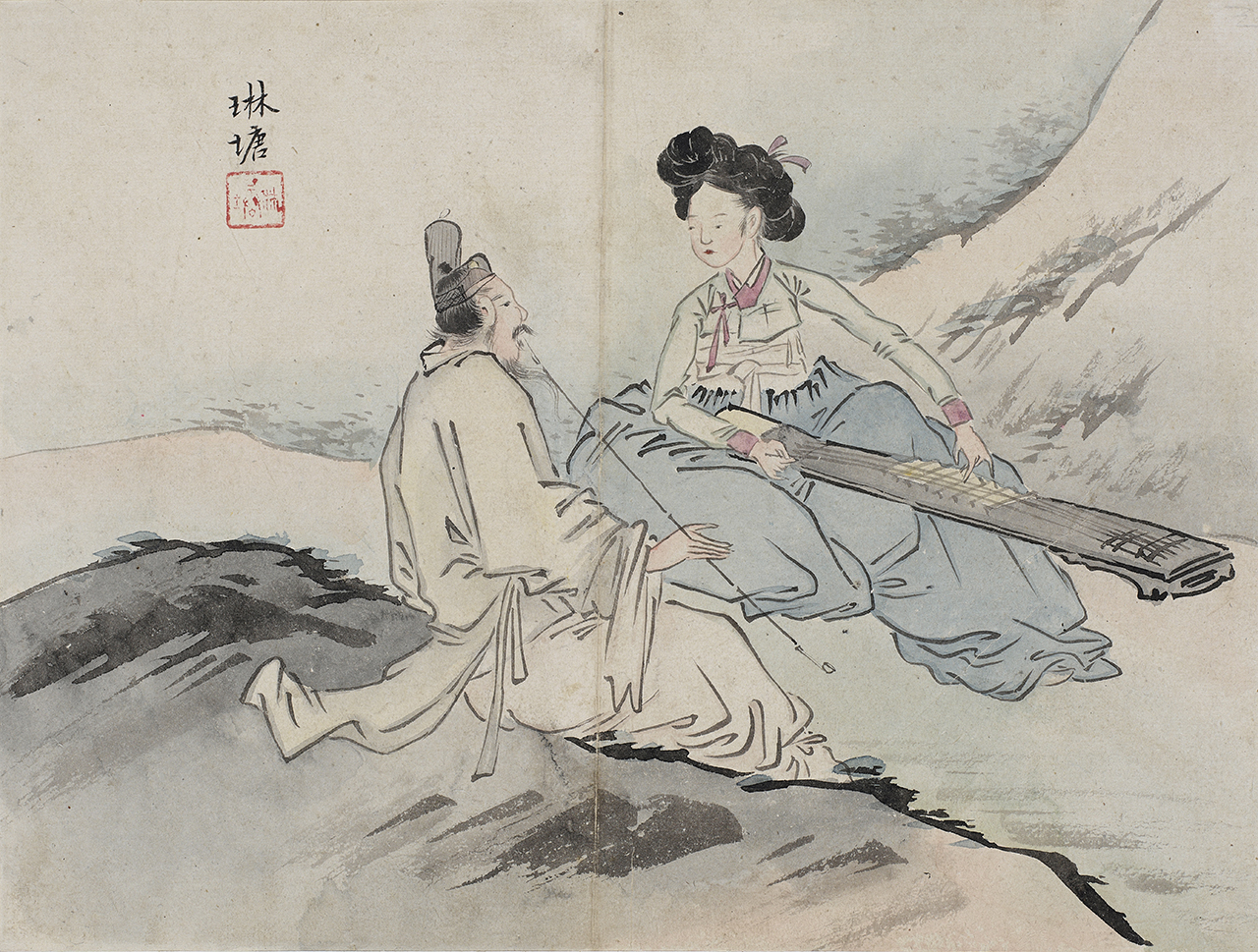
Tangeumyaheung, Kansong Art and Culture Foundation, Baek Eun-bae
Local officials sometimes summoned musicians and gisaeng to play music and dance in this way. However, it seems that at most banquets with musicians present, dances would break out spontaneously as the mood lifted. Pak Se-dang, a late Joseon scholar known for his integrity, was also swept up in the excitement and danced. This occurred when, as a young man, he attended a family banquet hosted by Kim Wu-myeong, the king’s father-in-law. While some criticized his actions as undignified, it was not at all rare for yangban to dance when the mood struck as music played.
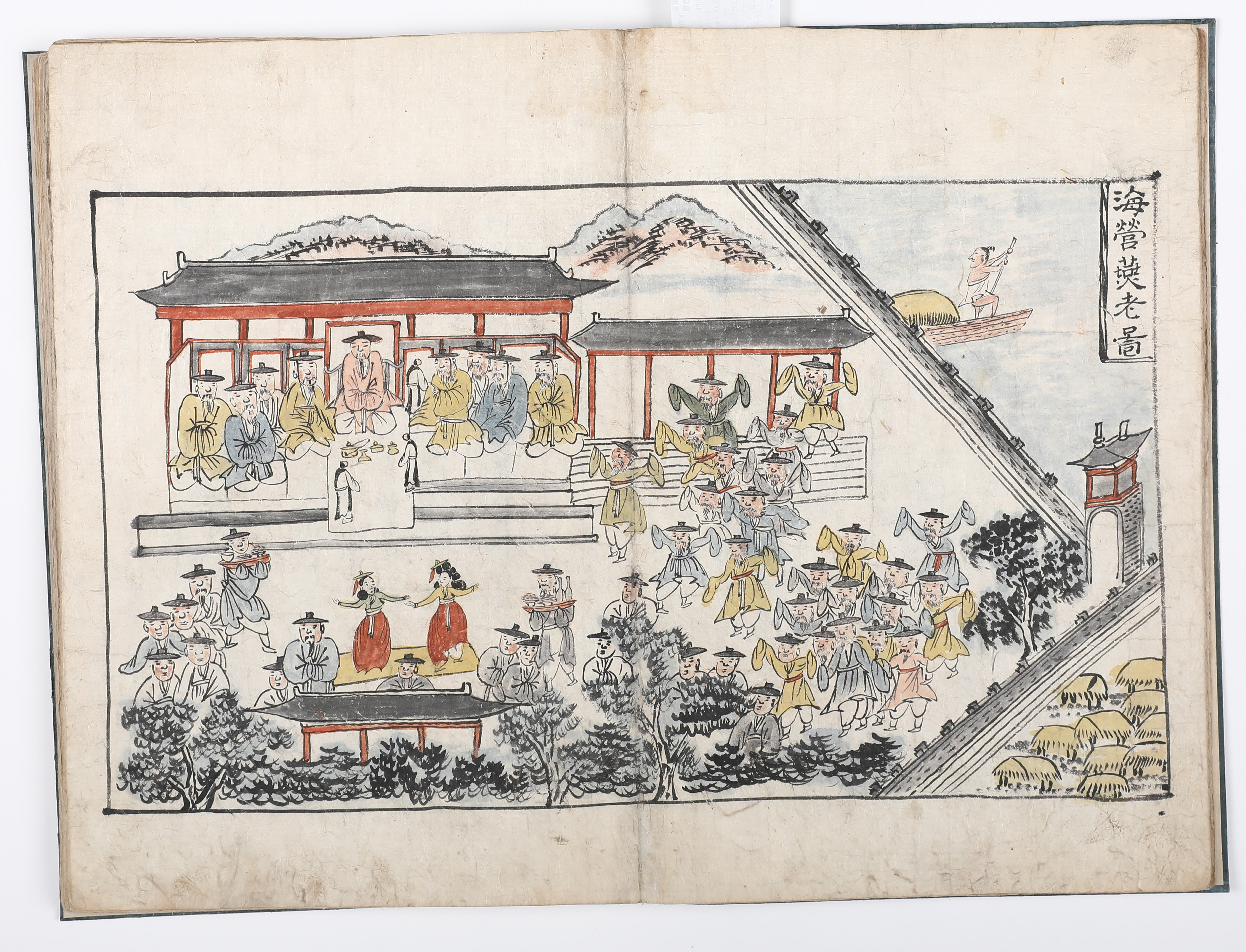
Sejeonseo hwacheop Illustrated Album, The Korean Studies Institude Collection, Donated by the Geunjeon Family of the Pungsan Kim Clan
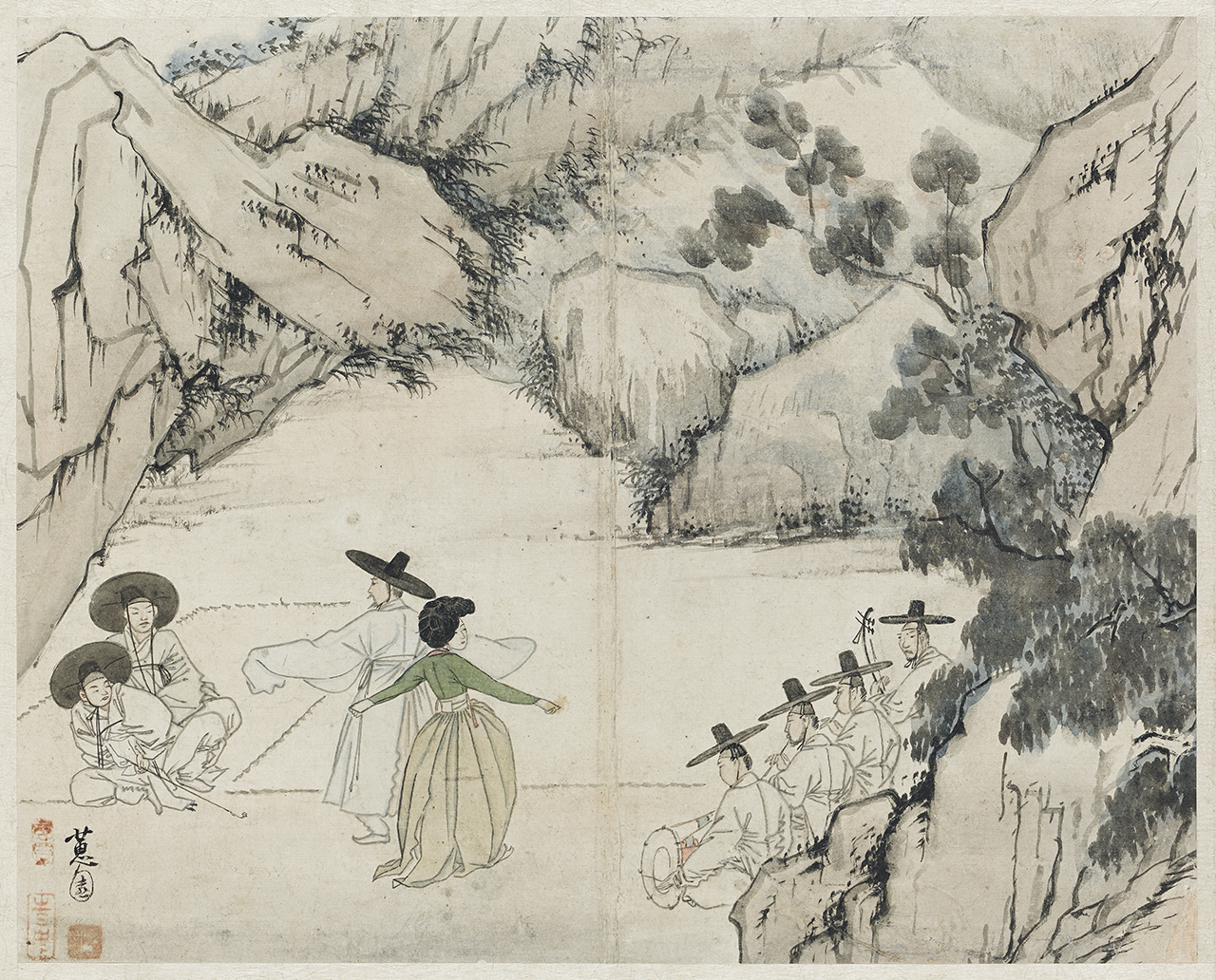
Can we actually see that men and women danced together? The 18th-century master genre painter Shin Yun-bok left behind a painting that captures people engaged in pungnyu. Entitled Chum (“dance”), the painting depicts mountains at the top and people below. On the left, two young male yangban are sitting on a mat. One is wearing his hat askew with the hat strings loosened, and the other is leaning slightly, both watching a man and woman dancing together on the right. The dancing man is also a young yangban. On the left side of the painting, four musicians are playing the flute, haegeum (a two-stringed instrument), and janggu (a slim-waist drum). The dancing woman cannot be an ordinary housewife but must be gisaeng, probably working as part of a team with the four musicians. The scene is of this team of entertainers and three yangban who have ventured outdoors to play music, listen, and dance as the excitement builds.
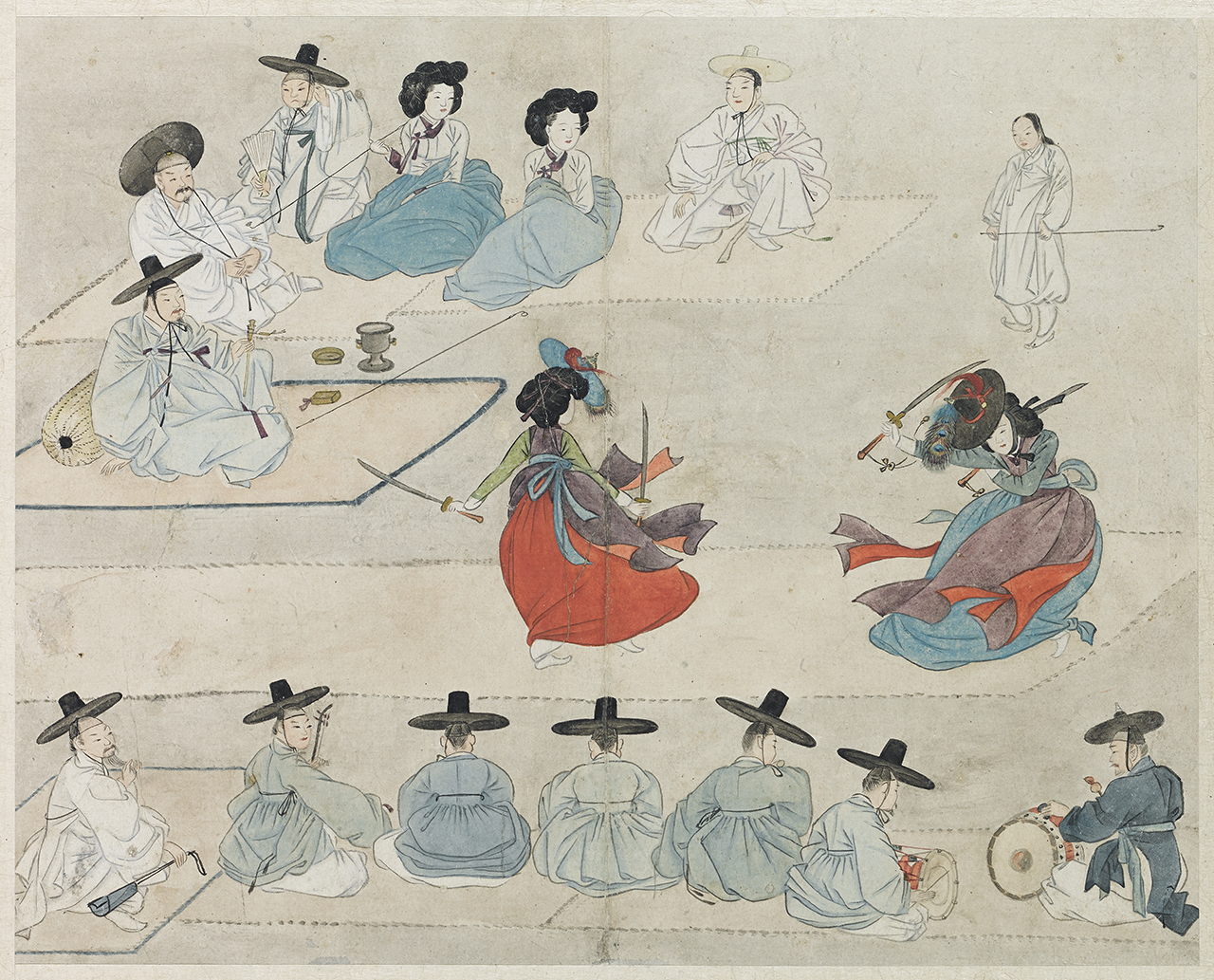
Ssanggeomdaemu (“Slow Dance”), Kansong Art and Culture Foundation, Shin Yun-bok
As seen in historical writings and paintings, Koreans since the Joseon era have considered pungnyu to be as important as working and have brought joy to their lives with the richness of its music and dance. Korean genre paintings illustrate this enduring aspect of Korean culture, both past and present.