Feature
Meticulous Records of Joseon Fuel Creativity Today
By Park Hyun-mo
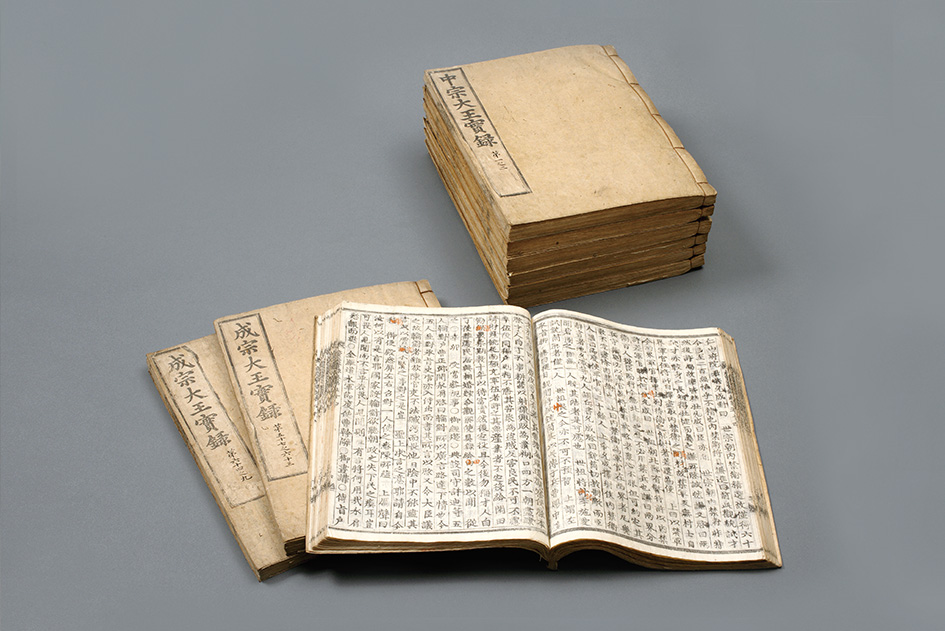
The annals of King Seongjong and King Jungjong, respectively the ninth and eleventh monarchs of Joseon, from the Odaesan Mountain Historical Archives (photo courtesy of the National Palace Museum of Korea)
“The one-inch tall barrier of subtitles has already broken down. There will be a day when the barriers of subtitles or languages will disappear for good,” said the Korean filmmaker Bong Joon-ho after winning four Oscars at the 92nd Academy Awards for his movie “Parasite.” It reminds me of a quip by a speaker at the World Congress of Korean Studies years back during a presentation on the Korean Wave and the movie industry: “The Annals of the Joseon Dynasty (Joseon wangjo sillok) is the foremost treasure trove of cultural content for the Korean Wave.”
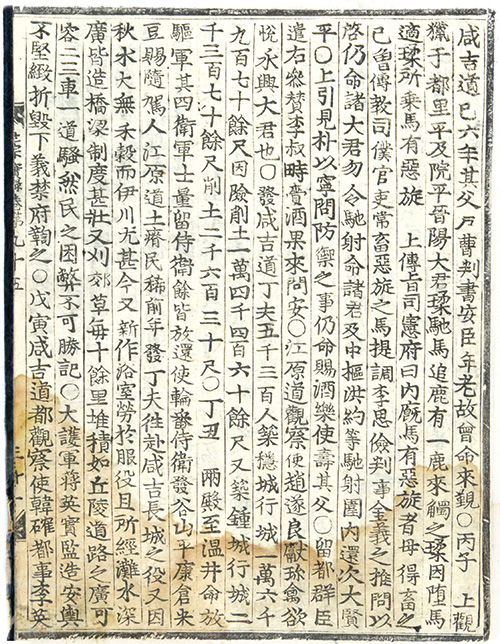
An entry from March 16, 1442 in The Annals of King Sejong:
“Jang Yeong-sil made a royal palanquin, but it was not sturdy. As the palanquin
broke down and collapsed, he was sent to the State Tribunal for interrogation”
(photo courtesy of The Annals of the Joseon Dynasty of
the National Institute of Korean History).
All about Joseon
The Annals of the Joseon Dynasty is a collection of records on Joseon kings chronologically organized by year, month, and day. This documentary collection compiled throughout the Joseon era (1392–1910) is comprised of a whopping 1,894 volumes, spanning 472 years from the first through 25th monarchs of Joseon, respectively King Taejo and King Cheoljong. It is unlike other histories of the past that were mostly created by particular compilers driven by the needs of the time of compilation. Whenever the throne of the Joseon Dynasty changed hands, records were produced on the preceding king and his court to give rise over the centuries to the vast collection of chronological accounts on Joseon kings now found in The Annals of the Joseon Dynasty.
The Annals of the Joseon Dynasty offers a wide range of stories, the diversity and quantity of which are simply astonishing. The records on the reign of King Jeongjo, the 22nd ruler of Joseon, are a good example. The volumes of The Annals of King Jeongjo recount, to name just a few items, the occasion of the tragic death of the king’s father, Crown Prince Sado, the politics involving the restoration of an ancient literary style, heated debates over the construction of a new city at Hwaseong, and his death and the supposition regarding his poisoning.
The bounty of stories is also exemplified by the records on King Sejong. The Annals of King Sejong describe the discussion over what it takes to become a king and why Prince Chungnyeong (later King Sejong) should hold the throne rather than other princes, debates surrounding ritual etiquette for welcoming Chinese envoys and the suzerainty and tributary relationship with China, military strategies for conquering the Jurchen, incidents concerning homosexuality in the palace, and the creation of the Korean alphabet. Every single story in The Annals of King Sejong is a good source of drama.
As an example, the recently released Korean film “Forbidden Dream” was conceived based on a single line of a record appearing in The Annals of King Sejong: “Jang Yeong-sil made a royal palanquin, but it was not sturdy. As the palanquin broke down and collapsed, he was sent to the State Tribunal for interrogation.” It is an account for March 16, 1442, the 24th year of the reign of King Sejong. This line was turned into the first scene of the film, in which his palanquin breaks down and King Sejong stands helplessly in the pouring rain while his servants lie down on the ground shouting “We deserve death.” It is interesting that the accomplished scientist Jang Yeong-sil is never mentioned again in the records after this palanquin accident. His sudden and permanent disappearance from history allows writers to play with their imaginations over such unanswered questions as— most interestingly—how such a simple device as a palanquin came to collapse
like this.
Some conclude that Jang simply failed to take enough care while making the palanquin and therefore lost his office. Others suggest a conspiracy theory. There were courtiers who adamantly opposed the cooperative scientific ventures carried out by Jang Yeong-sil and King Sejong, and they could have had secretly removed a few key parts from the palanquin to allow its destruction and drive a wedge between the two. The last hypothesis imagines the possibility of maneuvering on the part of the king. One of the scientific achievements of Jang was the creation of an astronomical observatory. King Sejong could have masterminded the palanquin accident in order to thwart the possibility of China summoning his cherished collaborator Jang to question him about creating a device for observing celestial phenomena, which was supposed to be exclusive to the emperor of China. The film “Forbidden Dream” is based on this line of thinking. King Sejong was in fact concerned about China taking serious note of the invention of the observatory in Joseon. According to an entry on January 14, 1443, the king did not wish the observatory to remain installed at the palace where it could be seen by the Chinese envoys and planned for it to be transferred to another site.
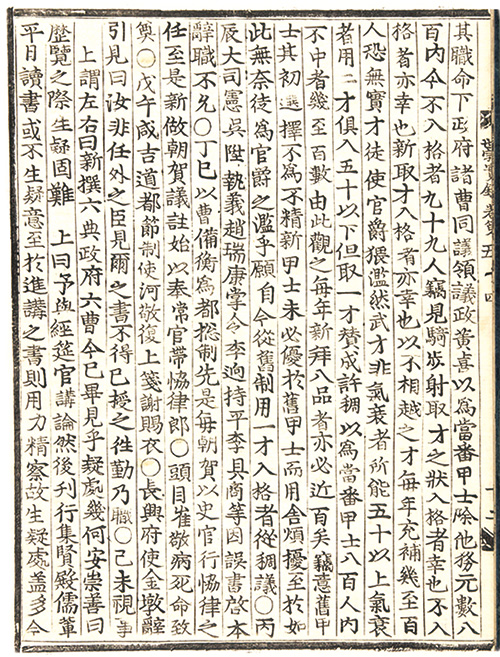
An entry on October 28, 1431 in The Annals of King Sejong:
“[The king says] While scholars of the Hall of Worthies do not normally show curiosity,
they read a text with the utmost care on the occasion of a group discussion”
(photo courtesy of The Annals of the Joseon Dynasty of
the National Institute of Korean History).
Tapping into the Rich Reservoir of Stories
It is not easy to effectively utilize The Annals of the Joseon Dynasty. The entire collection was originally written in Chinese characters but was translated into Korean over 25 years from 1968 to 1993 through a cooperative effort by the Institute of the Translation of Korean Classics and the King Sejong Memorial Society. The Korean translation and the Chinese original are freely offered on the webpage of the National Institute of Korean History. However, it remains difficult to fully access the formidable world of The Annals of the Joseon Dynasty. Here, I would like to share a few tips on how to take the first steps into this vast reservoir of interesting stories in The Annals of the Joseon Dynasty.
The easiest point of access is the collection’s Korean translation offered online. On the webpage of the National Institute of Korean History you can read the annals categorized by reign. You can check records related to certain themes or sift through the collection for particular keywords. Pages of the Chinese original are also available on the website.
You can also try to read a printed version of The Annals of the Joseon Dynasty. My first experience with printed Annals of the Joseon Dynasty was The Annals of King Jeongjo, which I studied as part of the preparations for my PhD thesis. It took me a great deal of time to get through it the first time. As I re-read the work, I felt its structure and content growing clearer in my mind. It took me almost a year to get a firm grip on the 24 years of King Jeongjo’s rule.
Study clubs were also effective for advancing my understanding of The Annals. As it is a multifaceted and complex text, it is nearly impossible working alone to fully appreciate the meaning of the entries. While studying and discussing with people from such diverse academic backgrounds as architecture, finance, and international politics over the last 15 years, I have discovered many novel aspects of The Annals. Group study is definitely worth a try for its many advantages.
King Sejong also pointed out the merits of studying collectively. In an entry made on October 28, 1431, King Sejong observes that while courtiers do not normally express curiosity over what they read, they read a text with the utmost care on the occasion of a group discussion and develop questions that would not have come up if they were studying on their own.
These questions could be expanded into a full drama script or novel if they were followed up by a thorough exploration of the contextual background and a creative imagination. As she completed the 15-volume series The Story of the Roman People over 15 years, the Japanese writer Shiono Nanami compared herself to the legendary bird wife who plucked her feathers one by one and wove them into a beautiful piece of cloth. She crisscrossed the areas home to Roman relics from North Africa to Scotland and studied a vast volume of documents from ancient records to recent studies. I sometimes wonder what would happen if Shiono Nanami studied The Annals of the Joseon Dynasty. There are so many interesting sources of drama in The Annals that have not yet been tapped. I hope that there will soon appear talented writers who can pick through the records in The Annals and weave them into interesting stories.
Text by Park Hyun-mo, Director, King Sejong Institute of Statecraft and Leadership, Yeoju Institute of Technology
Photos by the National Palace Museum of Korea and the National Institute of Korean History
Website http://sillok.history.go.kr

기록의 나라, 조선왕조실록
“1인치 자막의 장벽은 이미 허물어져 있었다. 언어나 자막의 장벽이 흔적도 없이 사라지는 날이 곧 올 것이다.” 제92회 아카데미상 시상식에서 영화 ‘기생충’으로 작품상 등 4관왕을 수상한 봉준호 감독의 말이다. 문득 몇 년 전 세계한국학대회에서 ‘한류와 영화산업’을 주제로 발표한 어느 분의 이야기가 떠올랐다. 그는 “《조선왕조실록》이야말로 한류의 무한한 보물창고(寶庫)”라고 말했다.
조선왕조의 A부터 Z까지
실록(實錄)은 황제나 국왕과 같은 제왕이 조정에서 일어나거나 보고되는 일들을 연월일 순서에 따라 편년체(編年體)로 기록한 역사서로서, 일종의 연대기에 해당한다. 《조선왕조실록》은 태조부터 철종까지 25대 472년간 총1,894권으로 이루어진 임금들에 대한 기록이다. 특정한 시기에 특정한 사람들이 의도적으로 기획하여 편찬한 역사서가 아니라, 역대 조정에서 국왕이 교체될 때마다 편찬한 것이 축적되어 이루어졌다.
실제로 《조선왕조실록》에는 조정의 국가 대소사에서 시작해 두메산골의 여염집 치정사건에 이르기까지 그야말로 없는 얘기가 없다. 예를 들어 조선 후기의 《정조실록》의 경우, 정조의 생부 사도세자의 죽음과 관련된 이야기, 중요한 싱크탱크였던 규장각의 신하들과 왕이 나눈 지식의 향연, 그 시대의 필화(筆禍)사건인 ‘문체반정의 정치학’, 화성신도시 건설을 둘러싼 논쟁과 정조의 디자인경영 리더십, 그리고 정조의 죽음과 국왕독살설 등 그야말로 이루 셀 수 없을 만큼의 얘기 거리가 들어 있다.
이것은 전기의 《세종실록》도 예외가 아니다. 왜 충녕대군(세종)이 왕이 되어야 하는가로 시작되는 ‘국왕의 조건’, 그 시대의 큰 골칫거리였던 중국사신의 예우와 사대외교문제, 대마도 및 여진족 정벌을 둘러싼 논쟁과 갖가지 전략전술들, 궁궐 내 동성애 사건과 왕세자빈 폐위과정, 비밀 프로젝트 훈민정음 창제 등 하나하나가 드라마틱한 소재들이다.
가령 최근에 나온 영화 '천문'은 세종실록의 한 줄 기록에서 착상되었다. “장영실이 안여(安輿: 가마)를 감조(監造)하였는데, 견실하지 못하여 부러지고 허물어졌으므로 의금부에 내려 국문하게 하였다.[監造安輿 不堅緻折毁 下義禁府鞫之]”라는 《세종실록》 24년(1442년) 3월 16일의 기록이 그것이다. 거기에서 작가는 영화의 첫 장면, 즉 비가 쏟아지는 가운데 세종의 가마가 부서지고, 망연자실하게 서 있는 세종 주위에서 신하들이 "죽여주시옵소서"를 외치는 장면을 만들어냈다. 흥미로운 것은 가마 파손사건 이후 장영실이 역사에서 영영 사라져버린다는 점이다. 도대체 그는 어디로 간 것일까? 멀쩡하던, 그리 대단한 기술이 필요한 것도 아닌 왕의 가마는 갑자기 왜 부서진 것일까? 이에 대해서도 많은 작가들이 상상의 나래를 펼쳤다.
어떤 사람은 장영실이 방심해서 가마를 부실하게 만들었고, 그 때문에 파직되어 사라진 것에 불과한 실책설을 논한다. 그런가 하면 음모설도 있다. 세종과 장영실이 하는 일, 즉 조선의 시계와 문자를 만들려는 정책을 반대하는 자들이 왕의 가마에서 부품 몇 개를 빼내 부러지게 한 다음, 둘 사이를 갈라놓게 하려 했다고 해석한다. 마지막은 기획설이다. 영화 ‘천문’도 이 입장인데, 경복궁 천문대(간의대) 제작을 이유로 강대국 명나라에서 제작자인 장영실을 북경으로 압송하라는 요구할 경우에 대비한 세종의 선제적 조치였다는 주장이 그것이다. 실제로 세종은 “중국 사신들로 하여금 경복궁 경회루 근처에 있는 간의대를 보게 해서는 안 된다”고 하여, 다른 곳으로 옮기라고 지시했었다(세종실록 25년 1월 14일 기록).
조선왕조실록 활용법
문제는 그렇게 풍부한 얘깃거리를 담고 있는 《조선왕조실록》에 접근하기가 쉽지 않다는 점이다. 물론 한국고전번역원과 세종대왕기념사업회에서 1968년에서 1993년까지 25년에 걸쳐 국문으로 번역해 놓았고, 국사편찬위원회에서 한글 번역문과 함께 한문원문을 인터넷에 올려서 누구나 무료로 볼 수 있게 해놓았다(http://sillok.history.go.kr). 하지만 여전히 실록이라는 커다란 산에 발을 들여놓기에는 어려움이 있다. 그러면 어떻게 하면 《조선왕조실록》을 쉽게 읽고 활용할 수 있을까?
우선, 국사편찬위원회의 홈페이지에 있는 인터넷 조선왕조실록을 만나 볼 것을 권한다. 국사편찬위원회의 홈페이지에는 실록의 소개와 열람실, 자료실 및 토론마당 등의 메뉴가 있다. 이 중 열람 메뉴를 통해 《태조실록》, 《정종실록》 등 국왕별로 실록 내용을 읽어볼 수도 있고, 주제 분류나 용어 색인을 이용해 열람할 수도 있다. 물론 실록의 원본 이미지를 볼 수도 있다.
다음으로, 간행된 책 《조선왕조실록》을 직접 읽어보는 단계이다. 나는 박사논문을 쓰기 위해서 《정조실록》을 맨 처음 읽었다. 1회독을 할 때에는 용어가 생소해서 무척이나 진도가 매우 더디게 나갔으나 2회독, 3회독 하고 나니 전체적인 얼개와 쟁점의 흐름을 파악할 수 있었다. 정조 재위 24년의 기록을 읽는데 거의 1년이 걸렸다. 그 ‘무지막지한 통독 작업’을 끝내자 비로소 실록의 ‘구조’를 느낄 수 있었다.
실록학교, 즉 실록을 강독하는 공부 모임에서 함께 읽고 토론했던 경험도 유효했다. 실록 자체가 워낙 복합적 목적을 가지고 만들어진 텍스트이다 보니, 혼자의 안목으로는 그 안의 중층적 구조를 다 파악할 수 없다. 나는 지난 15년 동안 건축학, 재정학, 국제정치학 등 다양한 전공자들이 함께 읽고 토론하면서 전혀 생각지도 못했던 실록의 면모들을 만났다. 또한 더불어 공부하는 것의 장점을 여러 번 경험했다.
세종도 함께 공부하는 것의 효과를 경험했다. 세종은 “집현전의 선비들이 평일에 글을 읽을 때에 혹 의심을 내지 않다가도 강독하는 자리에 나오면 힘써 글을 정밀히 살핀다”고 말했다. 임금과 신하들이 한 자리에 모여 공부하는 경연(經筵)과 같은 곳에 모이면 ‘용력정찰(用力精察),’ 즉 온 힘을 다해 정밀하게 살피게 되고, 그러다보면 혼자 읽을 때는 생기지 않던 곳에서 의문점이 떠오른다[生疑]는 말이 그것이다(세종실록 13년 10월 28일 기록). 말하자면 떠오르는 의문점을 붙잡고 맥락을 파헤치며, 거기에서 상상력의 나래를 펴면 영화가 되고 소설이 만들어진다는 게 ‘세종식 역사콘텐츠 제작법’인 셈이다.
<로마인 이야기>를 15년 만에 완성한 시오노 나나미는 “나는 자신의 깃털을 하나하나 뽑으면서 아름다운 천을 만들어 나갔던 전설 속의 여인 ‘쓰(津)’와 같다”고 말했다. 일 년의 절반을 북아프리카에서 스코틀랜드 구석구석까지 로마인의 흔적이 남아 있는 곳이면 어디든지 찾아 다니며 고문서부터 최근 연구까지 두루 섭렵했다. 나는 가끔 그녀가 조선왕조실록을 섭렵했더라면 어땠을까 생각해본다. 다행히 아직까지 실록은 작가들의 발길이 닿지 않은 곳이 너무도 많다. 조선왕조실록의 깃털을 하나하나 뽑아 <한국인 이야기>라는 아름다운 천을 자아낼 뛰어난 작가들이 나타나기를 기대한다.
Text by 박현모, 여주대학교 세종리더십 연구소장
Photos by 국립고궁박물관, 국사편찬위원회