Feature
Seoraksan National Park
By Text by Cultural Heritage Administration Photos by Clipartkorea
Seoraksan Mountain
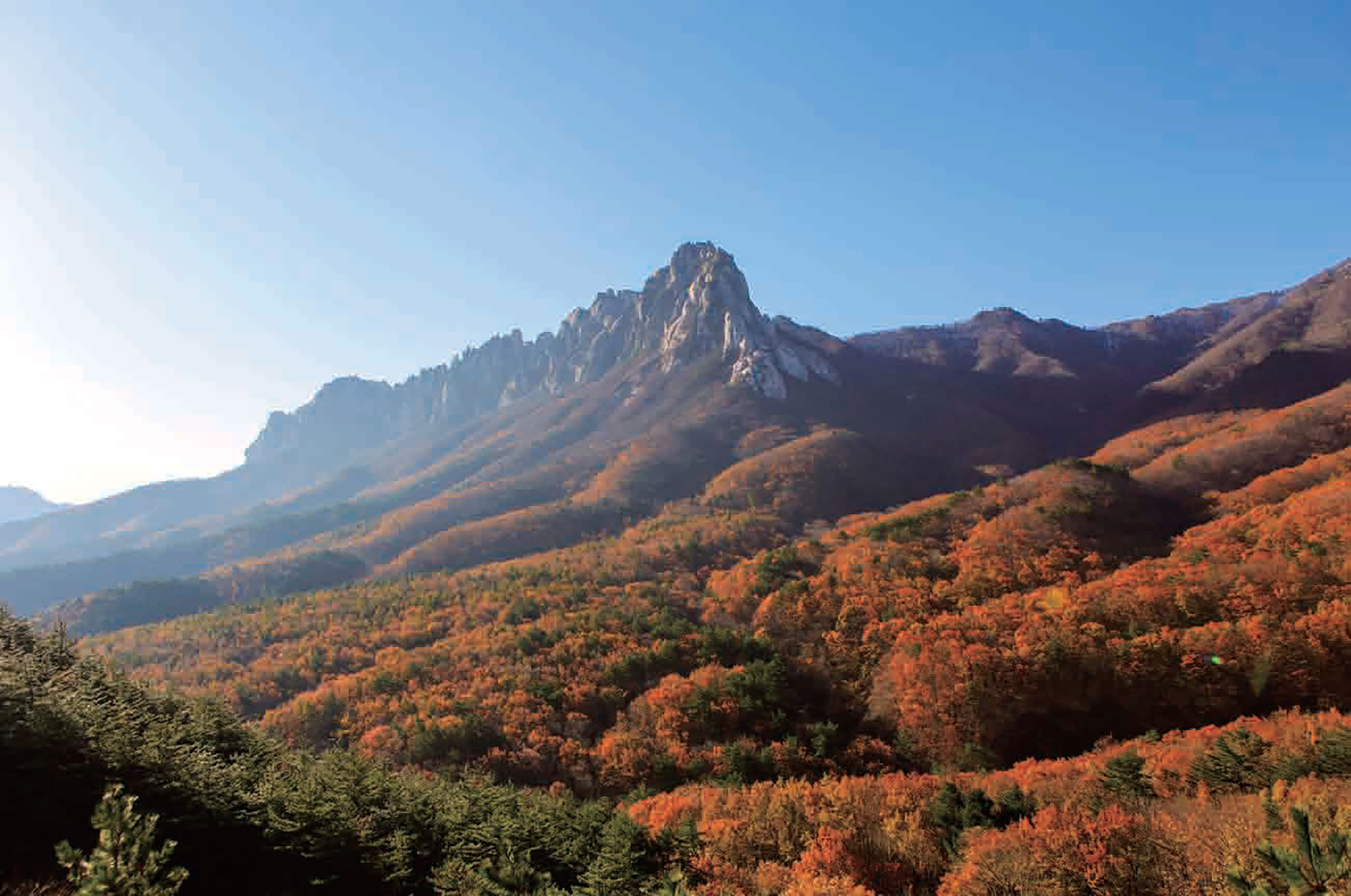
Ulsanbawi Rock
This towering granite formation is composed of six peaks. At its top are five potholes. Along with the astonishing vista
from its summit, Ulsanbawi Rock is also renowned for its fierce winds. This explains why it has been traditionally known
as Cheonhusan, or “Mountain of Heavens’ Cries.”
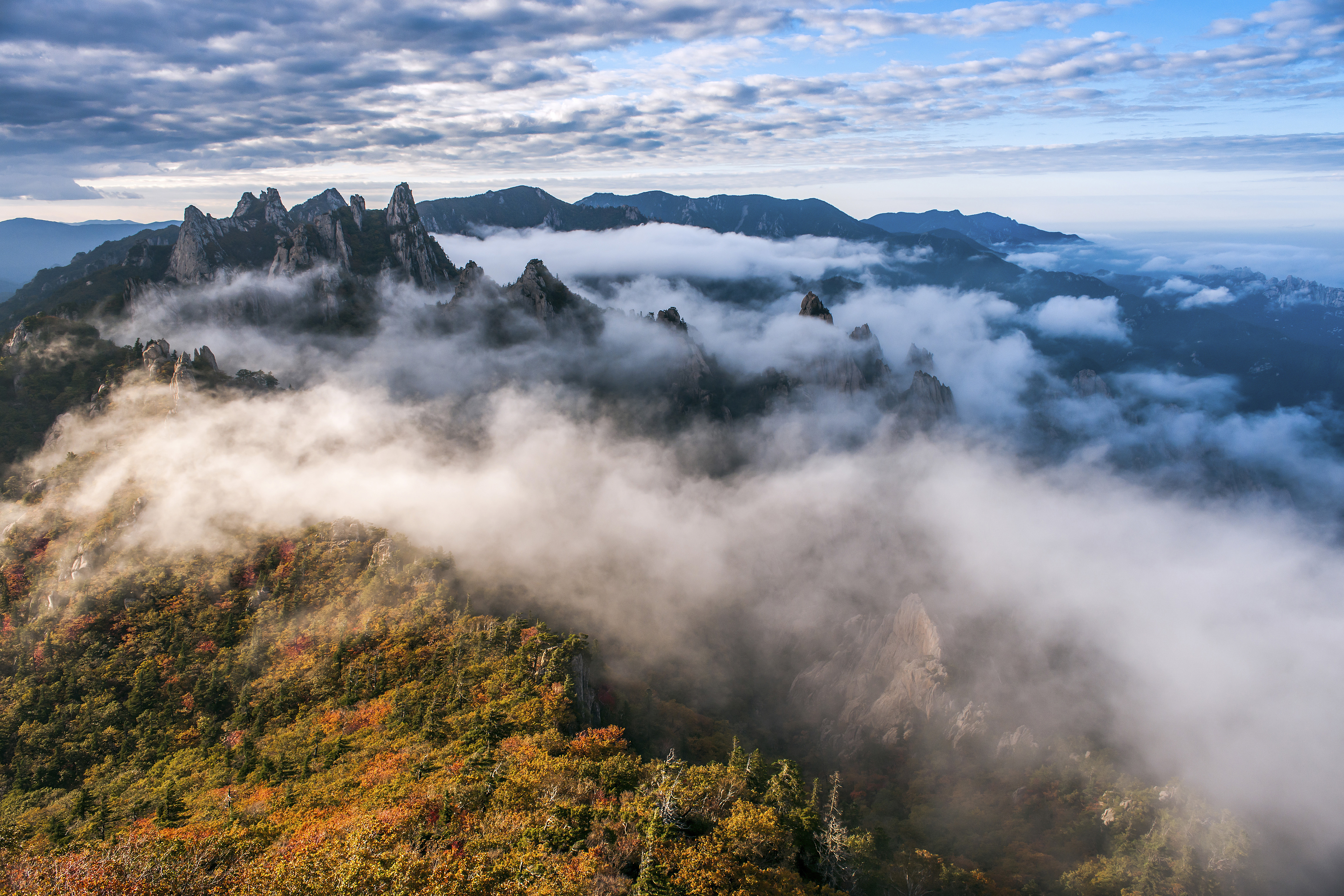
Gongnyong Ridge
This main ridge of Mt. Seoraksan divides the sea-facing Outer Seoraksan from Inner Seoraksan, which is oriented inland.
It offers a breathtaking vista of many of the scenic sites of Mt. Seoraksan as well as a good view of the sea off the east
coast of the Korean Peninsula. Gongnyong Ridge, literally meaning “Dinosaur Ridge,” was given
its name for its resemblance to a dynamically climbing dinosaur.
Mangyeongdae Cliff
This peak rising 922.2 meters above sea
level is a good place for hikers to enjoy a
panoramic view of astonishing scenery. It is
located in front of Oseam Hermitage.

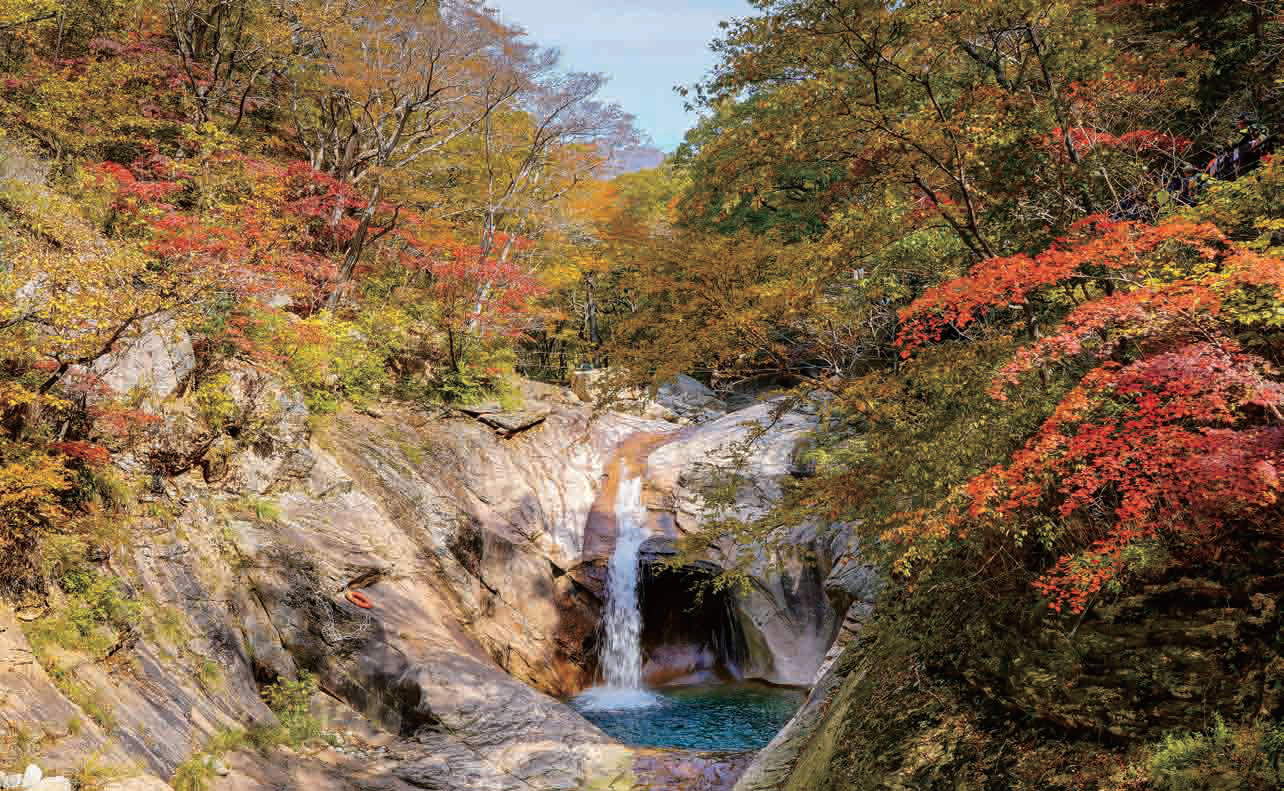
Jujeongol Valley
The various rock formations and waterfalls
around this area amplify the beauty of
Jujeongol Valley.
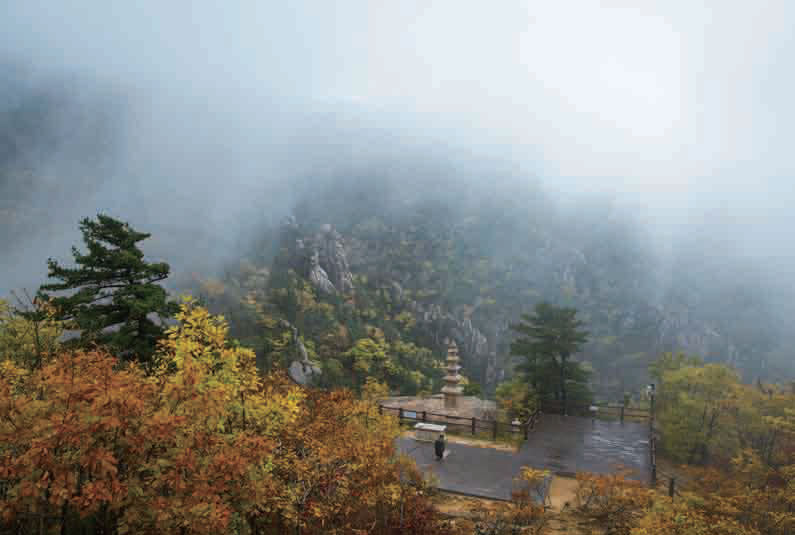
Five-story Stone Pagoda at Bongjeongam Hermitage Bongjeongam Hermitage is located 11 meters up from Baekdamsa Temple at an elevation of 1,244 meters. At this hermitage is a five-story stone pagoda enshrining relics of Shakyamuni Buddha. It is designated a Treasure at the national level.