Feature
Fascinating Stories Told by Earthenware from Goryeo Shipwrecks
Earthenware found alongside written records in Goryeo shipwrecks provides a rich source of information with a great potential fo
By Text by Shin Jong-kuk, Exhibition and Education Division of the National Research Institute of Maritime Cultural Heritage Photos
Pottery making in Korea dates back 10,000 years all the way to the Neolithic Period.
Earthenware was the dominant form of ceramics through the Unified Silla era (668–935).
Afterwards, more technologically advanced forms of ceramics were introduced into Korea—
first celadon during the Goryeo Dynasty (918–1392) and then white porcelain in the Joseon
era (1392–1910). As these vitrified forms of ceramics gained in popularity, earthenware fell
out of fashion and was disregarded as a cheap, everyday product. These vessels with their
iron-rich clays and darkish colors received little attention from modern researchers as well.
Large volumes of ceramic vessels dating to the Goryeo and Joseon eras have been
excavated from the seas off Korea. With countless hard-fired celadon and white porcelain
items with decorative designs being discovered in their original form, it was difficult to look
past these valuable objects and focus on the relatively small number of greyish and blackish
earthenware vessels, mostly recovered in a broken state. It was common practice for
earthenware shards to be tucked away in the corners of storage rooms without conservation
treatment or even appropriate record-keeping.
Lacquered Box with Inlaid Mother-of-Pearl Chrysanthemum and Scroll Design
Goryeo Earthenware as a Vessel for Local Specialties
A change in these practices was finally spurred on July 31, 2009 when the team excavating
a shipwreck in the waters around Mado Island in Taean-gun County (known as Mado
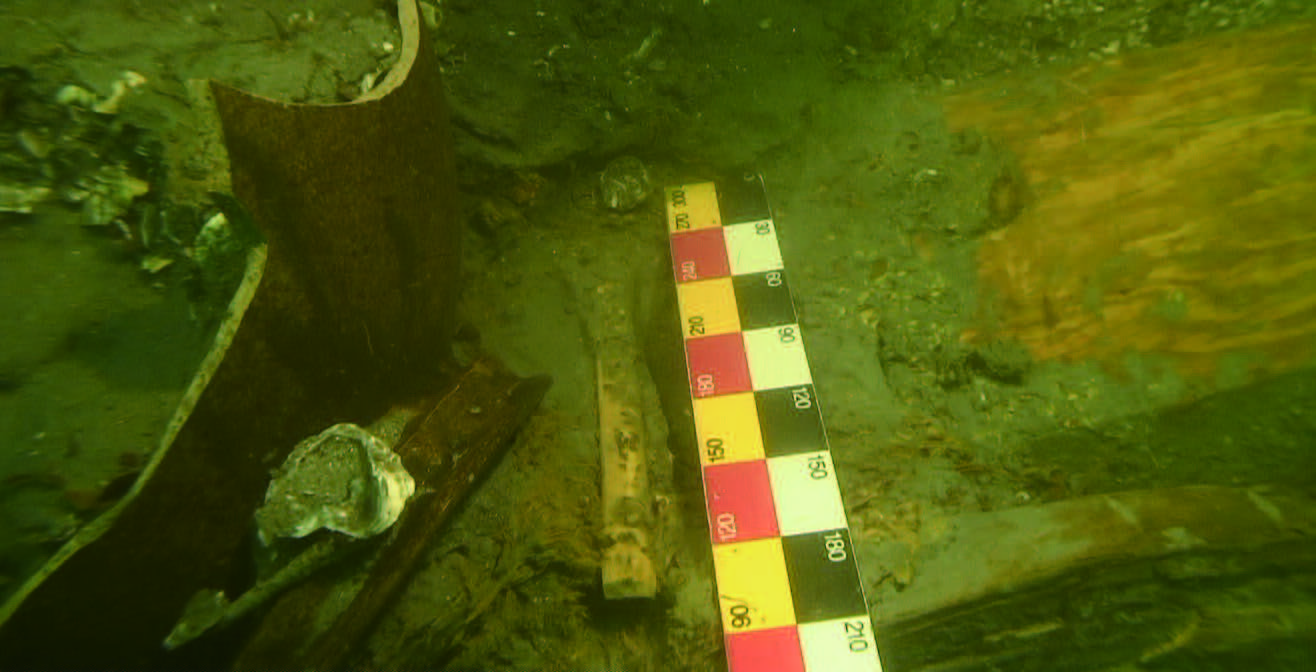
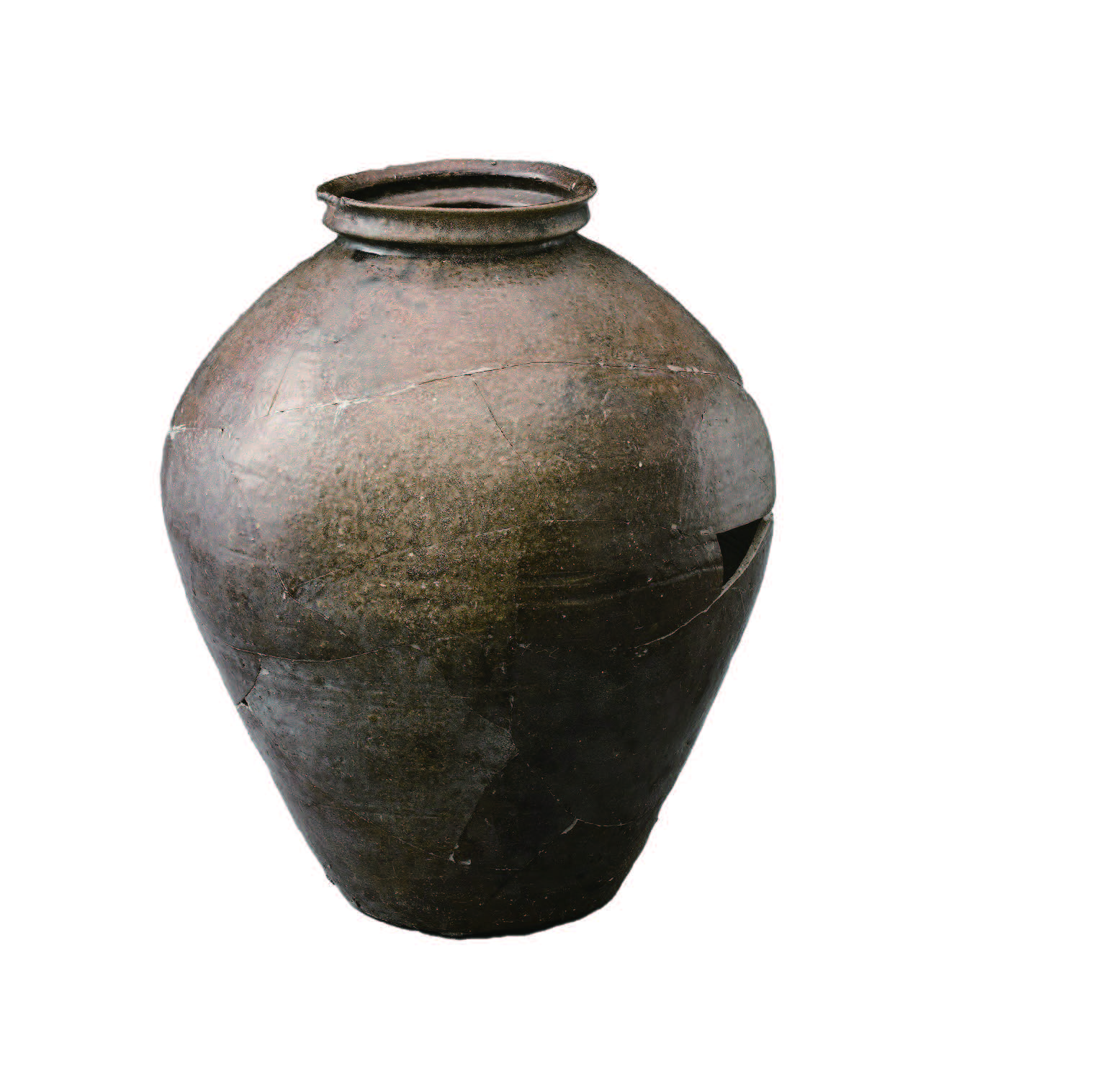
Shipwreck No. 1) found an earthenware jar with a fragmented body but intact rim. In front
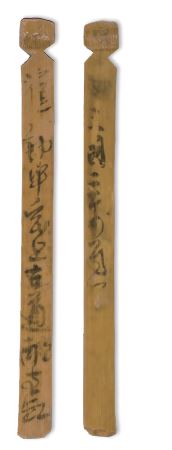
of the jar was a delicately shaped bamboo strip known as a mokgan. Mokgan strips made from
bamboo or wood served as shipping labels during the Joseon period. This one clearly read,
“A jar of fermented mackerel is sent to the household of a Nangjung [a title in the eighth
rank in the 18-rank hierarchy of the Joseon bureaucracy] with the surname Choi.” The
significance of this jar and its accompanying bamboo strip was not fully understood at the
time of discovery. Upon further research, this find revealed evidence that transformed the
conventional understanding of earthenware found in shipwrecks as
simply utilitarian items for the crew. The jar and bamboo
strip excavated from Mado Shipwreck No. 1 brought to
light the fact that earthenware was also used for containers
when transporting local specialties to other parts of the
country.
Pottery found alongside written records is an invaluable
source of information with great potential for academic
research. Another example was excavated from the same
shipwreck. A few weeks after the first discovery, a mokgan
strip with more than half of its body lost was found stuck
in the seabed in front of two earthenware jars. On this
fragment of the shipping label is written “Two jars each
containing five mal [a Joseon-era unit of volume] of food
are sent to the household of Yun Gi-hwa in Kaesong.”
Each jar has a capacity of approximately 18 liters. Given
that one mal equals 3.4 liters, the five mal mentioned, or
17 liters, is roughly the amount that could be contained in
each jar with a small headspace remaining. Although the
damaged mokgan strip did not indicate the kinds of food
being sent, the jars respectively produced shrimp and crab
The front and back of a mokgan strip
shells, complementing the information provided on the label. Given all the evidence—the
location where the strip was found, its content, and the food residues in the jars—it is certain
that these two earthenware jars were being used to pack fermented shrimp and crab to send
to a person named Yun Gi-hwa living in Kaesong in present-day North Korea.
Besides Mado Shipwreck No.1, additional shipwrecks were excavated in the waters
around Mado Island in 2010 and 2011. They are known as Mado Shipwrecks No. 2 and
No. 3. Two and 20 mokgan shipping labels describing local specialties were respectively
found from Mado No. 2 and Mado No. 3.
An earthenware jar from Mado Shipwreck No. 1
Mado No. 3 Transports Ingredients for a Royal Feast
The three Mado shipwrecks were all grain transports with their primary cargo space filled
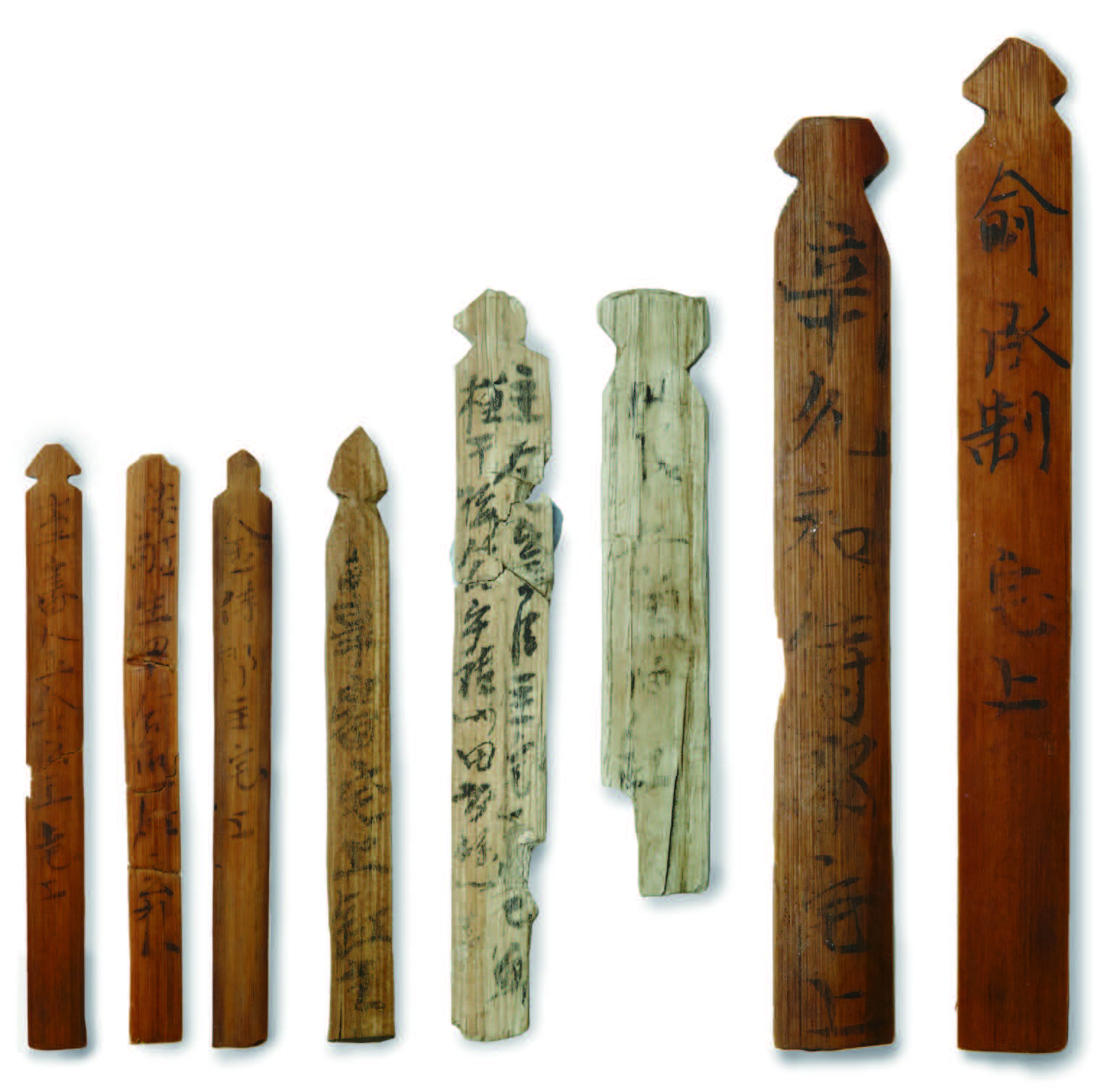
with a range of cereals. However, the mokgan shipping labels discovered from the sites tell
a somewhat different story about Mado No. 3. As with Mado No. 1 and No. 2, most of
the labels concern grain (47 out of the 53 found with Mado No. 1 and 28 out of the 32
from Mado No. 2). In the case of Mado No. 3, however, 20 out of the 29 labels found—
approximately 70 percent—mention non-grain local foods. Only five refer to grain. The
number of earthenware vessels excavated from Mado No. 3 is the greatest among the three
with 45 in total.
The range of foodstuffs aboard Mado No. 3 is diverse. While the local foods transported
by Mado No. 1 and Mado No. 2 were mostly everyday types of seafood, those in Mado
No. 3 were high-end specialty items from both the land and the sea, such as fresh abalone,
fermented mussels, fermented abalone, dried shark meat, fish oil, dried mussels, pheasants,
and dried dog meat. These foods were packed in different containers for transportation:
fresh abalone and fermented seafood in earthenware jars; dried shark meat and dried
dog meat in bamboo boxes; and dried mussels in bags made of rice straw (similar to the
bags used for grain). Large quantities of specialty foods were carried aboard Mado No. 3.
According to the shipping labels, at least six jars of fresh abalone are estimated to have been
onboard. It is indicated that one jar contained 100 abalone. According to this, it is estimated
that approximately 600 abalone would have been loaded on Mado No. 3 (no shells were
discovered inside the jars, so it is presumed that abalone meat had been separated from the
shells prior to shipment). There were ten jars of fermented mussels and fermented abalone,
four jars of fish oil, two rice-straw bags of dried mussels, one box of dried shark meat, one
box of dried dog meat, and three pheasants. In addition, the contents of two jars could not
be identified because their labels were broken.
Another aspect of this specialty food cargo that merits attention is the recipients. A total
of five jars of fresh abalone and fermented mussels were addressed to Kim Jun, who was
among the most powerful figures in the Goryeo government from 1258 to 1268. Another
jar of fresh abalone was sent to a Sirang (a title in the seventh rank) with the surname Kim,
who is presumed to be one of Kim Jun’s three sons. Other recipients are related to Kim
Mokgan strips assigned to earthenware jars from Mado Shipwreck No. 3
Jun as well. All in all, six jars of fresh abalone, four jars of fermented mussels, two jars of
fermented abalone, and three pheasants were addressed to Kim Jun or to people related to
him. This covers all the fresh abalone aboard Mado No. 3.
The volume of food addressed to Kim Jun is quite large for a single household to
consume. In this regard, there is an intriguing account found in the Korean history Goryeosa
(History of Goryeo) that is dated March 19, 1265 when Mado No. 3 was on the voyage.
The account reads, “Celebrating the birthday of the king, Kim Jun offered food, drink, and
fruit to the king via General Yi Ta. The offerings were rich and lavish. Gladdened, the king
bestowed a leather belt on Yi Ta.” It seems that Kim Jun provided local specialties for royal
feasts using ships like Mado No. 3. Mado No. 3 encountered violent waves and sunk in the
waters off of Mado Island on its way to Ganghwado Island, but it seems that the specialty
foods aboard the ship would have become ingredients in a birthday feast for the king if they
had arrived safely at their destination.
Earthenware vessels from shipwrecks tell much richer and more interesting stories
when they are discovered together with shipping labels. Many cultural items from the
past are left silent and still buried under the ground or in the deep waters. It is our duty to
awaken them and allow them to speak about the lives of Koreans of the past. The National
Research Institute of Maritime Cultural Heritage is holding a special exhibition on Goryeo
earthenware, including these examples from shipwrecks, from September 5, 2023 to January
14, 2024. It is an excellent opportunity to hear the intriguing stories told by these humble
relics from the Goryeo era.
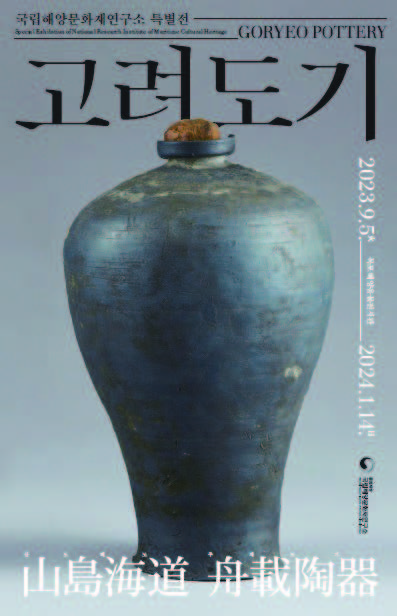
Poster for an ongoing special exhibition on Goryeo earthenware