
Inside
The History and Meaning of Heritage Designation
By Hwang Jung-yon
Unexchangeable Even for the Three Highest Official Ranks (Samgong bulhwando)
Kim Hong-do; 1801; light color on silk; 177 x 424.8 cm; collected at Leeum, Samsung Museum of Art; designated Treasure No. 2000 on October 4, 2018
On October 4, 2018 a painting by the late-Joseon artist Kim Hong-do(1745–c. 1806) entitled Unexchangeable Even for the Three Highest Official Ranks (Samgong bulhwando) was designated Treasure No. 2000. The designation number reflects its order of designation, meaning that the number of Treasures in South Korea hit the 2000 mark at this point. Other designations exist in South Korea besides the status of Treasure, such as National Treasure. With so many designated historical sites and items now in place, it is worth sparing the time to investigate the South Korean heritage designation system. Taking advantage of the occasion of a special exhibition to be held in this June on the roughly 100 Treasures and National Treasures listed from 2017– 2019, this article explores the history and meaning of the heritage designation system of South Korea with a focus on Treasures and National Treasures.
Heritage Designation in Korea
Heritage designation is an effective tool to provide historical objects and sites of great significance with permanent institutional protection. The legal provisions establishing South Korea‘s heritage designation system were conceived during the Japanese colonial period (1910–45) and, after several revisions in the years following liberation, were compiled into the Cultural Heritage Protection Act in 1962. In the time since, this framework law on heritage protection has been steadily amended in response to sociocultural changes to eventually take on its current form. Heritage designation is performed both by the central and local (city or provincial) governments. These two levels of designation complement each other since important legacies of the past that the national heritage list cannot accommodate can be registered on local lists and protected by the pertinent regional governments.
In the Cultural Heritage Protection Act, “cultural heritage” is classified as “artificially or naturally formed national, ethnic, or world heritage of significant historic, artistic, academic, or scenic value.” According to this definition, the central government empowers the Cultural Heritage Administration to designate heritage sites and objects of significant historic, artistic, or academic value as National Treasure, Treasure, Historic Site, Natural Monument, or National Folklore Cultural Heritage. In the case of sites with exceptional scenic beauty, the designation Scenic Site can be applied as well. In addition, important nonmaterial legacies of the past are also protected at the national level under the designation National Intangible Cultural Heritage. A difference in status exists between the seemingly similar designations Treasure and National Treasure: National Treasures hold greater significance than Treasures in terms of their rarity and value for humanity.
A ranked system like this exists only in South Korea and Japan. South Korea and Japan are also the only two countries to extend government protection to movable objects such as paintings, sculptures, and documents. Other countries, including China, the United States, and the European nations, operate their own heritage protection systems, but their protection only applies to historic sites and buildings. When Japan shifted from the term “Treasure” to Important Heritage Property following a legal amendment in the 1940s, South Korea became the only country to use the terms “Treasure” and “National Treasure.”
History of Treasures and National Treasures
The history of Treasures and National Treasures in South Korea can be divided into three periods. The first spans the years under Japanese colonialism from 1933 to 1945 when heritage designation was first introduced in the country. This period is also marked by the plundering of Korean cultural properties by Japanese colonialists.
Japan began preparing legal provisions to ensure heritage protection within its territory and prevent the export of its cultural properties abroad in the late 19th century. It applied these heritage protection rules and regulations to Korea when it fell under Japanese control in 1910. The Historic Sites and Relics Preservation Rules were prepared in 1916 to identify cultural properties throughout Korea and list them on a register. This process of heritage identification and registration under colonial rule wreaked irreparable damage on Korean cultural heritage, with numerous cultural properties being looted or displaced. The Sacred Bell of King Seongdeok, an invaluable artifact from Silla currently designated National Treasure No. 29 was transferred to a new site in 1916. The excavation of Seobongchong Tomb in Gyeongju, the long-time capital of Silla, was carried out with the participation of the visiting crown prince of Sweden in 1926. These are examples of the harm Korean cultural heritage suffered under Japanese colonial rule.
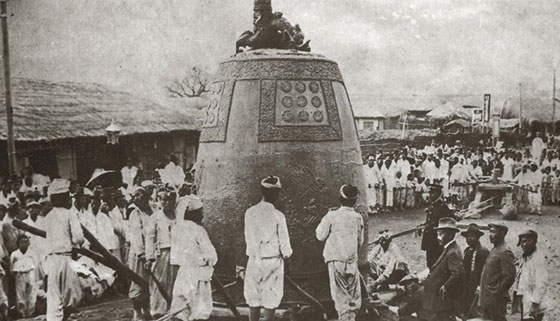
The transfer of the Sacred Bell of King Seongdeok in 1916 by Japanese archaeologists
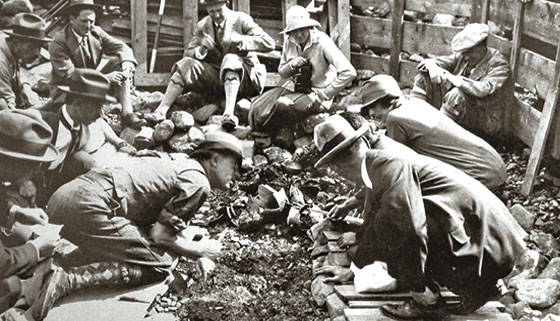
Seobongchong Tomb in Gyeongju was excavated in 1926 during Japanese colonial rule.
The Governor-General of Korea invited Swedish crown prince Gustaf VI Adolf, who was
travelling in Asia at the time, to participate in the excavation. Appropriate
protective measures were not taken at the excavation site and large quantities of
excavated artifacts were displaced. This is considered one of the worst cases of
colonial damage to Korean heritage.
In 1933 the Act on the Preservation of Treasures, Historic Sites, Scenic Sites, and Natural Monuments of Korea was enacted, endowing the Governor-General of Korea with authority over the management of Korean cultural heritage. In reflection of the doctrine underpinning Japanese colonialism that Japan and its colony Korea were a single entity, the same designation titles used in Japan were introduced into Korea—Historic Sites, Scenic Sites, and Natural Monuments. To reflect the status distinction between the two countries, however, the designation National Treasure that was applied to Japanese cultural properties of greatest importance was demoted to Treasure in the Korean system. Under this law, 12 designation sessions took place during 1934–43, naming 419 Treasures, 145 Historic Sites, five Historic/ Scenic Sites, 146 Natural Monuments, and two Scenic Sites/Natural Monuments.
The second period lasted from the years of rule by the U.S. Military Government (1945–48) until the enactment of the Cultural Heritage Protection Act in 1962. This was a transitional period for the heritage designation system. During these 17 years, a series of attempts was made in liberated Korea to devise new legal systems to replace the legal provisions on heritage established under colonial rule. Although these efforts failed to bear fruit, a foundation was laid for a new system through such efforts as preparing criteria for obtaining national designations and preparing a legal basis for designating both Treasures and National Treasures.
The third period began with the enactment of the Cultural Heritage Protection Act in 1962 and the establishment of the Cultural Heritage Committee as an advisory organ. The first law on heritage conservation ever issued by the South Korean government, the Cultural Heritage Protection Act includes provisions regulating the criteria and process for conferring and revoking the titles Treasure and National Treasure, the management of records on designated cultural properties, and the provisional designation of important cultural properties. The overall formulations at the time have mainly been maintained to the present.
Heritage designation was made subject to prior deliberation by the Cultural Heritage Committee. The first act of the heritage advisory committee was to endow 116 colonial-era Treasures with National Treasure status on December 20, 1962. Sungnyemun, the south gate in the Seoul city wall that had been designated Treasure No. 1 by Japanese authorities, became National Treasure No. 1 of South Korea. The advisory committee also elected to maintain the Treasure status of about 400 heritage sites and objects and to suspend the decision on whether to offer designations to the 67 properties located in North Korea that had been named Treasures during the colonial era. About a month later on January 21, 1963 the Cultural Heritage Committee assigned the status of Treasure to another 423 cultural properties. On March 1, 1971 the committee listed 52 cultural properties located in North Korea (including the South Gate in Kaesong) in an effort to organize the status of cultural resources in preparation for possible national reunification. All in all, 2,194 historical sites and objects are currently designated as Treasures and 345 have been named National Treasures.
Treasures and National Treasures Today
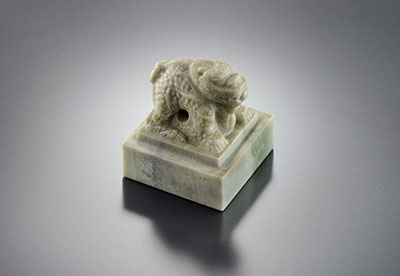
State Seal of the Emperor
Korean Empire; jade; 95.2 x 94 cm; collected at National Palace
Museum of Korea; designated Treasure No. 1618-2 on January 2, 2017
Certain trends can be identified in Treasure and National Treasure designation. During the 1960s–70s, objects excavated from archaeological sites made up the lionʼs share of new Treasures and National Treasures, such as the Gold Crown from the North Mound of Hwangnamdaechong Tomb (National Treasure No. 191) and the Great Gilt-bronze Incense Burner of Baekje (National Treasure No. 287). In the 1980s–90s there was a concentration of designation of scientific heritage (for example, when the Celestial Chart Stone was designated as National Treasure No. 228 and the Clepsydra of Changgyeonggung Palace as National Treasure No. 229), architectural heritage (Geunjeongjeon Hall of Gyeongbokgung Palace as National Treasure No. 223), and other heritage areas that had not previously received due attention. Awareness was also growing during this period regarding books and documents in private ownership.
Ever since the 2000s, efforts have been made to actively identify new sites and objects for national designation and develop the value of existing designated properties. The Cultural Heritage Administration does not wait for requests for designation to be submitted by local governments or individuals, but actively seeks out cultural properties to designate through both its own research endeavors and partnerships with other organizations. The Cultural Heritage Administration also elevates designated sites and objects to National Treasure status after discovering greater value in them than had been previously understood. Examples of its investigations include its blanket research into Joseon palaces and tombs, Buddhist temples, Neo-Confucian academies, and uigwe protocols; public requests for designation in such categories of heritage as moon-shaped porcelain jars, old maps, portraits, and calligraphic works; and partner agreements with the National Museum of Korea and Kansong Art Museum. As a result of this active administration by the Korean heritage authorities, the disproportionate concentration on archaeological relics and historical documents during the previous decades has been mitigated, bringing diversity and balance to the body of Treasures and National Treasures in terms of the thematic focus of designated items and the historical periods represented.
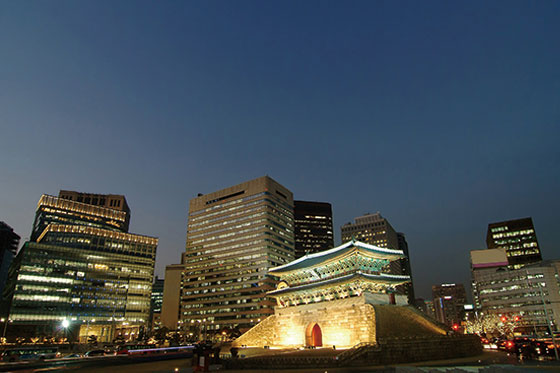
Sungnyemun Gate, National Treasure No. 1
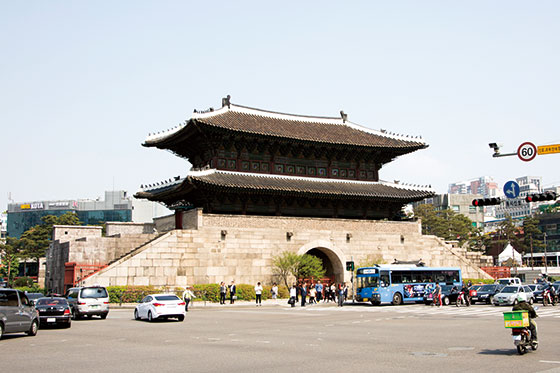
Heunginjimun Gate, Treasure No. 1
This June’s special exhibition organized in cooperation between the Cultural Heritage Administration and National Museum of Korea features a series of Treasures and National Treasures reflecting this positive trend in heritage designation. The following are a few examples from this exhibition that reflect the efforts to determine the value of returned artifacts and upgrade designated properties to National Treasure status: the four volumes of The Annals of the Joseon Dynasty collected at the Jeoksangsan Mountain Library that have been newly included in the assemblage of volumes of The Annals of the Joseon Dynasty designated as National Treasure No. 151; the Reliquaries from the Wangheungsa Temple Site, which has been promoted from Treasure to National Treasure No. 327; and the State Seal of the Emperor, a national seal of the Korean Empire that was returned to South Korea and designated Treasure No. 1618-2. Another interesting item on exhibit is the Stone Standing Maitreya Bodhisattva of Gwanchoksa Temple. This popularly approachable stone bodhisattva, sometimes called an “ugly stone Buddha,” was reevaluated based on the delicate expression of Goryeo aesthetics hidden behind its rough appearance. It was accordingly upgraded in heritage status from Treasure to National Treasure No. 323, generating considerable public attention.
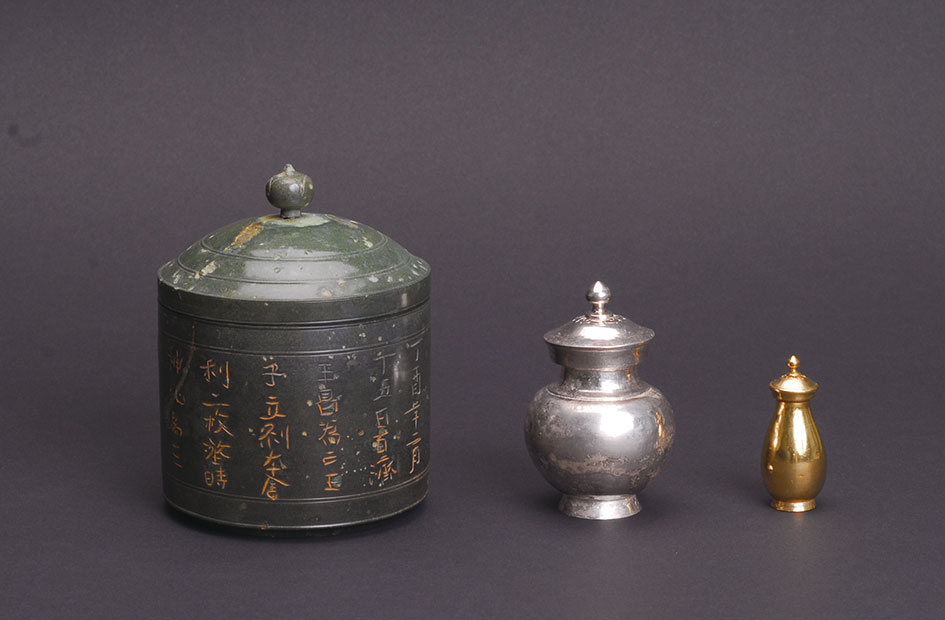
Reliquaries from the Wangheungsa Temple Site 577 (Baekje); bronze and silver; 6.8–10.3 cm high; collected at the Buyeo National Research Institute of Cultural Heritage; designated National Treasure No. 327 on June 26, 2019
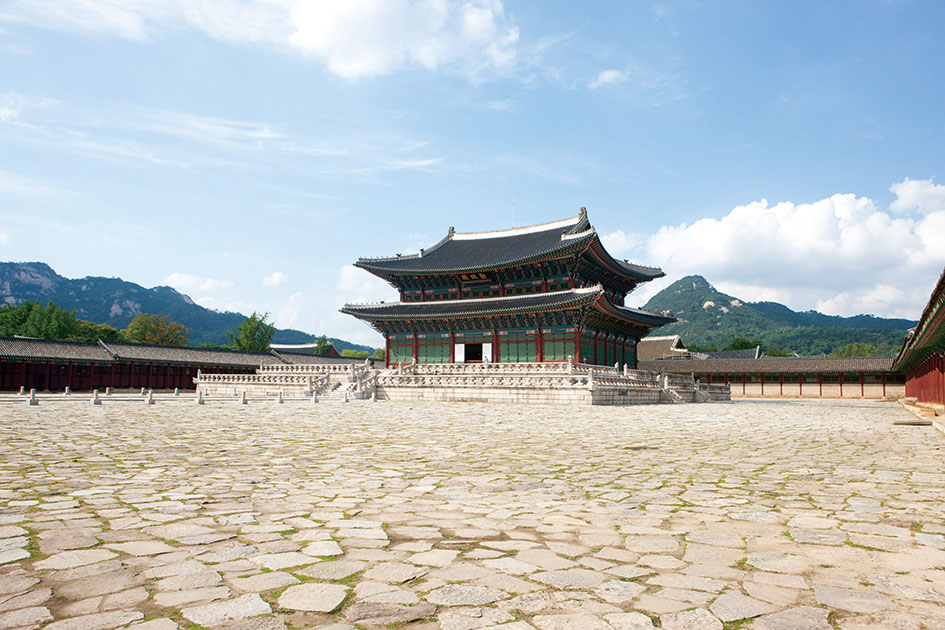
Geunjeongjeon Hall of Gyeongbokgung Palace, designated National Treasure No. 223 on January 8, 1985
Also on display are Buddhist woodblocks that were designated as a result of research initiated in 2014 on the woodblocks collected at Buddhist temples and drawing upon the results of the previous research on Buddhist artifacts. Additionally, there are 22 artifacts that have been designated through the partnership agreement with the Kansong Art Museum. These 22 artifacts include painterly and calligraphic works by renowned Joseon artists such as Jeong Seon, Kim Hong-do, Sin Yun-bok, and Kim Jeong-hui.
Meanwhile, designation does not always directly result in the development of an item’s heritage value and its protection. Sometimes it provokes controversy regarding provenance and authenticity, but such controversy can be translated into useful reforms to the relevant policy. One example is the turtle ship gun that was designated National Treasure No. 274 in 1992. When it was identified as a forgery in 1996, it was deprived of National Treasure status and a new step was introduced in the designation process to allow the collection of pertinent public opinions. Items under deliberation for designation are published in the official gazette for at least 30 days before being subject to deliberation by the Cultural Heritage Committee. The Cultural Heritage Administration has also made it mandatory when requesting the designation of a cultural property to submit documents regarding its acquisition. Scientific research has also been institutionalized as a component of the designation process.
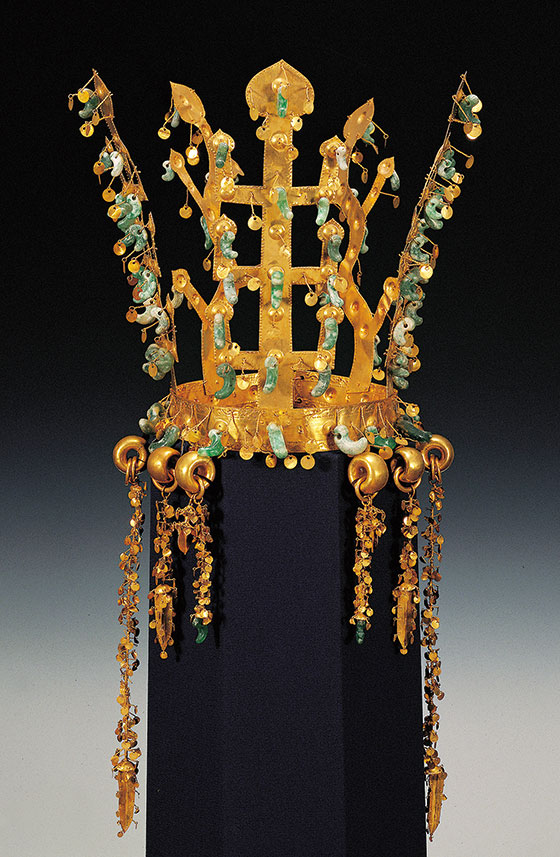
Gold Crown from the North Mound of Hwangnamdaechong Tomb
Silla; 27.5 cm high; collected at the National Museum of Korea;
designated National Treasure No. 191 on December 7, 1978
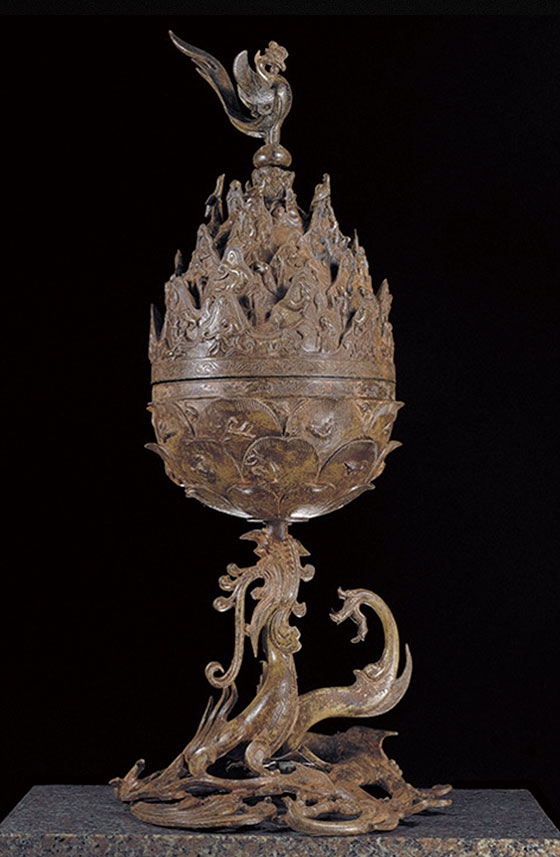
Great Gilt-bronze Incense Burner of Baekje 7th century
(Baekje); gilt-bronze; 64 cm high; collected at the Buyeo National Museum;
designated National Treasure No. 287 on May 30, 1996
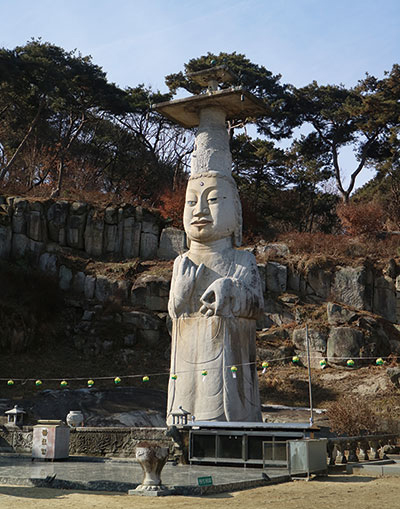
Stone Standing Maitreya Bodhisattva of Gwanchoksa
Temple Ca. 968 (Goryeo); granite; 18.2 m high;
located in Nonsan, Chungcheongnam-do;
designated National Treasure 323 on April 20, 2018
Providing historical sites and items with the designation of Treasure or National Treasure is a heritage policy of immense importance, not only because it provides a legal basis for the permanent protection to the pertinent cultural properties, but also because it testifies to the cultural history of Korea. The Cultural Heritage Administration is working hard to enhance the transparency and credibility of the heritage designation process. Its strengthened comparative research on similar heritage sites or items, institutionalization of scientific research, and inclusion of sociocultural interpretive analysis are all examples of the heritage agency‘s efforts in this regard.
Although sometimes still in private ownership, heritage sites and objects designated as Treasures or National Treasures can all be thought of as truly belonging to the people. Cultural heritage reaches its fullest potential when it is openly enjoyed and appreciated by the public. Based on this principle, the Cultural Heritage Administration and National Museum of Korea have been organizing exhibitions on designated cultural properties. The special exhibition being held this June is one part of this joint endeavor to promote the appreciation of designated heritage among a wider audience. It is hoped that this special exhibition will provide an invaluable opportunity not only to better understand the heritage designation system of South Korea, but to consider how to best transmit today‘s cultural heritage to future generations.
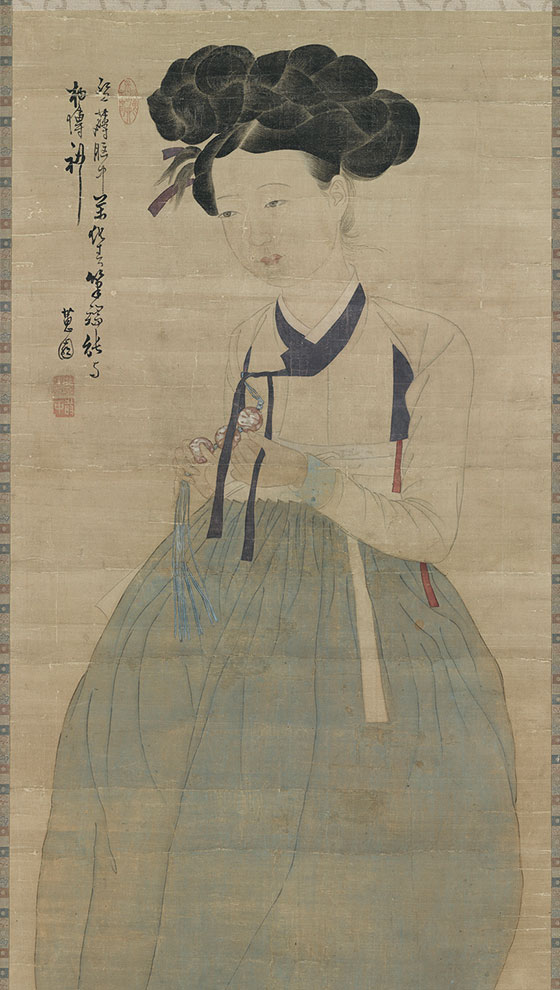
Beauty (Miindo)
Sin Yun-bok; 18th century (Joseon); light color on silk; 114.0 x 45.5 cm; collected
at the Kansong Art Museum;designated Treasure No. 1973 on February 22, 2018
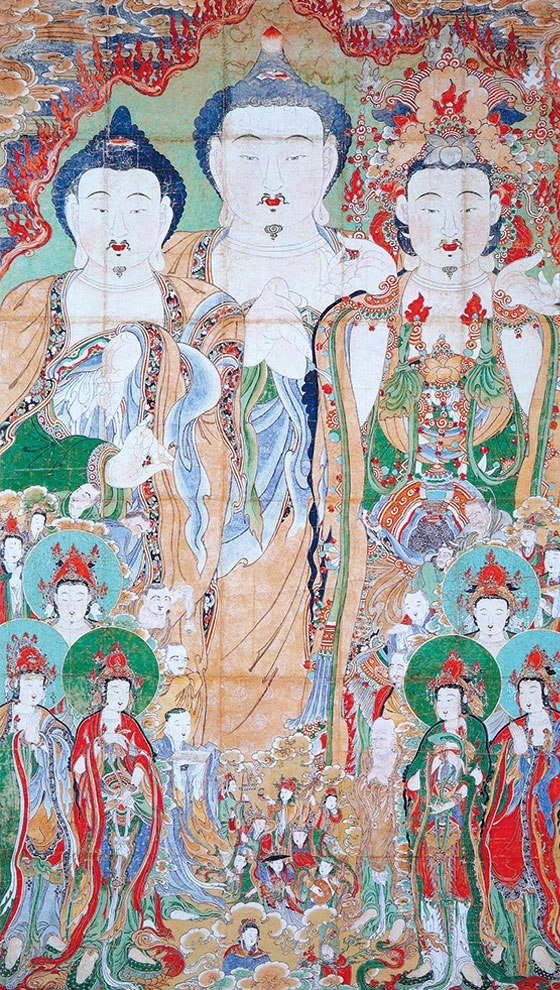
Hanging Painting of the Vairocana Buddha Triad at Bongseonsa Temple
1735 (Joseon); color on paper; 785 cm high; collected at Bongseonsa Temple; designated Treasure No. 1792 on December 27, 2012
Text by Hwang Jung-yon, Cultural Heritage Administration
Photos by Cultural Heritage Administration

한국 국보·보물 지정제도의 역사와 의의
2018년 10월 4일, 조선 후기 화가 김홍도(金弘道, 1745~1806 이후)가 그린 <삼공불환도(三公不換圖)>가 보물 제2000호로 지정됐다. 지정 번호는 지정 순서에 따라 정해지기 때문에 문화재의 가치를 반영한 것은 아니다. 그러나 일제강점기인 1933년부터 시작된 지정제도가 1962년 「문화재보호법」 제정을 계기로 폐기되고 이때부터 정식제도가 시행된 지 56년 만에 2,000종의 보물이 지정된 사실은 우리나라 국보․보물 지정역사를 뒤돌아보게 하는 계기를 불러일으키기에 충분했다. 그렇다면 <삼공불환도> 처럼 문화재가 국보나 보물로 지정되기 위한 요건은 무엇이며 이는 한국지정제도의 흐름과 어떠한 연관이 있을까? 마침 올해 6월 문화재청과 국립중앙박물관은 2017년부터 2019년까지 3년간 지정된 국보와 보물 100여 점을 소개하는 「신규 지정 국보·보물 특별전」을 공동 개최한다. 이 글에서는 특별전을 계기로 한국 국보·보물 지정제도의 역사와 의의에 대해 살펴보도록 하겠다.
국가지정문화재 지정의 범위와 국보·보물
'지정(指定)'은 보존 가치가 높은 문화재를 일정한 제도권 안에서 영구적으로 보호하고자 마련한 제도이다. 우리나라의 경우 일제강점기부터 시행된 법령이 광복 후 수정을 거쳤으며, 1962년 정식 법제가 마련되어 지금까지 현실에 맞게 꾸준히 개정되면서 체계가 갖추어졌다. 체계상 ‘국가지정’과 ‘시도지정(지자체 지정)’으로 이원화해 국가에서 미처 관리하지 못하는 중요문화재를 지방정부에서 관리하는 보완적인 시스템으로 운영되고 있다.
한국에서는 문화재의 지정과 관리 등 전반적인 사항을 1962년에 제정된 「문화재보호법」에 근거해 시행하고 있다. 이 법에서는 ‘문화재’를 '인위적이거나 자연적으로 형성된 국가적·민족적 또는 세계적 유산으로서 역사적·예술적·학술적 또는 경관적 가치가 큰 것'으로 정의하고 있다. 이는 곧 한국의 문화재 지정 범주와 연결된다. 역사적·예술적·학술적 가치가 큰 것은 국보·보물·사적·천연기념물·국가민속문화재 등과 같이 유형(有形)의 문화재로, 경관적 가치가 큰 것은 ‘명승(名勝)’으로 지정되며 모두 국가지정문화재의 범주에 해당한다. 이를 통해 김홍도의 〈삼공불환도〉는 유형의 문화재로서 역사적․예술적․학술적 가치가 인정되어 ‘보물’로 지정된 것으로 이해할 수 있다.
문화재청은 여기서 더 나아가 기술과 정신문화 가치를 존중하여 ‘무형문화재’ 지정제도도 함께 운영하고 있다. 유형문화재 중 중요하다고 여겨지는 것은 보물로 지정되고, 이 가운데 인류문화의 관점에서 가치가 크고 유례가 드문 것은 다시 국보로 지정된다.
이처럼 국보나 보물 개념으로 문화재를 등급화하여 지정하는 제도는 세계에서 한국과 일본뿐이다. 중국, 미국, 유럽 국가들이 유적이나 건축물을 대상으로 나름의 보호제도를 운영하고 있으나 한국과 일본만이 회화, 조각, 서책 등 동산문화재를 포함하는 지정정책을 시행하고 있다. 단, 일본은 1940년대 법령 개정을 통해 ‘보물’ 대신 ‘중요문화재’라는 명칭을 사용해 오고 있어 ‘국보’, ‘보물’의 명칭을 사용하고 있는 나라는 한국이 유일하다.
국보·보물 지정제도의 역사
한국의 국보·보물 지정제도의 흐름은 총 3기로 나누어 살펴볼 수 있다. 제1기는 지정제도가 처음 도입된 일제강점기로서, 1933년~1945년 기간이 해당한다. 이 기간은 일본에 의한 한국 문화재의 약탈과 고난의 시간이었으며, 지정제도 역시 이러한 과정에서 처음 시행되었다.
일본은 19세기 말부터 자국 내 문화재 보존과 해외 유출을 막고자 각종 문화재 관련 법령을 마련하였다. 그리고 1910년 조선을 식민지화하면서 이 방침을 적용하였다. 1916년 「고적 및 유물보존규칙」을 만들어 조선 전역에 걸쳐 파악한 문화재의 현황을 대장에 등록하는 작업을 추진하면서 전국의 삼국시대 고분이 도굴당하고 수많은 문화재가 원위치를 잃어버린 파괴 현상이 일어났다. 1916년 성덕대왕신종의 이전, 1926년 문화통치의 한 전략으로 스웨덴 황태자에게 공개된 경주 서봉총 고분 발굴 현장 등은 모두 한국 문화재의 수난을 상징한다.
이후 일본은 1933년 조선총독에게 한국 문화재에 자의적이고 강력한 권한 행세를 부여하는 법령인 「조선보물고적명승천연기념물보존령」을 만들었다. 내선일체(內鮮一體)를 명분으로 일본의 지정제도와 같이 ‘보물’, ‘고적(古蹟)’, ‘명승(名勝)’, ‘천연기념물’로 구분했고, 일본 자국에서 ‘국보’를 조선에서는 ‘보물’로 낮춰 불렀다. 이 법령에 따라 1934년~1943년까지 총 12회에 걸쳐 보물 419건, 고적 145건, 고적 및 명승 5건, 천연기념물 146건, 명승 및 천연기념물 2건 등으로 모두 717건이 지정되었다.
제2기는 광복 후 미군정기(美軍政期, 1945.9.8.~1948.8.14.)에서부터 1962년 「문화재보호법」이 제정되기까지 기간으로, 지정제도의 과도기에 해당한다. 1945년 8월 일본의 패전(敗戰)으로 광복을 맞이한 한국은, 같은 해 9월부터 시작된 미군정 3년을 포함해 1961년까지 약 17년 동안 일제의 문화재 규정을 대체하기 위한 법령 제정을 거듭 시도하였으나 끝내 완성하지 못했다. 그러나 국가지정문화재의 기준을 제시하고 국보 외에 ‘보물’을 법적으로 구분하는 등 이후 관련 법안의 기초가 된 중요한 시기이다.
제3기는 1962년 「문화재보호법」 제정과 자문기구인 ‘문화재위원회’가 출범한, 한국 지정제도의 정식 출발 시기이다. 「문화재보호법」은 헌정사상 최초로 한국 정부가 만든 문화재 관련 법령이라는 점에서 역사적 의의가 있다. 이 법률에 따라 국보·보물의 지정 기준, 지정 또는 해제 절차, 지정문화재 기록 보존과 신청자료 제출, 그리고 중요문화재의 임시지정[가지정假指定]에 관한 구체적인 내용과 절차 등이 규정되었고, 오늘날까지 기본 골격이 유지되고 있다.
아울러 자문기구인 문화재위원회를 구성하고 위원회의 심의에 근거해 국가지정문화재를 지정하는 절차를 확립하였다. 문화재위원회가 가장 먼저 수행한 일은 일제강점기에 지정되었던 보물 가운데 116건을 1962년 12월 20일 자로 ‘국보’로 지정한 것이다. 이때 일제가 보물 1호로 지정했던 남대문(현 숭례문)이 국보 제1호로 지정되었다. 또 국보로 지정되지 않은 약 400건의 구(舊) 보물은 보물로 지정해 보존하기로 했으며, 일제강점기 보물로 지정된 북한 소재 보물 67건에 대해서는 재지정을 보류하였다. 이듬해 1963년 1월 21일 자로 ‘서울 흥인지문’ 등 423건을 보물로 다시 지정하였고, 1971년 3월 1일에는 통일을 대비해 북한의 지정대상 주요문화재 파악을 위한 예비적 성격으로 ‘개성 남대문’ 등 52건의 북한 문화재를 지정·공포하였다. 이렇게 1962년 첫 국보·보물이 지정된 이후 2020년 4월 현재까지 국보 345건, 보물 2,194건 도합 2,539건이 지정되었다.
오늘날 국보·보물의 지정
국보와 보물의 지정 현황을 시기적으로 살펴보면 몇 가지 주된 특징이 파악된다. 먼저 1960~70년대에는 황남대총 북분 금관(국보 제191호), 백제 금동대향로(국보 제287호) 등 발굴문화재가 주로 지정되었다. 1980~90년대에는 천상열차분야지도 각석(국보 제228호), 창경궁 자격루(국보 제229호) 등 과학기술문화재, 경복궁 근정전(국보 제223호) 등 건축문화재를 비롯하여 기지정문화재 중에서 상대적으로 소외되었던 분야와 개인 소장 전적 문화재의 지정이 많았다.
2000년대부터는 개인이나 지자체가 신청하는 문화재뿐 아니라 문화재청이 각종 조사와 업무협약 등을 통해 적극적으로 지정대상을 확대하여 국가지정문화재 제도권으로 흡수된 사례가 증가하였고, 국보 승격 추진 등을 통해 선제적으로 가치를 발굴하는 데 주력하고 있다. 궁능‧사찰·서원 문화재 및 조선왕조 의궤 등 다량문화재 전수조사, 달항아리·고지도·초상화·옛 글씨 등 분야별 일괄 공모, 국립박물관과 간송미술문화재단 등과의 업무협약을 통한 지정을 예시로 들 수 있으며, 그 결과 고고유물이나 전적문화재에 주로 치중되어 온 지정 대상이 한층 더 다양화되고 시대별·분야별로도 균형을 맞추어 나가게 되는 긍정적인 효과를 보여주고 있다.
이번 특별전에도 최근 이러한 지정경향이 반영된 작품들이 다수 선보인다. 몇 가지 주된 사례를 살펴보면, 2017년도부터 본격적으로 추진한 국보 승격 및 환수문화재 가치 발굴의 일환으로 국보 제151호 <조선왕조실록>에 추가 지정된 ‘적상산사고본 실록’ 4책, ‘부여 왕흥사지 출토 사리기’(국보 제327호)를 비롯해 미국으로부터 환수된 대한제국 국새인 보물 제1618-2호 ‘국새 황제지보’ 등이 포함되어 있다. 이밖에 ‘논산 관촉사 석조미륵보살입상’(국보 제323호)의 경우 일명 ‘못난이 석불’로 불리며 대중에게 친근한 대상으로 널리 인식되어 왔으나 투박한 가운에 섬세함이 숨어 있는 고려 시대의 미감(美感)을 재평가해 국보로 승격되어 많은 화제를 낳기도 했다.
문화재청이 2002년부터 추진한 ‘전국 사찰 소장 불교문화재 일제조사’의 결과물 중 2014년부터 실시한 ‘전국 사찰 소장 불교목판 조사’에 따른 지정 목판문화재를 포함해 2017년 간송미술문화재단과 업무협약을 통해 지정된 22점도 대상에 포함되었다. 조선 시대 서화작품을 전문적으로 소장하고 있는 간송미술관의 특성을 살려 그동안 지정에서 소외되었던 정선, 김홍도, 신윤복, 김정희 등 조선 시대 대표 작가들의 작품이 재조명된 기회가 마련되었다.
한편, 국보나 보물의 지정은 해당 문화재의 가치를 발굴하고 보존관리 시스템을 마련한다는 긍정적인 측면도 있으나, 도난과 은닉, 진위문제 등으로 본래의 지정목적을 흐리게 하는 경우도 있다. 이는 정책변화로 이어지기도 한다. 대표적으로 국보 제274호로 지정된 ‘귀함별황자총통(龜艦別黃字銃筒)’이 모조품으로 밝혀지면서 1996년 해제되었던 사례를 들 수 있다. 이 경험을 바탕으로 ‘지정예고제’가 도입되었다. 문화재위원회의 지정 심의 이전에 심의할 내용을 관보에 30일 이상 예고하여 당사자들의 의견을 듣도록 법령이 개정된 것. 아울러 문화재청은 신청 문화재의 정당한 소유 관계나 연혁, 도난문화재 여부 등을 파악하기 위해 취득경위서 제출을 의무화 하고 객관적 판단을 위해 과학적 조사를 제도화하는 등 지정과정을 투명하고 타당성 있게 진행하기 위한 제도개선을 지속적으로 수행하고 있다.
국보·보물의 지정은 해당 문화재의 영구한 관리를 법적으로 보호하는 기반을 제공하고, 한국문화사의 주요 사실관계를 대표적 유적이나 유물을 통해 시각적으로 증빙해주는 척도로서 역할 한다는 점에서 파급 효과가 크다. 최근 문화재청은 국보·보물의 객관성을 높이고자 동종(同種) 문화재 비교 조사 등을 한층 강화하여 해당 문화재의 명확한 가치 규명을 위해 노력하고 있으며, 다양한 분석기술의 발달에 힘입어 과학적 조사를 제도화하고, 인문학적인 안목 감정을 보완하는 등 문화재 해석에 대한 지평을 넓히고 있다.
국보·보물은 국·공유가 아닌 개인의 소유물일지라도 선조로부터 물려받은 유산인 만큼 모두 함께 공유하는 공공재(公共材)로서의 성격이 강하다. 박제된 문화재가 아닌 살아 숨 쉬는 문화재는 모든 국민이 지키고 향유할 때 빛을 발한다. 이러한 공통적인 목표를 위해 근래 몇 년 동안 문화재청과 국립박물관은 전시를 통해 지정문화재 공개를 활성화 해왔다. 이번 「신규지정 국보·보물 특별전」을 통해 한국의 문화재 지정정책을 이해하는 한편 자국의 문화유산을 미래세대에 온전히 전할 수 있는 방법이 무엇인지 고민해보는 시간이 되기를 바란다.
Text by 황정연, 문화재청 학예연구사
Photos by 문화재청