Inside
An Ancient Stone Pagoda
Reclaims Its Past
By Kim Hyun-yong
The pagoda, a longstanding architectural symbol of Buddhism, was derived from the stupa, a hemispherical structure used to enshrine the relics of Shakyamuni Buddha. Pagodas started to be erected across East Asia with the dissemination of Buddhism. They developed into unique styles grounded in the natural and cultural environments of respective local areas. In Korea, stone was the dominant material for the construction of pagodas. The local abundance of quality stone such as granite fueled the development of masonry early on. It was considered a suitable replacement for wood, the material of first choice but vulnerable to fire and decay. The stone pagoda at the site of Mireuksa Temple in Iksan, recently opened to the public after a long and arduous process of repair, is the oldest and largest surviving stone pagoda in Korea. Including the preparatory research, the restoration of the stone pagoda at the Mireuksa site took a full 20 years, the longest period ever for the repair of a single structure in Korea. Its renovation is considered a milestone in the country’s history of heritage conservation.
Restoration of a Stone Pagoda from 1,300 Years Ago
The survey and repair of ancient stone pagodas at the substantive level began in the early 20th century under Japanese colonial rule (1910–45). The focus at the time was concentrated on artifacts found within the pagodas, and academic studies of stone pagodas were biased toward the archaeological and art history perspectives, leaving their architectural and technical aspects mostly understudied. Toward the later 1980s, the significance of the documentation and conservation treatment of their architectural elements was brought to attention, and from the 2000s the science and technology related to the conservation and repair of stone pagodas saw phenomenal development. The greatest impulse for this advancement was provided by the repair project for the Mireuksa stone pagoda.
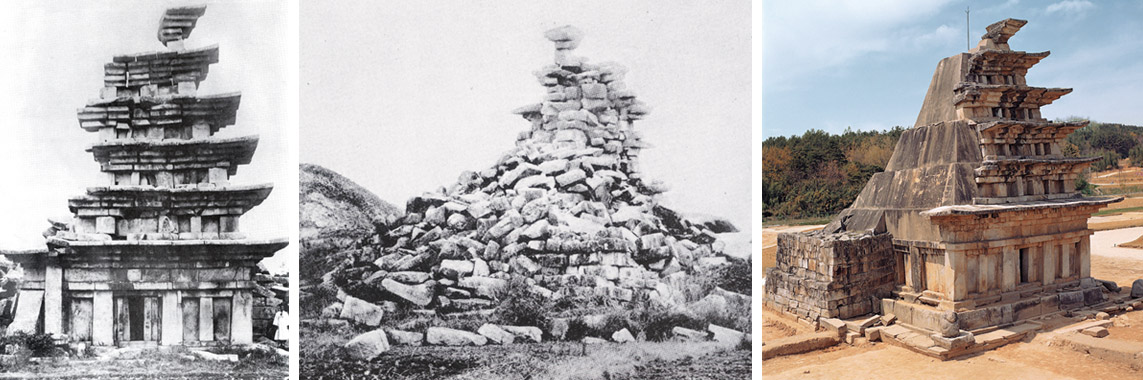
A _ The eastern side of the stone pagoda at the site of Mireuksa Temple in 1910 (Photo courtesy of the National Archives of Korea)
B _ The western side of the stone pagoda in 1910 (Photo courtesy of the National Archives of Korea)
C _ The southeastern side of the stone pagoda after being reinforced with concrete under Japanese colonial rule (Photo courtesy of Jeollabuk-do Provincial Government)
Mireuksa Temple was constructed in the seventh century in what is now Iksan, in the southwestern portion of the Korean Peninsula ruled by the ancient Korean kingdom of Baekje. The temple was originally rendered as a large tripartite compound with each section housing a Buddhist hall and a pagoda. A stone pagoda was erected in both the eastern and western sections, and the middle housed a wooden version. Except for the recently repaired stone pagoda standing in its western section, the ancient Buddhist temple of Mireuksa exists today only as an archeological site. However, the cultural and historical significance of the Mireuksa site was recognized at the global level in 2015 by its inscription on the World Heritage list as part of the “Baekje Historic Areas.” The stone pagoda, which features a cross-shaped passage through the first tier of the body, is a remarkable embodiment of the transitional characteristics of pagodas as the primary material shifted from wood to stone. It is also a rare surviving example of ancient architecture with immense historical and academic significance. Worn out by the effects of 1,300 years of history, the western pagoda at the Mireuksa site came down to us with half of the body collapsed and several component stones severely damaged, calling for an urgent repair action.
After collapsing presumably around the 17th century, the western pagoda underwent a round of repairs in 1915 under the Japanese colonial authorities. The damaged half of the pagoda was covered and reinforced with concrete. The conservation at the time was not considered an effort at resolving fundamental problems, but more of an emergency response to ward off further deterioration. A structural safety check in 1998 revealed that the aging of the concrete reinforcement threatened the pagoda’s structural safety, so a full-scale repair involving the disassembling and reassembling of the pagoda was authorized in 1999.
Prioritizing Authenticity
Information on the structure of the pagoda and its state of conservation was scarce, a systematic survey and study of the pagoda was required before determining how to proceed. First of all, it was decided that any use of new stone was to be kept to a minimum. Given the unique style of the pagoda, the severity of the damage, and the difficulty of the effort, the period of repair was projected from the beginning to be extensive.
After long and in-depth discussions, a decision was made that the repairs should be limited to up to the sixth tier of the pagoda, the extent to which it had survived. There was an argument that the pagoda originally reached a ninth tier, but no concrete evidence could be found in the survey that would confirm this proposition. It was agreed that any reconstruction based on conjecture would undermine the authenticity of the pagoda and its value as historical material. Furthermore, it had to be taken into account that the original stone members, estimated to have only half of the load-bearing capacity of new stone, would not be able to withstand the weight of additional tiers, which would counter the intention to use original materials as much as possible. Keeping all this in mind, primary principles for repair were devised as follows:
First, since few surviving stone elements suggested having composed tiers above the sixth, the pagoda was to be restored only to the sixth tier as a means to reject conjecture and ensure authenticity.
Second, original architectural materials and traditional techniques were to be used to the greatest possible extent, while damaged stone elements were reinforced through scientific treatment before reuse.
Third, when it was deemed that traditional techniques alone would be insufficient to guarantee structural safety, proven modern techniques were to be allowed as a supplement but only to the minimum allowable extent.
Fourth, the entire repair process involving preliminary survey, research, and construction was to be thoroughly recorded, and the resulting documents were published to promote future research.
Based on these principles, the National Research Institute of Cultural Heritage embarked on the repair of the pagoda in 2001. The process of disassembling and studying the stone pagoda was completed in 2010, and from 2013–17 its reassembly up until the sixth tier was carried out.
The Long Process of Repairing the Stone Pagoda
Since little information existed regarding details of the pagoda, such as on its original appearance and current state, the National Research Institute of Cultural Heritage conducted multi-pronged research into its architecture, conservation science, archaeology, and art history. Based on the results, directions for the overall process and particular technical methods were established. It was unprecedented for the repair of a single structure to be preceded by such an extended, systematic research effort, and its outcomes were used as guidelines for determining the details of repair.
The academic and technical research into the repair of the western stone pagoda at the Mireuksa site is generally categorized into four areas: preliminary research, conservation science, study of structure and materials, and repair techniques.
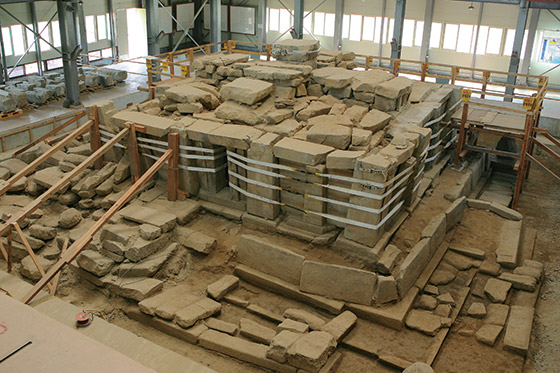
The disassembly of the first tier of the stone pagoda in 2008
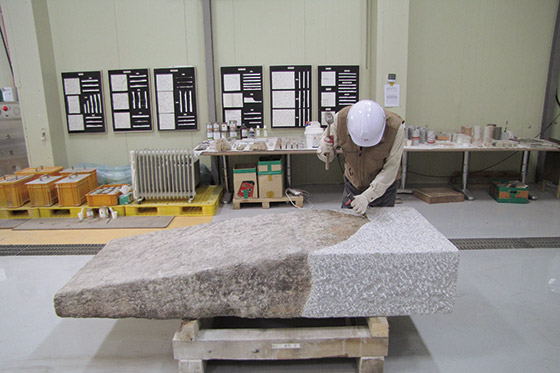
An incomplete stone member is reinforced with new stone.
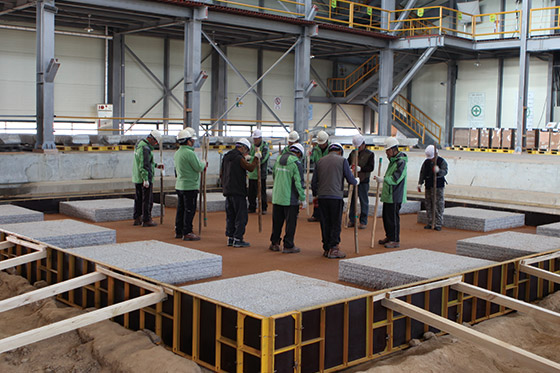
Earth rammed for the reinforcement of the foundation
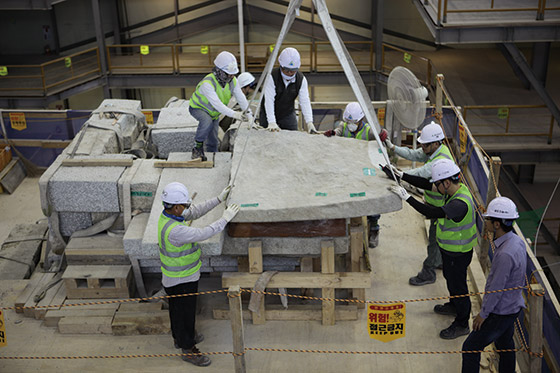
The reassembly of the sixth tier in 2017
First of all, research was launched to collect baseline information on the pagoda. The efforts in this category of research included the disassembly of the pagoda and three-dimensional scanning and documentation, excavation of the foundation platform, collection of excavated artifacts, and study of the construction methods for the pagoda. In particular, the disassembly of the pagoda, the entire process of which was fully documented, offered critical information for the entire repair process, including ascertaining the pagoda’s original appearance, carrying out conservation treatment, reinforcing its structural stability, developing new techniques, and reassembling the pagoda. In terms of conservation science, the surrounding environment, contaminants on the surface of the pagoda, and the level of weathering of the stone elements were all scrutinized. Methods of conservation treatment were designed to reinforce the existing stone members and utilize them to the greatest degree possible. To ensure the structural stability of the pagoda, endeavors were made to ascertain the cause of its collapse, evaluate its structural security, select a source for new stone, and study reinforcement minerals. For repair techniques, the results of the above-mentioned lines of research were organized and patented. The patented techniques are concerned with earth ramming for strengthening the foundation, filling voids in stone members and reinforcing them with minerals, differentiated structural reinforcement of stone members according to their level of weathering, and equipment for joining stone members.
The Rebirth of the Stone Pagoda
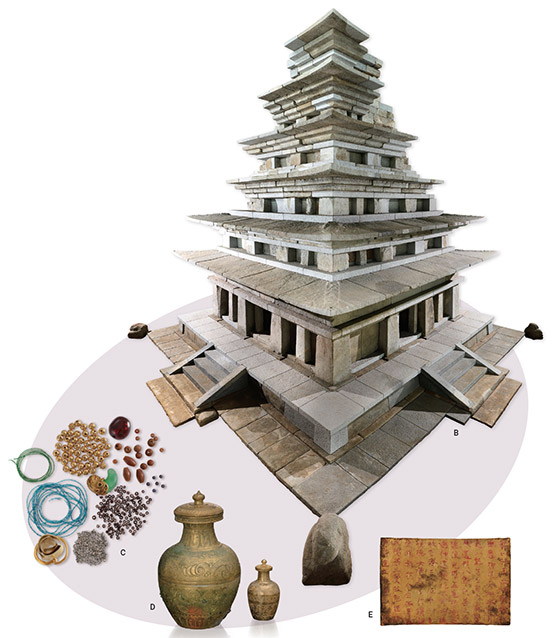
A _ An image of the collapsed stone members under a thick cover of concrete produced using
three-dimensional scanning
B _ The stone pagoda at the Mireuksa site after the completion of repairs in 2017
C _ Artifacts from the bronze reliquaries
D _ Reliquaries consisting of a gilt-bronze outer jar and gold inner jar found
within the stone pagoda
E _ A golden plate found in the pagoda inscribed with valuable information on
Mireuksa Temple and its western pagoda
The repair of the stone pagoda at the Mireuksa site has in many regards been a meaningful project in the country’s history of heritage repair. It was the longest extended repair endeavor in Korea for a single heritage structure. The extent of minimizing conjecture and maximizing the use of existing members for carrying out the repairs was rewarded with the preservation of the historical value and authenticity of the pagoda. The project also provided an occasion for advancing the repair methods for stone structures and promoting their successful application, generating a positive reaction among masonry experts at home and abroad.
Furthermore, from the void discovered in the center of the first layer of the pagoda were found receptacles for relics recognized as the greatest archaeological achievement made in the section of the country once ruled by Baekje. Alongside the reliquaries, about 9,900 further artifacts were found from the central empty space in the first tier. One object among them that merits particular attention is a golden plate inscribed with valuable information on the sociocultural background and main figures behind the construction of Mireuksa Temple and the year in which it was built. The discovery of the artifacts and precious information attracted academic interest to Mireuksa Temple and its western pagoda at the national and international levels, which in turn contributed to heightening their cultural and historical value.
Regardless of the type of heritage and its geographical or temporal position, conservation activity of any kind should always place accuracy before speed and historical fact before conjecture. Heritage is living history, and the repair and restoration of heritage of any kind should be based fully on in-depth understanding while vigilantly guarding against any supposition or haste. It must be kept in mind that the heritage we repair and restore today also belongs to future generations.
Text by Kim Hyun-yong, National Research Institute of Cultural Heritage
Photos by the National Research Institute of Cultural Heritage and others

1,300년 전의 석탑, 시간을 되찾다
불교신앙의 상징적 건축물인 탑은 고대 인도의 석가모니가 열반에 든 후 사리를 모신 무덤 양식에서 유래하였다. 동아시아에서는 불교의 전파와 함께 다양한 종류의 탑들이 건립되었는데, 각국의 환경에 따라 그 양식이 달랐다. 한국은 유독 석탑의 건립이 활발했다. 화강암 등 우수한 품질의 돌이 풍부하여 일찍부터 석공 기술이 발달하였고 부식이나 화재에 취약한 목탑의 재료적 한계를 극복할 수 있다는 장점 때문이다. 이번에 수리를 마친 미륵사지 석탑은 한국에 현존하는 석탑 중 가장 규모가 크고 오래된 석탑이다. 미륵사지 석탑은 단일 문화재 대상으로는 최장 기간인 20년간 조사 연구와 수리가 진행되어 한국 문화재 수리 역사에 한 획을 그었다.
1,300년을 힘겹게 버틴 탑, 바로 세우다
한국의 석탑에 대한 근대적인 조사와 수리는 20세기 초 일제강점기 이후 본격화 되었다. 그러나 석탑 해체 시 내부에서 발견되는 유물에만 관심이 집중되면서 석탑에 대한 연구는 주로 고고학, 미술사 분야에 치중되었고 건축 기술적 연구는 부족한 실정이었다. 1980년대 후반에 이르러 비로소 건축 기록과 보존 처리의 중요성이 인식되었고, 2000년대 이후부터는 석탑의 수리 및 보존처리 기술이 비약적으로 발전하였다. 그 중심에 익산 미륵사지 석탑의 보수정비사업이 있다.
7세기 백제 무왕 때 건립된 익산 미륵사는 세 개의 탑(서쪽 석탑, 중앙 목탑, 동쪽 석탑)과 세 개의 금당이 나란히 배치된 대규모 사찰이었다. 현재는 아쉽게도 사찰 터만 남았지만 고대 사찰 유적으로 그 가치를 인정받아 2015년 유네스코 세계유산에 등록되었다. 미륵사 창건 시 세워진 세 개의 탑 중 유일하게 남아있는 서쪽 탑이 바로 미륵사지 석탑이다. 이 탑은 목탑에서 석탑으로 변화되는 모습이 충실히 반영되어 있고, 1층 내부에는 十자형의 통로 공간이 조성되어 있는 한국 고대 건축의 실존 사례로써 역사적, 학술적으로 매우 중요한 가치를 갖고 있다. 그러나 미륵사지 석탑은 1,300여년 세월의 풍파를 거치면서 반파되었고 남아있는 석재들도 대부분 훼손이 심한 상태라 수리가 시급했다.
17세기 전후 시기에 붕괴된 것으로 추정되는 미륵사지 석탑은 1915년 일본인들이 흐트러진 석탑과 주변을 정비하고 무너진 부분에 콘크리트를 덧씌워 보강하였다. 당시의 작업은 붕괴된 석탑의 근본적인 문제를 해결하기 위한 것이 아닌 불안정한 석탑의 추가 붕괴를 막기 위한 응급수리의 성격이었다. 1998년 구조안전진단 결과 석탑의 붕괴 면에 보강된 콘크리트가 노후되면서 구조적 불안정성이 나타나는 것으로 판명되어 1999년 해체수리가 결정되었다.
원형 그대로, 진정성 있는 수리에 중점을 두다
미륵사지 석탑의 수리를 결정한 당시, 탑의 구조 및 보존 상태 등에 대한 자료가 확보되지 않은 상황이었다. 때문에 체계적인 조사 연구를 진행해 수리 방법을 정하는 것이 우선이었다. 기본적으로 신석재의 사용을 최소화하는 것으로 가닥을 잡았다. 수리 기간은 석탑의 특수한 양식, 풍화 훼손 정도, 수리 난이도 등을 종합적으로 고려하여 넉넉히 잡기로 했다.
오랜 기간 동안 다양한 논의를 거쳐 석탑은 기존에 남아 있던 6층까지 수리하는 것으로 결정되었다. 멸실된 상륜부의 고증에 한계가 있었고 석탑의 해체 조사 과정에서 9층으로 확신할 수 있는 근거를 찾을 수 없었기 때문이다. 추정에 의한 복원은 석탑의 역사성과 진정성을 훼손할 우려가 있다. 또한 원부재의 물리적 성능이 신석재의 절반 이하여서 층수를 추가할 시 상부 하중이 증가되어 풍화된 원부재의 재사용을 더욱 어렵게 만드는 문제도 있었다. 이러한 문제들을 종합적으로 검토하여 다음과 같은 석탑의 수리 원칙을 마련했다.
첫째, 미륵사지 석탑은 7층 이상의 부재가 거의 발견되지 않았기 때문에 추론에 의한 복원을 지양하고 남아있던 6층까지 수리하여 진정성을 확보한다.
둘째, 석탑의 원형을 보존하기 위해 훼손된 부재는 과학적 방법으로 보강하여 재사용하고 원래의 기법과 재료는 최대한 보존, 활용한다.
셋째, 전통 기법만으로 원형의 유지가 어려운 경우에는 구조적 안정성 확보를 위하여 실험연구 등을 통해 검증된 현대적 기술을 최소한으로 사용하여 보완한다.
넷째, 조사, 연구, 시공 등 모든 과정은 상세하게 기록하고 이를 자료화 및 공개하여 향후 연구에 활용되도록 한다.
이러한 수리 원칙에 따라 국립문화재연구소는 2001년부터 본격적인 석탑의 해체에 착수하여 2010년까지 해체 및 발굴 조사를 마치고 2013~2017년 6층까지 석탑의 조립을 완료하였다.
고증에서 과학 기술까지 총 동원된 미륵사지 석탑의 수리 과정
미륵사지 석탑은 창건당시 원형 및 석탑의 상태에 대한 구체적인 정보가 없었기 때문에 세부적인 수리 방법을 결정하는데 어려움이 있었다. 이에 국립문화재연구소는 건축, 보존과학, 고고학, 미술사 등 다양한 분야의 조사연구를 실시하여 석탑에 대한 상세한 자료를 축적하고 이를 기반으로 석탑의 수리 방향과 기술적 방법을 결정하게 되었다. 하나의 석탑을 대상으로 장기간 체계적인 조사연구를 실시하고 이를 바탕으로 세부적인 수리 방법을 정해나가는 과정은 한국의 기존 사례에서는 찾아보기 어려운 새로운 시도였다.
미륵사지 석탑의 수리원칙과 기술적 방법을 마련하기 위해 단계적으로 진행한 학술 및 기술 연구는 크게 ‘기초조사연구’, ‘보존과학 조사연구’, ‘구조 및 재료 연구’, ‘수리기술 연구’로 구분할 수 있다.
‘기초조사연구’는 석탑의 원형과 현황을 규명하기 위한 가장 기본단계의 연구로, 석탑의 해체조사 및 3D스캐닝 기록화, 기단부 발굴조사, 출토유물 수습조사, 축조기법 연구 등이 포함된다. 특히 해체조사는 과학적 방법을 적극 활용, 석탑 해체의 전 과정을 상세하게 조사하여 원형 고증, 보존처리, 구조보강, 기술 개발, 조립 설계 등 석탑의 수리과정 전반에서 중요한 근거가 되었다. ‘보존과학 조사연구’는 석탑과 주변의 보존환경 조사, 표면오염물 조사, 가공도 및 풍화도 조사, 파손부재 보강기술 연구 등으로 원래의 부재를 최대한 재사용하기 위한 과학적 보존처리 방법을 마련했다. 석탑의 구조 해석을 통한 붕괴 원인 파악, 구조안정성 평가, 신석재 공급지 파악, 무기질재료 연구 등 ‘구조 및 재료 연구’는 석탑의 구조적 안정성을 확보하기 위한 밑바탕이 되었다. ‘수리기술 연구’을 통해서는 기초토층 보강 판축다짐, 공극 충전 및 보강용 무기질재료, 풍화등급별 파손부재의 구조보강, 부재접합용 장치 등 선행된 연구결과를 정리하여 특허기술로 발전시켰다.
새로운 가치를 품고 미륵사지 석탑이 다시 태어나다
미륵사지 석탑은 한국의 문화재수리 역사에서 단일 문화재 대상으로는 최장기간 조사연구와 수리가 진행된 사례로 주목받고 있다. 무엇보다도 추정에 의한 복원을 지양하고 원부재를 최대한 재사용함으로써 석탑의 역사적 가치 보존 및 진정성을 확보했다. 또한 국제적인 기준의 석조문화재 수리방법론 제시 및 수리기술 고도화를 선도하게 됨으로써 국내·외 전문가들로부터 긍정적인 평가를 받고 있다.
한편, 석탑 1층 내부 중앙의 첫 번째 심주석에서 발견된 사리장엄구는 백제지역 최대의 고고학적 성과 중 하나다. 발견된 유물 총 9,900여 점 가운데 금판으로 제작된 사리봉영기에는 미륵사의 창건 배경과 주체, 석탑의 건립시기(639년) 등이 기록되어 있다. 이를 계기로 국내·외 학자들의 관심이 집중되었고 다양한 분야의 학술연구가 활성화되면서 백제 미륵사와 석탑의 역사적 가치가 재조명되었다.
문화재를 보존하기 위한 일체의 행위는 대상의 종류, 국가, 시대에 관계없이 속도보다는 정성에, 추정보다는 역사적 사실에 중점을 두는 것이 보편타당하다. 문화재는 살아있는 역사이기 때문에 수리나 복원의 행위는 그 대상에 대한 깊은 이해가 바탕이 되어야 하며, 성급함은 마땅히 경계해야 할 요소이다. 언젠가 이 땅에 살아가는 우리들은 사라지겠지만 다시 태어난 문화재는 제자리에 남아 새로운 역사를 맞이할 것이기 때문이다.
Text by 김현용 학예연구사 (국립문화재연구소)
Photos by 국립문화재연구소, 국가기록원, 전라북도청