
Interview
The Past and Present of Epidemiological Response in South Korea
By Choi Min-young
Interview with
Lee Hyun-sook,
Research Professor at the Institute of Medical History, Yonsei University College of Medicine
Lee Jacob
Associate Professor with the Division of Infectious Disease, Kangnam Sacred Heart Hospital, Hallym University
The world today finds itself in a constant struggle against a pandemic. Social distancing measures are restricting everyday life in unprecedented ways. With the number of COVID-19 cases spiking in many parts of the world, South Korea is being recognized for its success in containing the pandemic at a relatively stable level. This section looks at previous epidemics that swept the country and the Korean responses to infectious disease in the past and the present. Two experts discuss the issue: Professor Lee Hyun-sook at the Yonsei University College of Medicine and Lee Jacob from Hallym University.
Professor Lee Hyun-sook
at the Yonsei University College of Medicine
Epidemics in Traditional Korean Society
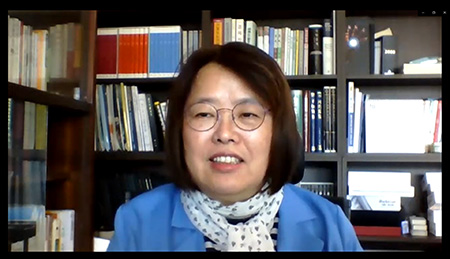
In her online interview, Professor Lee Hyun-sook
emphasizes that Koreans of the past implemented
strong social distancing measures during epidemics.
The oldest Korean document mentioning infectious diseases is The History of the Three Kingdoms (Samguk sagi). It records, “In the fourth year of the reign of King Onjo of the Baekje Kingdom [15 B.C.], it was dry in the spring and summer, a famine occurred, and an epidemic broke out.” The epidemic mentioned here is likely to have been caused by the southward movement of peoples fleeing the expansion of Han China in 108 B.C. Many of the infectious diseases that have been transmitted on the Korean Peninsula remain on the list of communicable diseases managed by the government today. Professor Lee Hyun-sook explains:
“Traditional Korean society saw regular occurrences of smallpox, malaria, dysentery, influenza, typhoid, and cholera, all illnesses that are today included on the list of communicable diseases subject to management by the government. They mostly arrived through China. A large epidemic that took place in early 661 in the Silla Kingdom is an example. There is a record saying that there was an outbreak of smallpox in China in 653. Later, as many as 200,000 soldiers from Tang China entered the Korean Peninsula over the course of Silla’s unification efforts. Given this, it can be reasonably assumed that the epidemic of 661 was smallpox coming in from China. Cholera first arrived in Korea in 1821, killing about one million people over the next 10 years. Originating in India, cholera came to Korea overland through southern China and then across Manchuria. At the time, infectious diseases traveled mainly through military conflicts and trade.”
The History of the Three Kingdoms records 27 outbreaks of infectious disease that took place in the three ancient Korean kingdoms of Goguryeo, Baekje, and Silla. These epidemics all occurred in winter, spring, or summer. It is inferred that cold and dry weather during the wintertime and seasonal famines before the harvest could be brought in were the main causes. While The History of the Three Kingdoms features just one name for infectious disease, the records of the succeeding Goryeo Dynasty, The History of Goryeo (Goryeosa), provides several names for specific infectious diseases such as onyeok and jangyeok. This history only accounts 20 outbreaks of infectious disease, but 17 more are listed in other historical documents. However, it is assumed that more than these 37 recorded epidemics must have occurred over the 475-year history of the Goryeo Dynasty. Information on epidemics during the Joseon era can be found in The Annals of the Joseon Dynasty (Joseon wangjo sillok), which describes diverse cases of epidemics. Over the more than 500 years of this dynasty, over 160 of them included an outbreak of infectious disease. What did traditional Korean society do to prevent and fight against these epidemics?
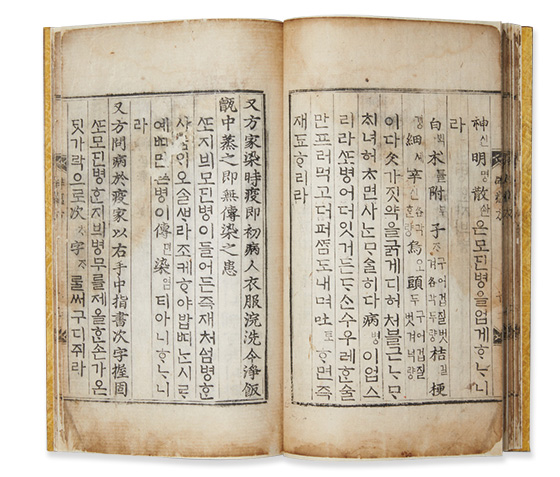
Simple Prescriptions to Prevent Epidemics (Gani byeongonbang)
This text written in Chinese characters is accompanied by a translation in the Korean alphabet
so that it could be widely read and followed. This page states, “If a family member falls ill,
the patient's clothes should be washed thoroughly and steamed in a rice steamer.
Then, the disease will not be transmitted to others.”
(Photo courtesy of the National Hangeul Museum)
“When an infectious disease broke out, the king disseminated medical information and materials to local magistrates in response. The state operated public health facilities for healing patients, and even a designated office for managing infectious disease. Given the devastating impact of epidemics on the food supply, the state also distributed emergency rations during epidemics to prevent both the stricken and healthy people from dying from hunger.”
In addition, the state would pardon all inmates except for those on death row, preventing the prisons from turning into hotbeds for transmission of the disease. There is a record of emergency measures being implemented just one or two days after the king was briefed about a situation. The state’s reaction was nimble, and it must have been a great source of stability in people’s lives during an epidemic.
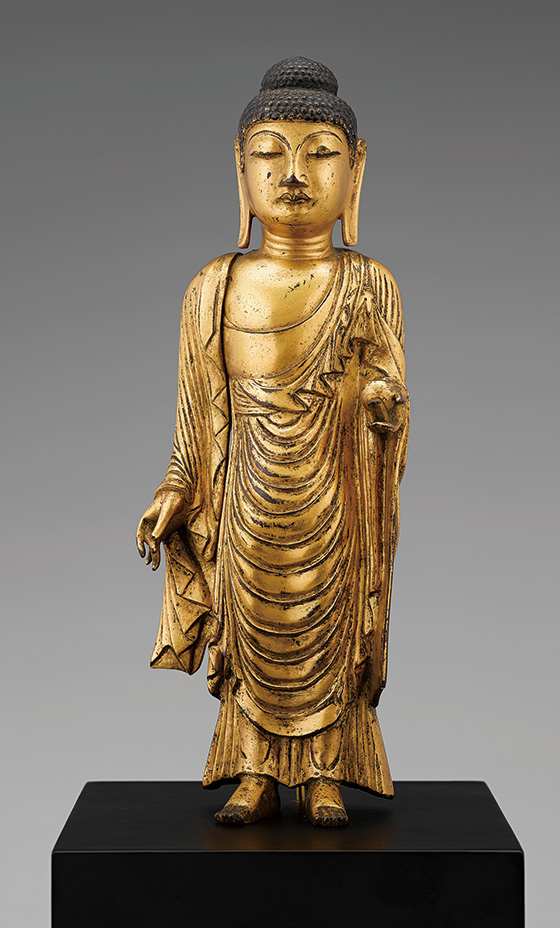
Gilt-bronze Standing Bhaisajyaguru Buddha (Treasure No. 328)
Bhaisajyaguru is the Buddha of medicine and healing.
He is normally expressed as holding a container of medicine.
The practice of crafting statues of the Medicine Buddha
came into vogue in Korea during the Unified Silla period.
(Photo courtesy of the National Museum of Korea)
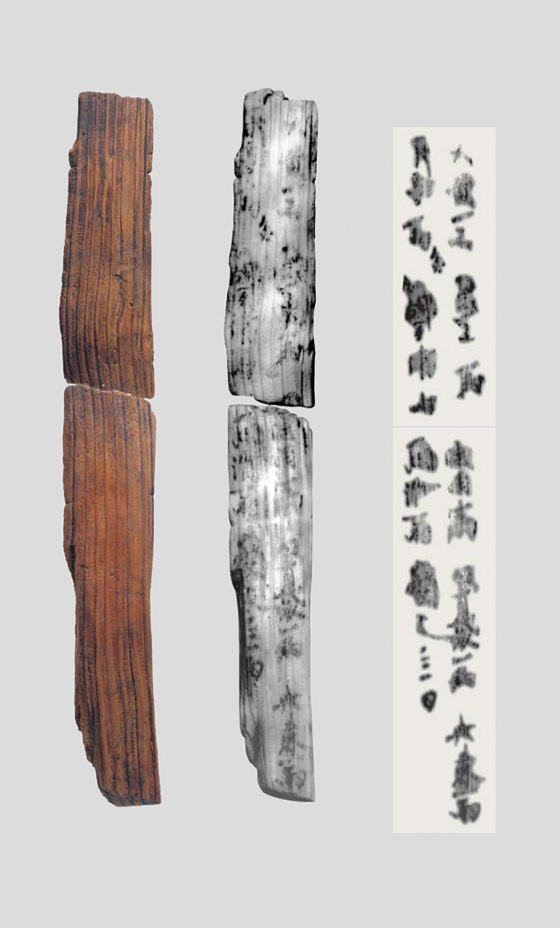
Wooden sticks excavated from Gyeongju, the capital of the Silla Kingdom,
with medical prescriptions written on them
(Collected at the Gyeongju National Museum; photo courtesy of the Gaya National Research Institute of Cultural Heritage)
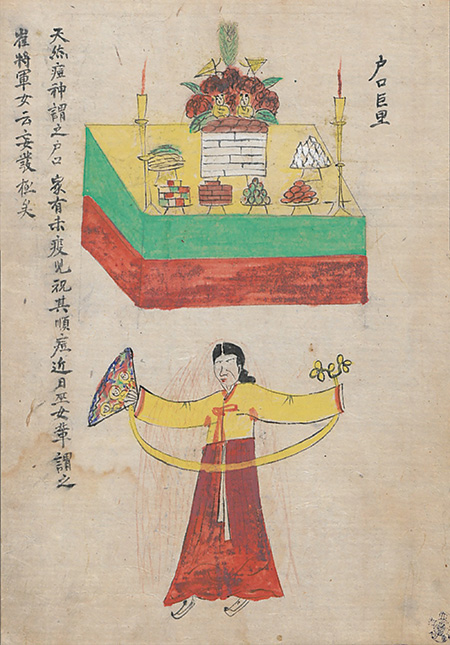
A record on a shamanistic rite to drive away the spirit believed to cause smallpox
(Photo courtesy of the Kyujanggak Institute for Korean Studies)
Social Distancing, a Traditional Method for Controlling Epidemics
“Koreans of the past already knew that prevention is the best policy for epidemics. Whenever an epidemic occurred, instructions on preventing the disease were printed in the Korean alphabet and circulated among the people. To ward off evil spirits [which they considered the major cause of infectious diseases], they customarily did things like taking a specially made pill and affixing branches from a peach tree to their front gates on the first day of the year, eating red bean porridge on the winter solstice, and playing with fireworks on the last day of the last month of the year.”
After the Japanese invasions in the late 16th century, a range of infectious disease outbreaks occurred. In response, the royal physician Heo Jun published two compilations on communicable diseases in 1613—one on onyeok (“febrile disease”) and the other on what is today identified as scarlet fever. He also saved a lot of smallpox patients with a treatment called jeomigo. Despite these systematic efforts, professionals with training in medicine were in short supply and therefore the responsibility for fighting an epidemic fell to individuals. When an epidemic broke out, people would take refuge in a mountain temple or in an unaffected area until the disease subsided. Self-isolation and social distancing were commonly used in traditional Korean society.
“The Chronicles of Japan (Nihon shoki) says in its records on the year 642, ‘When an epidemic occurs in Silla or Baekje, parents do not take care of their children and children do not take care of their sick parents’. Koreans at the time practiced extreme social distancing measures like this because they had learned from experience about the lethal impacts of infectious disease. According to records from the Joseon Dynasty, all planned feasts and ancestral rites were cancelled upon the outbreak of an epidemic, and even funerals were carried out in a highly simplified manner. It is recorded that there was no one out in the streets. Far stronger social distancing measures must have been implemented back then compared to today.”
With no scientific understanding of infectious disease, Koreans in the past believed that epidemics were caused by supernatural forces. They appeased evil spirits with shamanistic rituals, praying that no great harm would be inflicted.
As the scientific study of infectious diseases advanced starting in the late 19th century, communicable disease has seen a dramatic decline worldwide. With the rapid urbanization in many parts of the world and ever-increasing international exchanges, however, a single outbreak can be more dangerous than ever in terms of its speed and the area in which it can spread. This can be seen with COVID-19, which has been transmitted across the world at an alarming rate.
Lee Jacob from Hallym University
Universal Health Coverage in South Korea
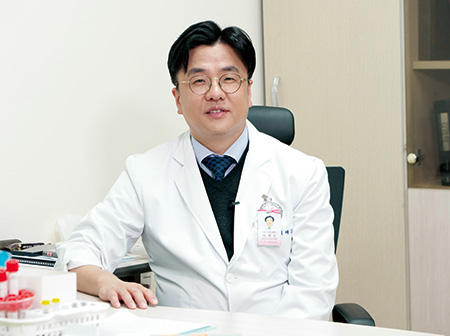
Professor Lee Jacob stresses that what is
underpinning the country’s successful response to COVID-19 is
people and their focus on the good of the community.
(Photo taken by Jung Meen-young)
Professor Lee Jacob comments on traditional Korean culture and its relations with today’s response to COVID-19.
“Koreans really like to meet and share food. It is a longstanding tradition to communicate and form bonds by coming together to eat and drink. This traditional practice unfortunately contributes to the transmission of infectious disease. Despite this longstanding practice, recent opinion polls indicate that the proportion of people abiding by social distancing measures is as high as 90 percent. This would be partly out of the desire to protect their own health. However, a greater motivation can be consideration for others and the desire not to harm them. Koreans are placing traditional habits aside in careful consideration of others.”
From the first COVID-19 case in late January until November 15, South Korea has seen 24,422 patients and 494 deaths. Given the spikes in coronavirus cases in many parts of the world, South Korea has been quite successful in containing the spread of the virus at a relatively low level. Professor Lee Jacob points to national health insurance as a major contributor to the country’s success in its fight against COVID-19.
“The universal healthcare coverage offered by the country’s national health insurance was a great help. People with symptoms can get a test for about 10,000 KRW [approximately 9 USD]. When people test positive, they can receive necessary medical care for free. With universal health coverage in place, people can feel assured that money will not be an issue even if they catch the virus. This sense of security also causes people to go to the hospital without delay when they develop symptoms.”
It goes without saying that the bedrock of the country’s medical system is its doctors, nurses, and other medical professionals who take care of patients day and night. Their dedication is a precious resource for the nation during the COVID-19 pandemic.

The dedication of medical workers has been a tremendous resource
sustaining the nation through the COVID-19 crisis.
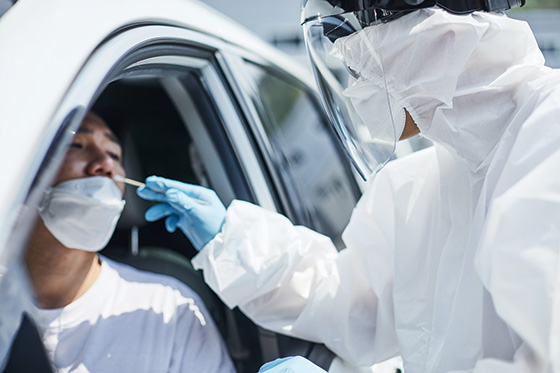
South Korea pioneered drive-through coronavirus testing stations.
Drivers and passengers can undergo the entire testing process
without leaving their cars. The drive-through is celebrated
as an innovative method for rapid mass testing.
Power of Grassroots Collaboration
Facing the current pandemic, the president’s administration has worked nimbly and efficiently in South Korea, earning high confidence from the public. They learned lessons from the outbreak of MERS-CoV (Middle East Respiratory Syndrome Coronavirus) in 2016, when the government failed in its initial response after the occurrence of the first case in South Korea and suffered a rapid nationwide spread. After the MERS-CoV outbreak, the Korean government laid the foundation for a speedy and efficient first-response system. This is the secret of the country’s head start in implementing a testing system for COVID-19.
“With the outbreak of the coronavirus pandemic, all the sectors involved—public, administrative, and private—began to respond quickly. After some conflicts over the division of roles, things have fallen into place and the harmonious system we see today was created. One thing to remember is that the greatest enemy in the response to a pandemic is complacency. The government should continue to think about how to build upon the well-established response system, and the private sector should keep a watchful eye on the government’s policies and be ready to give both constructive advice and strong support as needed.”
Universal health insurance, dedicated medical professionals, and efficient administration are all important elements explaining the country’s success against COVID-19. However, none of these factors would have been fully effective if they weren’t supported by cooperation from the public. Koreans voluntarily followed the social distancing measures set out by the government. They also help each other out: if they catch the virus, people can rely on the social networks that they have formed at the personal and professional level to get through the difficulties.
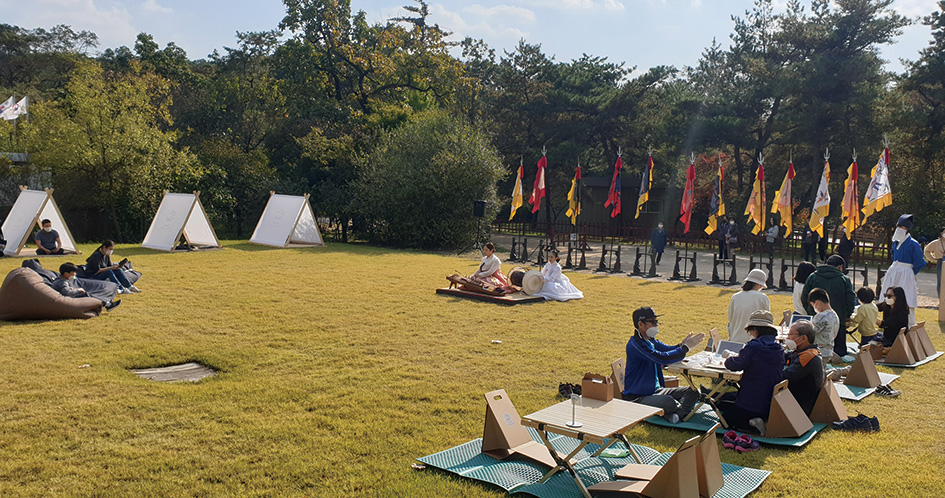
People enjoying a traditional performance while observing social distancing rules (Photo courtesy of the Cultural Heritage Administration)
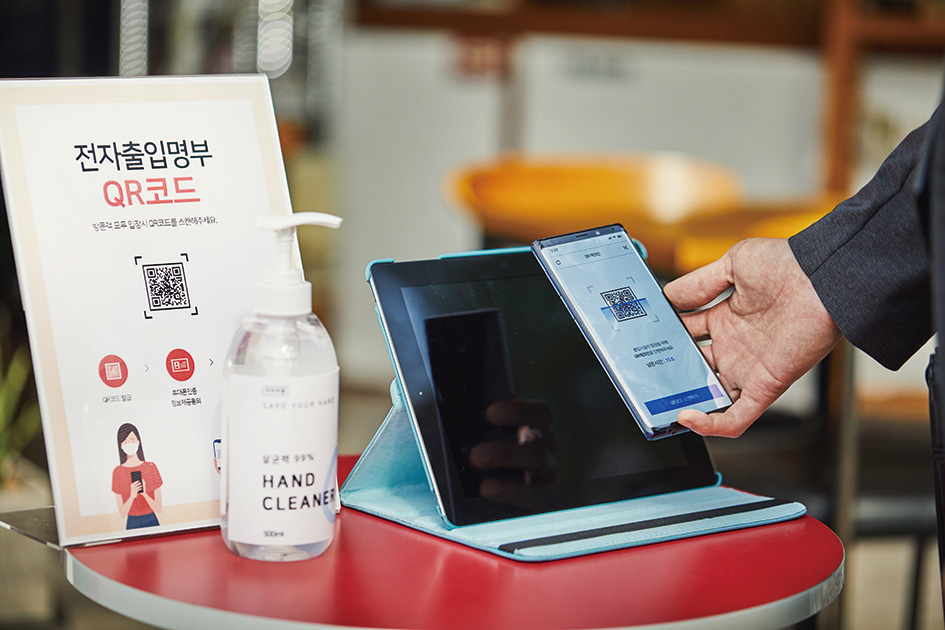
Koreans register their entry into a facility by submitting a QR code generated on their smartphones. The information gathered through this QR code-based system helps quickly trace the contacts of possible coronavirus patients.
“The sense of community and voluntary participation by the public has provided the basic fabric for the country’s successful response to COVID-19. It was through the unified action of the South Korean people that the country first achieved democracy and then overcome the financial crises of the late 1990s. It has been no different with the COVID-19 pandemic. People voluntarily practiced social distancing measures even before they were made mandatory, and fully supported the government’s response policies.”
It is being predicted by many that COVID-19 will be around much longer than first expected. It would be wise to prepare ourselves for effectively dealing with COVID-19 in everyday life, as well as any other viruses that might occur in the future.
“We have learned from the coronavirus pandemic how valuable human contact is. Contactless communication does not yet feel fully natural to Koreans. However, I believe that we will resolve these problems through technological development, and the new ways of communicating will also be good for the environment. I hope that there will soon be a solution that strikes a balance between the need for health security in everyday life and the traditional value of human contact.”
Professor Lee Jacob emphasizes that the recipe for success in responding to COVID-19 or any other infectious disease is addressing weaknesses within society. Those who are quick to identify what makes them vulnerable to infectious disease and respond properly will triumph. Those who do not will suffer. The least people can do is maintain a positive attitude and help each other out before the ultimate triumph is achieved.
Text by Choi Min-young
Photos by the Cultural Heritage Administration; the Gaya National Research Institute of Cultural Heritage; the National Hangeul Museum; the Kyujanggak Institute for Korean Studies; and Jung Meen-young

전염병, 그리고 거리 두기
연세대학교 의학사연구소 이현숙 연구교수
한림대학교 강남성심병원 감염내과 이재갑 교수
지금 우리의 매일은 전염병과의 전투다. 계절을 담은 공기의 달콤함은 추억이 되었다. 전 세계적으로 코로나19의 감염자 수가 경신을 거듭하는 요즘, 비교적 안정적인 수치가 유지되는 한국의 방역 체계에 세계의 이목이 집중되고 있다. 한국의 방역체계에 ‘한국적 요소’가 담겨있지는 않을까? 의학사연구소 이현숙 연구교수와 감염내과 이재갑 교수를 만나 전통사회와 현대사회의 전염병, 그리고 그에 맞서는 한국인의 태도에 대해 들어보았다.
연세대학교 의학사연구소 이현숙 연구교수
전쟁과 교역으로 전염병이 넘나들다
우리 역사에서 전염병이 언급된 가장 오래된 기록은 <삼국사기>이다. ‘백제 온조왕 4년(기원전 15년)에 ‘봄과 여름에 가물어 기근이 생기고 역병이 유행했다’고 적혀있다. 이는 기원전 108년 한(漢)나라의 공격으로 고조선이 멸망하면서 부여에서 고구려, 백제로 이어지는 사람들간의 이동에서 비롯됐을 가능성이 높다. 이현숙 교수는 오늘날의 법정 전염병의 상당수가 과거 전통사회에서 주기적으로 유행했다고 설명했다. “전통사회에서는 두창, 학질, 이질, 인플루엔자, 장티푸스, 콜레라 등 오늘날 법정 전염병의 상당수가 주기적으로 유행하였습니다. 대부분의 전염병은 중국을 통해 유입되었습니다. 661년 초 신라에 대규모 역병이 돌았는데 653년 중국에 두창이 유행했다는 기록과 신라 통일 전쟁 중에 당나라 군대 약 30만 명이 들어온 상황으로 미루어 당시 두창이 함께 전파된 것으로 추측됩니다. 또 1821년 조선에 상륙하여 10년 간 백만 명을 사망에 이르게 한 콜레라는, 인도에서 창궐하여 남중국을 거쳐 만주를 통해 육로로 조선에 전파되었습니다. 이처럼 당시 대부분의 전염병은 전쟁과 교역 등을 통해 전파되었다고 볼 수 있죠.”
<삼국사기>에는 고구려 3회, 백제 6회, 신라 18회의 전염병이 기록되어 있다. 이 중 겨울철 창궐이 14회, 봄·여름이 13회인 것으로 미루어 겨울의 온난화와 기근이 가장 결정적인 원인이 된 것으로 보인다. 이후 475년간 지속된 고려시대에는 구체적 병명인 온역, 장역이 등장한다. 그러나 <고려사>에 등장한 역병 발생 기록은 20여 회, 여타 기록에서의 언급은 37회뿐이지만 더 많은 전염병이 발생했을 것으로 보인다. 조선시대의 <조선왕조실록>에는 다양한 전염병 사례가 담겨있다. 1392년부터 500년 간 전염병이 발생한 기간을 헤아려보면 160여 년에 이른다.이처럼 전염병이 창궐하면 정부에서는 어떤 대책을 세웠을까.
“전염병이 유행하면 임금은 이 병에 대한 정보와 치료책, 그리고 약을 지방 수령에게 보내면서 지방에서도 의학적 대응을 할 수 있도록 지시하였습니다. 고려에는 ‘동서대비원’, 조선에는 ‘활인서’라는 일반인을 위한 치료기관을 운영했고, 임시 전염병동인 ‘구제도감’을 설치하여 전염병 환자를 수용했습니다. 사실 전염병이 유행하면 무엇보다 식량 유통이 제대로 이뤄지지 않아 가난한 백성은 굶어 죽는 일이 허다했어요. 그래서 국가에서 구휼미를 배부하여 아사자를 방지하려고 애썼습니다.”
또한 환경이 열악한 감옥이 전염병의 온상이 되는 것을 막기 위해 사형죄 이외의 죄수는 모두 사면하여 감옥을 비웠다. 이러한 조치들은 임금이 역병 보고를 받은 뒤 하루 이틀 사이에 시행되었으니 매우 민첩한 대응이었으며, 민심 안정에 큰 역할을 했다.
전염병은 미리 예방하는 것이 최선
“당시 사람들도 역병은 예방하는 것이 최선이라는 것을 알고 있었어요. 그래서 전염병을 미리 막는 내용을 담은 책 <벽온방> 계통의 책들이 한글만 알면 사용할 수 있도록 번역하여 전염병이 대유행할 때마다 출간되어 널리 사용되었습니다. 새해 첫 날 벽온단(열병을 물리치기 위하여 미리 먹는 단약의 일종)을 술에 타서 마시거나 대문에 복숭아 가지를 꽂아두는 일, 동짓날 팥죽을 먹거나 섣달 그믐에 폭죽을 터뜨리는 일 등의 세시 풍속들은 모두 역병 귀신을 막기 위해 생겨난 것들입니다.”임진왜란 이후 다양한 전염병이 창궐하자 어의였던 허준(1539~1615)은 세계최초 성홍열 치료서인 <벽역신방>과 온역 예방서인 <신찬벽온방>을 1613년 동시에 출간하고, ‘저미고’라는 약을 써서 두창 앓는 사람을 많이 살리기도 하였으나 당시 의학적인 훈련을 받은 의료인의 수가 절대적으로 적어서 전염병에 대한 의학적 대처는 결국 개인의 몫이었다. 전염병에 감염된 경우, 인적이 드문 산 속 사찰로 들어가거나 전염병 환자가 없는 지역으로 피신하여 전염병 유행이 가라앉을 때까지 머물렀다. 자가 격리 및 사회적 거리 두기가 당시에도 존재했던 것이다.
“642년 <일본서기>에 ‘신라와 백제는 역병이 유행하면 부모가 아이를 돌보지 않고 자식이 병든 부모를 돌보지 않았다’고 비난하는 기록이 남아있습니다. 이처럼 극단적인 사회적 거리 두기가 이루어진 것은 경험상 역병은 전염성이 높고 목숨을 위태롭게 한다는 것을 잘 알기 때문
이었습니다. 조선시대 기록에 따르면, 각종 잔치는 물론이고 제사도 지내지 않고 초상도 아주 간략하게 치렀다고 합니다. 길거리에 다니는 사람이 없었다는 걸로 보아 현재보다 훨씬 심한 거리 두기가 이루어졌던 것으로 보입니다.” 세균이나 미생물에 대한 지식이 전무하던 전통사회에서는 전염병이 유행하는 것을 귀신의 소행으로 여기곤 했다. 귀신을 달래어 더 큰 탈 없이 지나가도록 굿을 하거나 제사를 지냈다. 나랏님도 백성도 할 수 있는 것이라고는 그저 간절한 기도뿐이었던 시절이다.
19세기 후반, 역학, 세균 등에 대한 연구가 시작됐다. 그때부터 패스트, 콜레라, 장티푸스 등의 전염병은 점차 줄어들었다. 하지만 대도시가 등장하고, 국가간 교류와 국외 여행이 활발해지면서 전염병이 발병하면 과거에 비해 그 확장이 대단히 광범위해지며 전파 속도 또한 빨라졌다. 코로나19의 전세계로의 확산이 무섭도록 빨랐던 것도 이러한 까닭이다.
한림대학교 강남성심병원 감염내과 이재갑 교수
걱정 없이 병원으로 향할 수 있는 한국의 의료 체계
이재갑 교수는 특히 한국은 감염병에 취약한 편이라고 했다. 전통사회에서부터 대면문화가 깊게 뿌리내리고 있기 때문이다. “한국은 함께 만나 밥을 먹고, 차와 술을 마시며 소통하는 것을 즐깁니다. 한국의 ‘정’이라고 하죠. 이러한 정서는 사실, 감염병 확산에는 마이너스로 작용합니다. 그럼에도 불구하고 최근 사회적 거리 두기 참여율이 90%에 이른다는 설문 결과가 나왔는데요. 이는 나의 건강을 해치지 않기 위한 예방 측면도 있겠습니다만, 혹여 내가 감염자로서 타인에게 전파시킬지도 모른다는 우려, 그리고 다른 사람에게 피해를 주면 안된다는 심리적 기저가 작동하는 것이라고 생각합니다. 서로를 배려하는 마음으로 전통적인 정서마저도 참고 버텨내는 것이죠.”
한국은 지역사회 감염 차단을 위해 ‘사회적 거리 두기’라는 이름의 캠페인을 시행하고 있다. 사회적 거리 두기는 코로나19 유행의 심각성과 방역 조치 강도에 따라 1-3단계로 구분한다. 1단계는 마스크를 착용하고 생활 방역 속에서 일상·사회경제적 활동을 유지한다. 3단계에 이르면 10인 이상 집합 금지, 필수시설 이외 모든 다중이용시설 운영을 중단하며 원칙적으로 집에 머물러야 한다. 현재 한국은 10월 12일부터 사회적 거리 두기 1단계를 발효 중이다.
한국은 지난 1월 말 첫 감염 사례 발생 후, 11월 15일 현재 24,422명의 누적 확진자가 발생했고, 494명이 사망했다. 몇 차례 대확산의 고비가 있었으나 그때마다 정부와 국민이 합심하여 방역 대책을 꾸리고, 또 수행했다. 세계적인 확산 추이로 보면, 한국은 비교적 확산 범위가 낮은 편에 속한다. 이재갑 교수는 확산을 방지하는 한국만의 이유를 또 하나 꼽았다.
“한국의 전국민의료보험 체계가 상당부분 도움이 됐다고 봅니다. 의심 환자는 진단비 1만 원 선에서 진단 가능하고, 의료보험을 가진 사람이 확진 되었을 경우 전 치료과정을 무료로 지원합니다. 이것이 중요한 것은, 내가 코로나19 환자가 되더라도 진료비 때문에 치료를 받지 못하는 상황이 벌어지지 않는다는 사실이 국민에게 안심을 주고, 또 의심 증세가 있을 때 지체 없이 병원으로 향하는 동력이 됩니다.”
물론 병원 및 각 의료 기관에 상주하고 있는 의료진이 없다면 병원으로 달려간들 아무 소용이 없다. 당장 의료진 처우에 대한 개선이 필요하지만, 그럼에도 불구하고 밤낮없이 현장을 지키고, 환자의 치료를 우선으로 여기는 의료진들의 헌신이야말로 오늘의 이 고통을 이겨내는 가장 위대한 힘일 것이다.
국가의 위기를 극복하는 국민의 공동체 의식
한국의 행정력은 발 빠르고, 국민의 신뢰도 또한 높다. 정부는 2016년 메르스 발병 당시 행정 체계상 초기 방역 실패로 전국 확산을 경험하면서 신종 감염병 발생 시 빠른 진단 체계 구축의 중요성을 깨닫고 행정적 토대를 마련했다. 덕분에 코로나19 상황에서 다른 국가에 비해 한달 이상 먼저 진단을 시작할 수 있었다. “코로나19의 확산이 시작되면서 행정과 공공, 민간 간의 역할분담이 빠르게 이루어졌고, 대립과 협력을 거듭하며 균형을 잡아 오늘에 이르렀습니다. 언제나 전염병 유행 상황의 가장 큰 적은 ‘방심’입니다. 지금까지 잘 가동되어온 정부의 방역 체계를 발판으로 앞으로 더 잘할 부분을 궁리하고, 민간은 국가가 허술한 부분을 보이면 강하게 부추기고 협조하는 역할을 잘 수행해야 합니다.”
국가의 의료 체계와 의료진, 행정력 모두 오늘의 한국 방역을 이루는 큰 근간이지만, 가장 중요한 것은 국민의 자발적 참여다. 사람들은 여전히 외부와의 접촉을 최소화 하고, 정부가 시행하는 방역 체계에 큰 반발 없이 협조한다. 자가 격리가 필요한 경우 본인은 물론, 그가 속한 회사, 학교, 지역 사회 등의 사회적·일상적 관계망은 그가 무사히 그 기간을 이겨낼 수 있도록 협력 체계를 구축하고 지원한다.
“한국의 공동체 의식은 한국 방역의 큰 힘입니다. 한국의 국민은 거리로 달려 나와 정부와 싸우며 민주화를 이뤘고, 자발적 금모으기 운동으로 IMF 경제 위기도 극복했죠. 이번 코로나19 상황으로 위기감이 조성됐을 때에도 정부 차원의 행정 조치 이전에 이미 국민들이 자발적으로 거리 두기를 시행했고, 정부의 방역 협조에 적극 응했습니다. 결국은 국민 참여 의지가 한국 방역의 구심점인 셈입니다.”
앞으로 당분간은 코로나19와 함께 살아가야 한다는 예견들이 나오고 있다. 하지만 이번 사태를 통해 우리는 언제 어디에서 발병할지 모를 전염병에 언제든 맞서 싸울 준비가 필요하다는 것을 깨달았다.
“우리는 코로나19를 통해 한 번 한 번의 만남을 정말 소중히 해야 한다는 깨달음을 얻었습니다. 화상 대화, 온라인 회의 등의 비대면 문화가 아직 부자연스럽긴 하지만, 발전을 통해 많은 부분은 해소될 것이고, 나아가 환경 오염 등에도 긍정적인 영향을 줄 거라 믿습니다. 만남을 중요히 여기는 한국의 정서를 훼손하지 않으면서도 안전하게 살아갈 수 있는 구조가 곧 마련되겠지요.”
이재갑 교수는 전염병을 막기 위해서는 어느 국가든 각자가 가진 약점이 무엇인지 철저히 깨닫고, 그 부분을 끊임없이 개선하여 더 이상 약점이 아닌 형태로 만들어가야 한다고 강조했다. 그 취약한 곳을 잘 어루만지는 국가가 코로나19와의 전투에서 성공할 수 있을 것이라고. 지금 우리가 일상에서 할 수 있는 것은 서로의 약해진 마음을 보듬고 조금 더 버틸 수 있는 힘을 심어주는 것이다. 우리는 이겨낼 수 있다.
Text by 최민영
Photos by 문화재청, 국립가야문화재연구소, 국립한글박물관, 규장각한국학연구원, 정민영