
Interview
Taekkyeon: a Traditional Martial Art from Korea
By Text by Shin Joung-kun, National Intangible Cultural Heritage Taekkyeon, Transmission Education Scholar Photos by Taekkyeon Pres
Gentle but Dynamic
The traditional Korean martial art taekkyeon is characterized by undulating movements of the hands and feet and can easily be mistaken for a form of dance. However, these fluid and rhythmic movements harbor enormous energy and can explode out with great force. Taekkyeon is a Korean combat art that focuses on defending the self and others while valuing consideration for opponents. Skilled taekkyeon practitioners learn how to cause an opponent to withdraw without sustaining physical damage. This art of careful consideration and gentle movements gradually draws in its practitioners with its allure. Distinguished by the vast reserves of strength hidden within its soft and gentle motions, taekkyeon is considered to resemble the character of an ideal Confucian scholar.

Taekkyeon is an unarmed martial art tradition of Korea.

A photo of children practicing takkyeon, taken by a U.S. missionary in the 1890s

A painting of a taekkyeon match (Daekwaedo by Yu Suk) from the late-Joseon period
Transmission across Generations
Presumed to date back to the Three Kingdoms period (57 BCE–676 CE), taekkyeon has played diverse roles in Korean society through history, ranging from elite education, training for warfare, physical and mental development, to entertainment. In the later period of the Joseon Dynasty (1392–1910), taekkyeon took on the form of a competitive sport. Taekkyeon in those days did not function as a strict training discipline for individuals. Taekkyeon matches were held between different villages for the pleasure of the spectators, but also as an opportunity to nurture a sense of belonging and strengthen solidarity. Like many other Korean traditions, this entertaining sport declined under Japanese colonial rule (1910–1945). However, it did not completely disappear and continued to be passed down by a small group of practitioners. After Korea was liberated from colonial rule, this martial art tradition was rekindled by a taekkyeon master named Song Deok-gi, who had learned it from Im Ho. Song dedicated his life to the development of taekkyeon and handed down his knowledge and skills to Sin Han-seung, who made great contributions to registering this traditional martial art on the National Intangible Cultural Heritage list in 1983. It was the first martial art in South Korea to be entered onto the national heritage list. Taekkyeon was placed on the UNESCO Representative List of the Intangible Cultural Heritage of Humanity in 2011. It was the first martial art tradition in the world to earn this UNESCO recognition. Taekkyeon is an important part of the cultural heritage of Korea, and of the world as well. It exalts the value of “soft strength” in its movements. Its characteristic relaxed triangular step strikes a harmony with the swinging of the arms like a bird. Taekkyeon includes both striking and grappling techniques. It engages not only its practitioners but also spectators, pursuing a collective united experience while having fun. Taekkyeon is about persistent effort more than technical excellence.
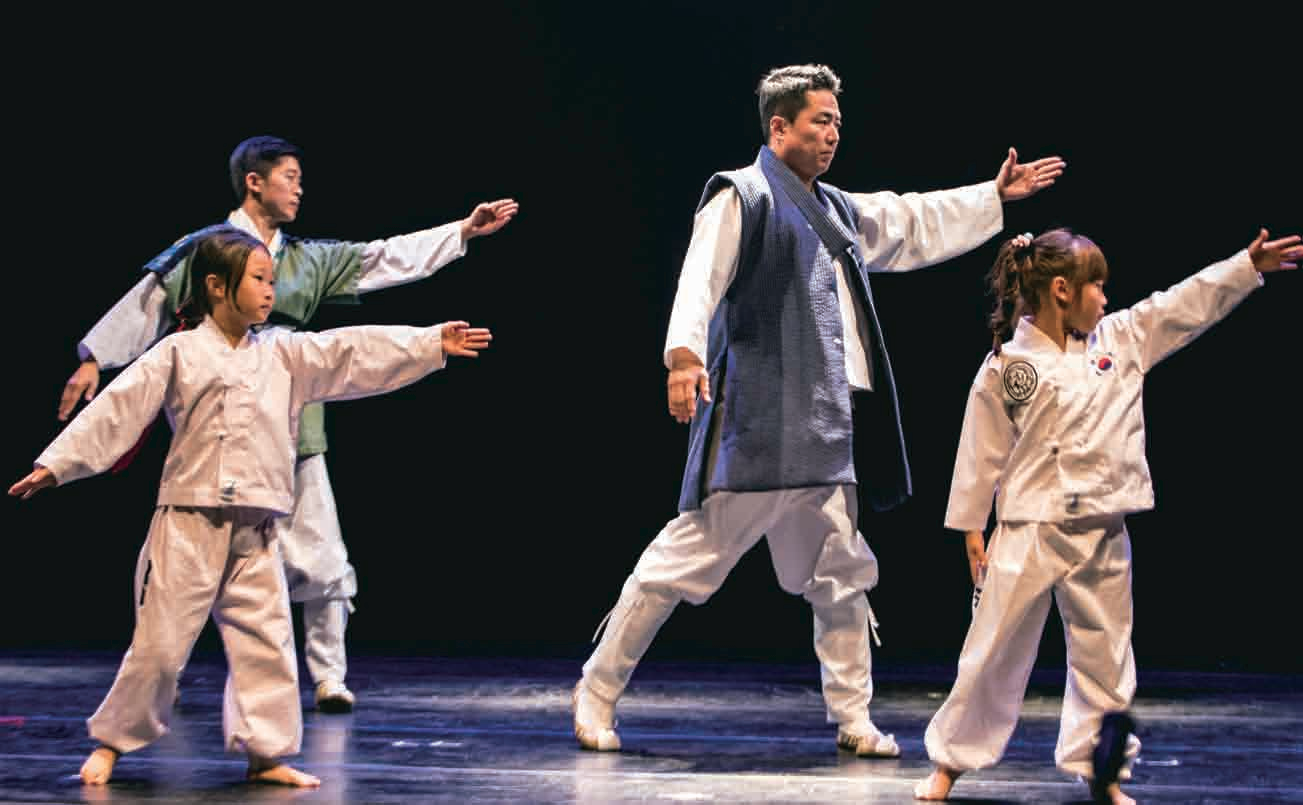
Taekkyeon was the first martial art tradition in the world to earn UNESCO recognition.
Shared Heritage of the North and the South
arms like a bird. Taekkyeon includes both striking and grappling techniques. It engages not only its practitioners but also spectators, pursuing a collective united experience while having fun. Taekkyeon is about persistent effort more than technical excellence. of martial arts underpin the creation of the North Korean version of taekwondo, a Korean martial art now included as part of the Olympic Games. Taekkyeon can offer yet another opportunity to further a spirit of reconciliation between North and South Korea. A step toward peace on the Korean Peninsula could be taken through North-South cooperation in the traditional martial arts taekkyeon and nalparam and their modern variant taekwondo. Taekkyeon possesses considerable virtues for sharing with the world as well. The principle of mutual respect and reciprocity embodied in this traditional Korean art can help promote respect and consideration among different cultures across the globe. Hopefully, the potential of taekkyeon can be fully tapped to contribute to creating and deepening an atmosphere of peace on the Korean Peninsula and beyond.
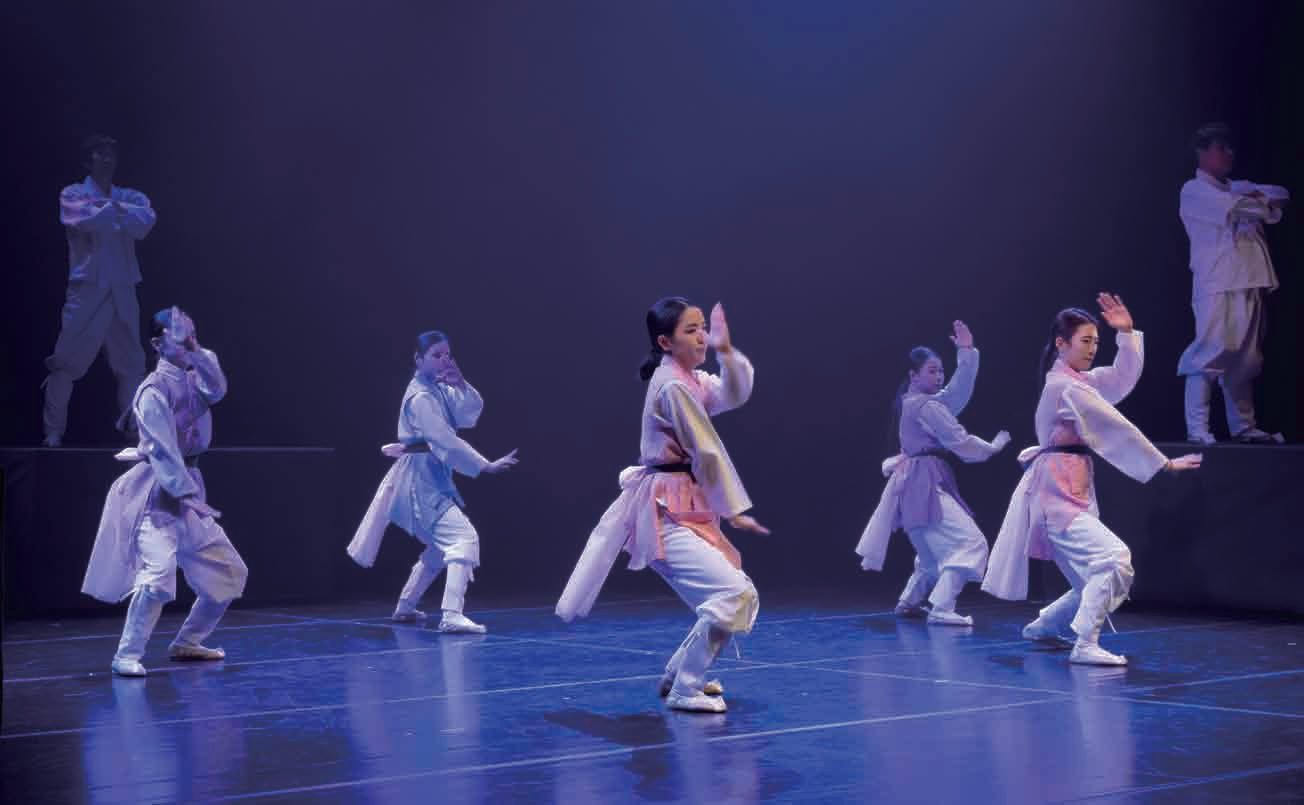
Taekkyeon focuses on defending the self and others while valuing consideration for opponents.