Interview
Lee Mae-bang: A Genius Dancer with a Divine Aptitude
By Ubong Lee Mae-bang Art Company
Lee Mae-bang (nickname Ubong; 1927–2015), by far the dominant figure in the traditional Korean dancing scene, was often praised as a “dancer with heavenly skills.” Dedicated to the preservation and transmission of traditional Korean dance over the course of his entire life, Lee estab–lished a unique dancing style known as the Lee Mae-bang school in the two most representative traditional Korean dances, seungmu (Buddhist monk dance) and salpurichum (exorcism dance).
Eighty Years of Dancing
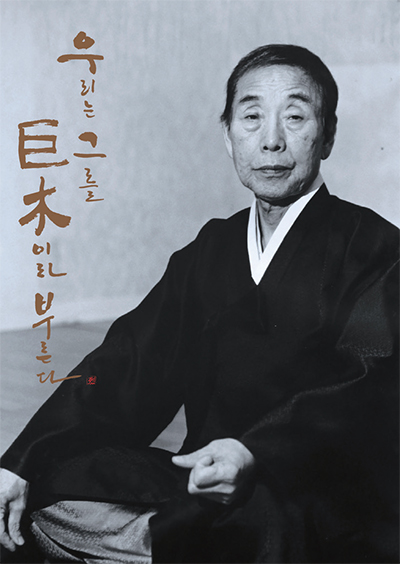
Exorcism dance by Lee Mae-bang
Born in 1927 in Mokpo in the southwestern province of Jeollanam-do, Lee Mae-bang entered the world of traditional dancing at the age of seven. At the time, the head of the Mokpo Gwonbeon, a training center for gisaeng (or entertainers), was living near Lee’s home and noticed the little boy’s extraordinary talent. He convinced him to begin lessons at his center. After training at the Mokpo Gwonbeon, Lee continued to build essential dancing skills through his elementary, middle and high school years by practicing under renowned traditional Korean dancers of the time, including Lee Dae-jo (for Buddhist monk dance), Park Yong-gu (drum playing for Buddhist monk dance), and Lee Chang-jo (sword dance). He also spent five years in China as an elementary school student where he learned sword dance and lantern dance from the legendary Chinese master Mei Lanfang (1894–1961).
Having developed a passion for traditional dance since early childhood, Lee Mae-bang made his public debut at the young age of 15. At the Virtuoso Artists Contest held in 1941 in front of Mokpo Station, Lee took the stage for the first time as a stand-in for the established dancer Park Bong-seon, who had been scheduled to perform the Buddhist monk dance at the contest but failed to make it to the event. Despite his tender age and lack of experience with public performance, the boy genius on the stage immediately mesmerized the audience with his dexterous moves.
Lee’s Dancing Creations
A life-long dancer, Lee Mae-bang not only preserved the existing forms of traditional Korean dance, but also gave birth to various creative innovations. Among them are the long-sword dance, which blends the sword dance he learned from the Chinese dancer Mei Lanfang with the traditional Korean form of sword dance; the hallyang (a man leading a leisurely and tasteful life) dance, which transforms the spontaneous and excited feelings of a lofty scholar into movement; and a Buddhist chant dance (boryeommu) that artistically completes the existing Buddhist ritual dance.
The pinnacle of his creations is a drum dance, which comes in versions using three, five, and seven drums. Drawing on one of his many artistic accomplishments, drum playing, the drum dance is performed at the finish of the Buddhist chant dance.
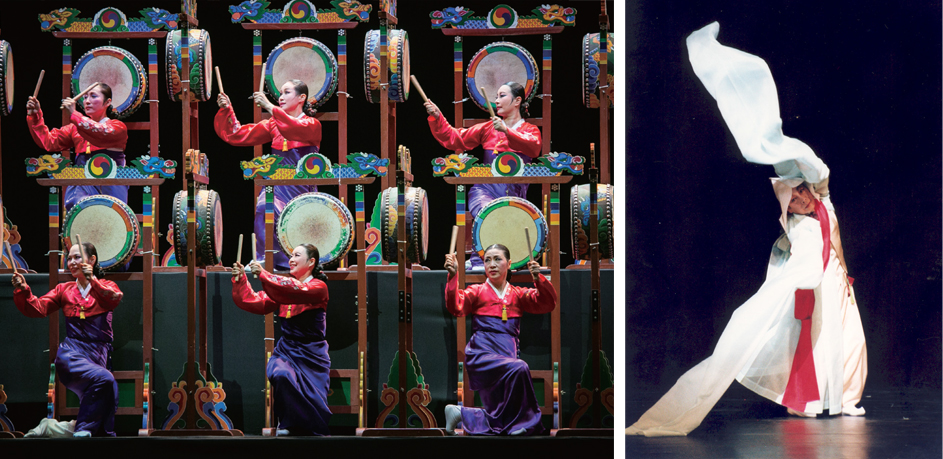
Left_A performance of a drum dance, one of the innovative dance forms created by Lee Mae-bang / Right_Monk dance by Lee Mae-bang
Traditional Korean Dance on the International Stage
Recognized for his passionate efforts toward the preservation of traditional Korean dance, Lee Mae-bang was designated as the Master (or Living Human Treasure) of Buddhist monk dance (seungmu; National Intangible Cultural Heritage No. 27) in 1987 and of exorcism dance (salpurichum; No. 97) in 1990. A definitive folk dance, seungmu traces its roots to Buddhist rituals expressing solemnness and tranquility through subdued movements. Salpurichum originally derived from the improvisational dances performed by shamans as part of a ritual, but has since developed into one of the most famous Korean artistic dances. Characterized by a long white strip of cloth, salpurichum depicts an emotional sublimation from sorrow into joy through beautiful dancing movements.
At the frontline of the preservation of traditional dance, Lee also played a critical role in bringing Korean dance to international attention. Through global performances by the Lee Mae-bang Art Company, Lee put on events in diverse countries such as Japan, the United States, and France. At the Avignon Festival held in France in 1998, Lee performed a Buddhist dance that was highly acclaimed in the local media: one French daily newspaper commented that within his dance the energy accumulated in the body was discharged through the hands at the drums, and the sounds from the drums were converted into music resonating through the night. In the same year, Lee received an art prize from the French government for this performance.
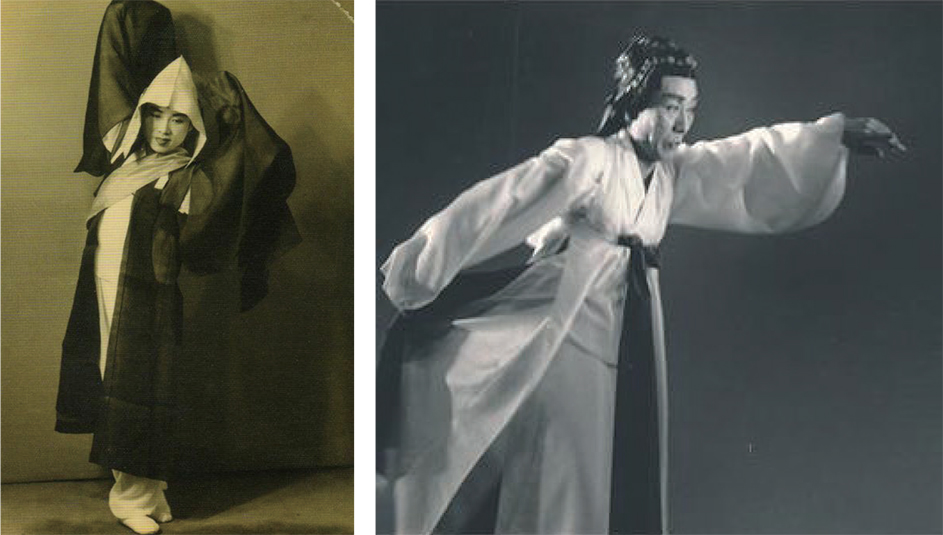
Left_Lee Mae-bang in his youth (1940s) / Right_Lee Mae-bang performing an exorcism dance in the 1970s
Lee Mae-bang, an Artist to the Core
Lee Mae-bang was also known for crafting his own stage costumes. At one corner of the living room in his house was a more than 130 year-old sewing machine that he had received from his mother. With this worn-down machine he would sew his own stage attire and also costume his disciples. He hand-crafted stage clothing out of the belief that not only the dance itself, but also the costumes are part of a performance. Despite a long period suffering from cancer toward the end of his life, Lee never ceased his ardent endeavors for preserving traditional dance, creating new forms, and nurturing future generations of dancers. He maintained his fiery passion for traditional dance right up until his last breath at the age of 89 in 2015. Dedicated to traditional dance over his entire life and never once regretting his choices, Lee Mae-bang remains one of the greatest artists of Korea.
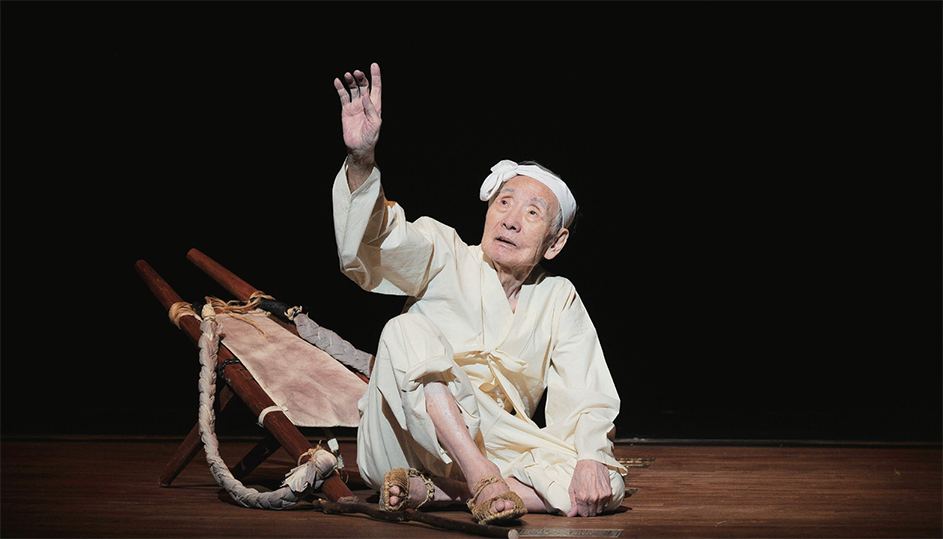
Lee Mae-bang in his last performance in 2014
Text & photos by the Ubong Lee Mae-bang Art Company