Interview
Hanok: Houses that Breathe for a Thousand Years
By Choi Min-young
Traditional Korean houses, or hanok, are built with full respect to the weather patterns and topographic features of the country. Wood-floored halls are laid at a set distance above the ground in preparation for the hot, humid summer, and an under-floor heating system was devised to address the freezing cold of winter. Drawing materials from nature as their major components, traditional Korean housing provides an architectural artifact that is minimally intrusive on nature. This issue of Korean Heritage presents the words of Master Choi Ki-young, a designated transmitter of traditional Korean architecture, and the artist Suh Do-ho, who applies novel interpretations to Korean architecture to create international art.
A Living House
“When those who live in an apartment composed of artificial and chemical ingredients sleep for a night in a hanok with its natural aromas of wood, earth, and stone, how do they feel? I’ve never intended to leave them with a certain impression; I just know that they will wake up to a level of freshness they’ve never experienced.”
These words were spoken by Master Choi Ki-young who recently supervised the construction of Gyeongwonjae Ambassador, a hanok-style hotel in Incheon. This clear answer was a response to a somewhat irreverent question about what he hopes foreign visitors will feel after a night at the hotel. According to him, just one night in a hanok-style accommodation would be enough to understand the difference.
“A hanok is a house that breathes. It is made of wood and earth; that is all. A traditional Korean house is a part of living nature. Humans who reside in such a living house also become part of nature.”
Wooden architecture is not unique to Korea, but the construction methods for traditional Korean houses are distinctive. Timbers are erected to form columns, wooden architectural members are joined without glue or nails, and wood is adopted as the finish. Spaces between the wooden members are packed with earth, and the doors and windows are sealed with paper. The sturdy structural wooden components provide a sense of security and coziness, and the air inside the house is freshened by being filtered through the walls of wood.
“I believe that a hanok is the best place for prenatal care. For a baby it is all about getting good air, hearing good sounds, and just spending the period of the pregnancy in a comfortable and pleasant ambience. Some people deliberately take time out to go to a suitable place and rest. If you live in a traditional Korean house, however, you don’t need to invest extra time and energy seeking mental security and a restful atmosphere—these things just come naturally.”
Master Choi Revives Historical Architecture
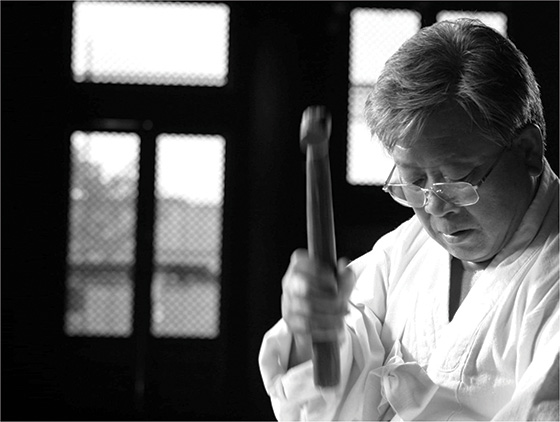
Master Choi Ki-young is dedicated to offering a new lease on life to traditional Korea architecture.
Choi Ki-young was designated a “Living Human Treasure” in 2000 for the practice of traditional wooden architecture, National Intangible Cultural Heritage No. 74. He is currently managing the Transmission Center for Traditional Wooden Architecture and teaching as an emeritus professor at Chonbuk National University. Korea’s wooden architectural practice was inscribed on the UNESCO Representative List of the Intangible Cultural Heritage of Humanity in 2010. Starting at the young age of sixteen, carpentry work has developed into a lifelong mission for Master Choi as he has shouldered the responsibility of sustaining traditional architectural skills and bequeathing them to future generations.
Master Choi has played a leading role in the restoration or repair of hundreds of Buddhist structures, such as the Paradise Hall at Bongjeongsa Temple in Andong and the Preaching Hall at Buseoksa Temple in Yeongju. He has also led a number of significant restoration projects, such as the restoration of a historical Silla Dynasty bridge named Woljeonggyo and the reconstruction of Baekje-era buildings for the Baekje Cultural Land historical attraction. The latter was a particularly grand project that spanned nine years starting in 2006 and involved the recreation of as many as 187 historical structures, including palace buildings, Buddhist temples, wooden pagodas, and more.
“I also never lived in the Baekje era. It is not that I already knew about the times and could just do the job. It was an arduous process of detailed analysis and historical crosschecking. I learned a lot during the process by comparing architecture from Joseon with that of the previous dynasty of Goryeo and further with that of Baekje. There is no such thing as an end to learning.”
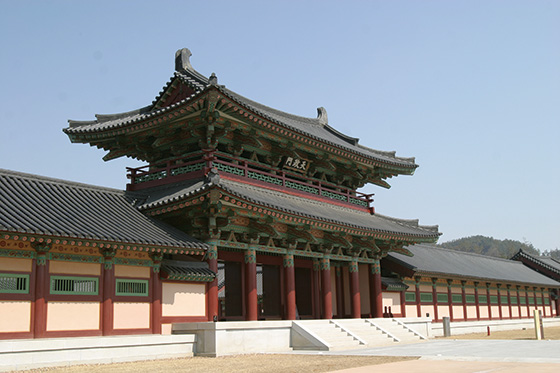
Based on the remaining underground relics of the ancient Korean kingdom of Baekje,
Baekje Cultural Land opened in 2010 in Buyeo, Chungcheongnam-do Province.
Choi Ki-young restored the Cheonjeongmun Gates for the queen’s quarters at Sabigung.
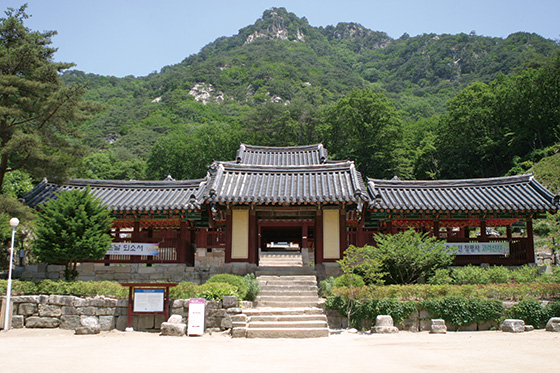
The Wheel-turning Gate of Cheongpyeongsa in Chuncheon dating
from the Goryeo Dynasty was repaired by Choi Ki-young in 2002.
Master Choi still graphically remembers his path as a traditional Korean builder from a novice carpenter all the way to the nationally designated transmitter for traditional wooden architecture. Overflowing with passion, his youth was dedicated to the fervent study of palace architecture. Perseverance and persistence dominated his middle age. Today, his driving force is supplied by a strong sense of his mission to actualize in the present time historic buildings from a thousand years ago.
“Today’s buildings have an average lifespan of about twenty years, but hanok can survive five centuries with no problem. That’s how natural elements normally are. A thousand-year-old pine tree can live another thousand years when a good carpenter forms it into a hanok.”
Traditional architecture, a comprehensive reflection of the history, culture, and thinking of a nation, can be transformed into artistic inspiration evoking a strong sense of nostalgia. Suh Do-ho, an installation artist active on the international stage, is placing traditional Korean housing at the center of his artistic world.
A Secure Space in Times of Confusion
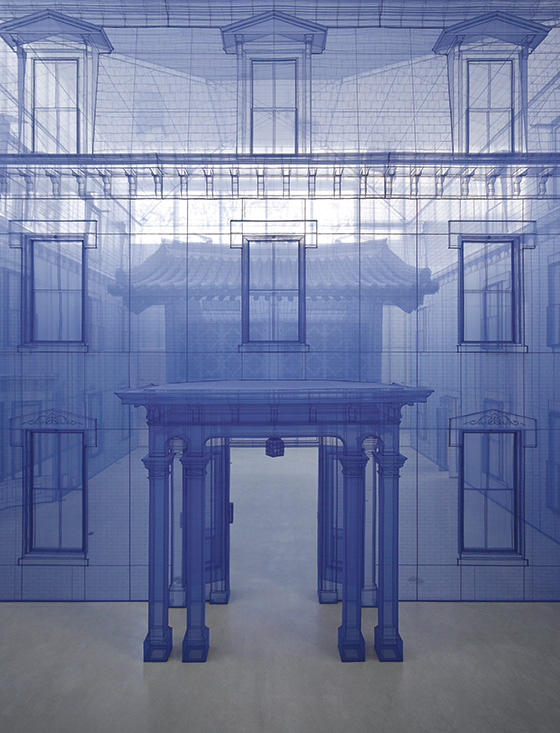
Home within Home within Home within Home within Home
ⓒ Do Ho Suh.
Courtesy of the Artist, Lehmann Maupin New York, Hong Kong and Seoul
and Victoria Miro London / Venice.
Suh Do-ho creates installation art in both domestic and international arenas. With a genuine understanding of the precious qualities of hanok, he cherishes a strong hope that these qualities will remain fully appreciated and respected in contemporary society.
“When I studied in the United States, my first house there was a colonial-style building from the eighteenth century. Living there, I started wondering about what a real home means to me, and this line of thinking inspired my work Home within Home within Home within Home within Home. The innermost home is the hanok-style house built by my parents where I spent my childhood. The house was a microcosm to me, something which closely protected me at an important stage of life when recognition of the self and identity formation takes place. My childhood house remains one of the major motifs in my artworks.”
His installation Home within Home within Home within Home within Home is rendered in the form of a traditional Korean house covered in layers of Western-style houses. The artwork is derived from his childlike imagination and a desperate longing to find a sense of safety and comfort in a house, even in a country far from his birthplace. This work embraces the cultural distinctions between Korea and the United States and speaks to the value of harmonious coexistence.
Other works of his also address cultural collisions—a hanok forcefully wedged between Western buildings and another that has crashed into a Western structure. Suh relates that all of his installations are based on his experience of establishing his own world within a wholly new environment. His unconventional sense of art seems to have emerged from his childhood in the 1970s when all Korea embarked on an earnest project of Westernization and modernization. He spent his childhood transgressing between two different periods inside and outside his house, which seems to have endowed him with the fundamental basis for his artistic work of today.
Suh’s Artistic World Buttressed by Hanok
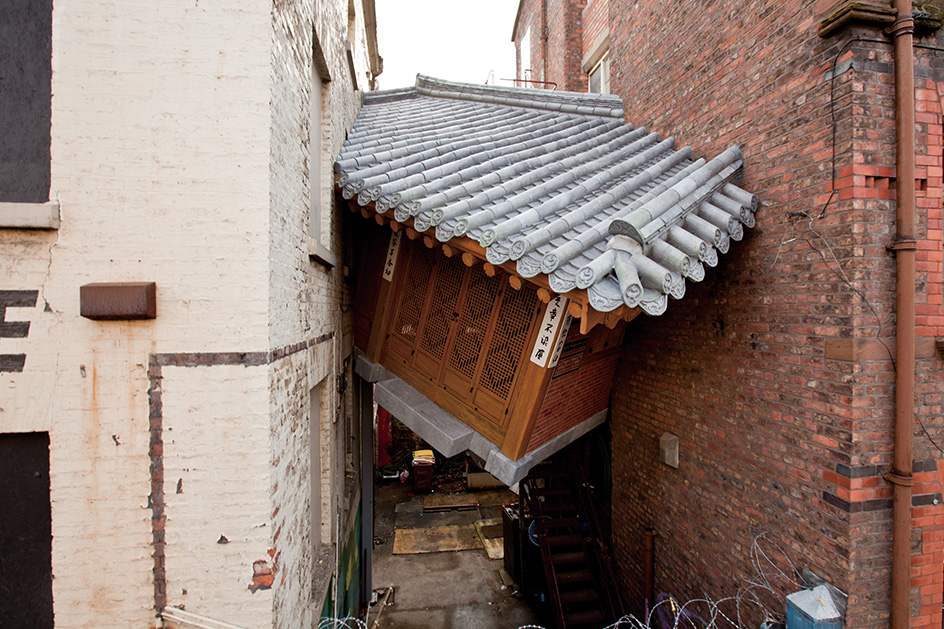
Bridging Home at the Liverpool Biennial in 2010 ⓒ Do Ho Suh (photo by Andrew Boyle)
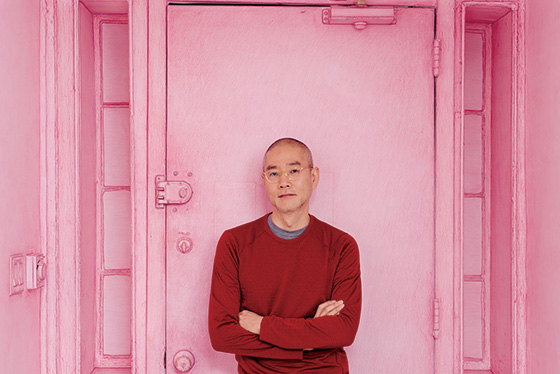
Artist Suh Do-ho narrates his experiences and personal stories through installation artworks
featuring hanok.
His unique artistic narratives centered on hanok are owed in large part to his parents, who had extensive knowledge of and a deep affection for traditional architecture. They did not hesitate to spend time or effort to secure quality wood, and they invested a full five years in the construction of his childhood home. The entire process was scrutinized by the young Suh Do-ho. He gradually learned about hanok through personal experience and developed a first-hand understanding rather than one gained by book or indirect learning.
“My parents obtained good timbers from the calligrapher Son Jae-hyeong and asked Master Bae Hui-han to build our house. Over the process of its construction, I could closely observe Master Bae as he did the designing, joining of wooden members, and shaping of the house. Connected only through a variety of jointing methods and not dependent on nails, the architectural components of a hanok contract and expand with the seasonal changes and live within the system of nature.”
All the tasks involved—piling up bricks, refining stone blocks, and plastering the walls—were carried out by artisans specializing in traditional architecture. They formed the last generation of artisans born in the Joseon era. Suh still vividly remembers the gray-haired masters earnestly constructing the house. Modeled after Yeongyeongdang Hall in the rear garden of Changdeokgung Palace, the house was constructed in the traditional manner from the inside out in terms of internal viewpoints and the rendering of walls and ceilings.
“My childhood house had doors and windows in place of dividing walls. When fully opened, the boundary between the inside and outside was erased. The unhindered entrance of external light, sounds, and smells into the house is, I think, the most distinctive characteristic of hanok. The warm sunshine that penetrated the plastered paper of a window to reach inside the house has taken a deep root in my subconscious world.”
All of his experiences and stories demonstrate that hanok were not simply artificially selected as an artistic motif, but that they stand at the heart of the impetus that has driven him to venture out into new artistic realms.
“Hanok form an important place in the Korean identity, but it is not easy to encounter them in everyday life. They remain more as an image in our consciousness. However, I am glad that hanok seem to gradually be re-entering people’s lives these days. I hope that we can preserve the beauty of traditional Korean houses in everyday life by finding ways to maintain the old while at the same time introducing modern elements.”
Text by Choi Min-young
Photos by Choi Ki-young and Suh Do-ho

스스로 천 년을 사는 집, 한옥
한옥은 한국 고유의 형식으로 지은 집이다. 우리 기후와 지형적 특성이 잘 반영된 것이 특징으로, 덥고 습한 여름을 위해 마루는 지면에서 떨어져 있고, 추운 겨울을 위해 방 바닥에 돌을 깔고 불을 지폈다. 나무와 돌, 흙을 주 재료로 한 한옥은 자연의 순리를 크게 거스르지 않고 가장 현명하게 타협한 건축양식이 아닐까. 수천 년간 이어진 전통 건축 양식을 전승하는 최기영과 예술적 재해석을 통해 한국인의 가치관과 정서를 세계에 알리는 서도호를 만났다.
사람을 품고 고른 숨을 쉬는 집, 한옥
“철골이나 합판, 화학약품 등으로 지은 집에 사는 사람이 나무 냄새, 흙 냄새, 돌 냄새 나는 집에서 한숨 자고 일어나면 기분이 어떨까요. 무엇인가 느꼈으면 좋겠다, 라고 생각한 것은 없어요. 다만 그들이 지금껏 느껴보지 못한 상쾌한 아침을 맞이할 것임은 알아요.”
최근 인천 송도에 새로 지은 호텔 ‘경원재’를 총괄한 최기영 대목장에게 ‘외국인들이 이 호텔에 묵으며 한옥의 어떤 매력을 느꼈으면 좋겠느냐’는 우문에 대한 현답이었다. 하룻밤 자보면 알 거라는 그 말에 모든 답이 들어있었다.
“한옥은 숨을 쉬는 집입니다. 한옥을 이루는 소재는 나무와 흙이 전부예요. 스스로 호흡하는 자연의 일부이죠. 이렇게 살아있는 집에 사람이 살고 있으니, 사람 또한 자연이 됩니다.”
물론 서양에도 목조 건축물이 있지만, 한옥의 건축 방식과는 차이가 있다. 나무로 기둥을 세우고, 나무에 나무를 끼워 잇고, 나무로 마감한다. 틈은 흙으로 메우고, 창은 종이로 덮었다. 굵고 튼튼한 나무가 공간적 안정감과 아늑함을 제공하고, 나무가 가진 자연 정화 기능은 외부의 나쁜 공기를 걸러 청정한 산소로 바꾸어 집안을 채워준다.
“저는 한옥을 ‘태교에 최적인 공간’이라고 말합니다. 태교란, 아이를 잉태한 부모가 뱃속 아이를 위해 좋은 공기를 마시고, 좋은 소리를 들으며 편안하고 즐거운 열 달을 지내는 것이지요. 그래서 일부러 휴식을 취하려 조용한 곳을 찾아가기도 하고, 좋은 음악을 챙겨 듣기도 합니다. 하지만 한옥이라면 굳이 애쓰지 않아도 좋은 기운과 정서적 안정을 찾을 수 있지요.”
최기영, 복원을 통해 시대를 배우다
최기영 대목장이 국가무형문화재 제74호로 지정된 것은 2000년의 일이다. 2008년부터 국가무형문화재 대목장 전수교육관 관장을 맡고 있으며 2010년 유네스코 인류무형문화유산으로 등재됐다. 2016년부터는 전북대학교 석좌교수로 후학 양성에도 힘쓰고 있다. 16살에 시작한 목수 일이 이제 한 나라의 전통을 계승하고 후대에 전승하는 사명으로 발전했다.
최기영 대목장은 안동 봉정사 극락전, 영주 부석사 설법전 등 수 백 채에 달하는 사찰을 되살리거나 새로 지었고, 경주의 월정교, 부여의 백제문화단지 등을 복원했다. 특히 백제문화단지는 2006년부터 9년 동안 백제 시대 왕궁과 사찰, 목탑 등 187동의 전통 건축물을 짓는 대형 프로젝트였다.
“백제시대에 살아본 적도 없는 내가 알면 뭐 얼마나 알겠어요. 모든 걸 알아서 복원 작업을 하는 게 아닙니다. 하나하나 분석하고 대조해가며 저 역시 배우는 거예요. 조선의 건축 양식과 고려의 건축 양식을 비교하고, 또 백제의 건축 양식을 비교하면서 깨달아 가는 거죠. 배움은 끝이 없어요.”
최기영 대목장은 처음 목수 일을 배울 때부터 국가무형문화재로 발돋움하기까지의 긴 여정을 모두 잊지 않고 있다. 창경궁 담장을 넘어 밤을 새우며 궁궐 건축의 구조를 공부하던 젊은 날의 패기와 끊임없이 긋고 지우고 다시 그리기를 반복하던 중년의 고집, 그리고 살아본 적 없는 천 년 전의 건축물을 다시 지어 올리는 오늘날의 사명감까지. 기록으로 남아있는 오래된 시대를 오늘에 되살리는 사람, 최기영 대목장. 그의 꿈은 황룡사 9층 목탑 복원이다.
“요즘 짓는 건물은 평균 수명이 20년입니다. 한옥은 500년이 지나도 거뜬히 살아있어요. 자연의 소재라는 것이 그래요. 천 년을 사는 소나무가 목수를 잘 만나면 집이 되어 또 천 년을 삽니다. 그게 한옥입니다.”
한 나라의 역사와 전통, 정서와 생활방식까지 고스란히 품고 있는 건축물은 때로 그곳으로부터 멀어졌을 때 뜨거운 그리움을 동반하는 지극히 개인적인 공간이 되기도 한다. 세계를 무대로 활동하는 아티스트 서도호의 작품 세계의 중심에는 집, 한옥이 있다.
혼란 속에서 나를 지키는 소우주, 한옥
아티스트 서도호는 설치미술가이다. 주로 공간을 소재로 하는 작품을 선보인다. 그는 누구보다 전통 한옥의 가치를 제대로 알고, 지금의 시대에 고스란히 전해지길 바라는 사람이다.
“미국에 유학하며 제가 살았던 첫 번째 집은 18세기에 지어진 미국식 주택이었어요. 그 안에 앉아서 ‘나에게 진정한 집은 무엇일까’를 고민하다가 떠오른 작품이 <집 속의 집 속의 집 속의 집 속의 집(Home within Home within Home within Home within Home)>이에요. 가장 안 쪽에 있는 한옥은 부모님이 직접 지으시고, 제가 자란 집입니다. 자아와 정체성이 형성되는 시기에 저를 보호해준 소우주와 같은 공간입니다. 제 작업에 반복적으로 등장하는 중요한 소재이기도 하죠.”
서양식 건물이 한옥을 품고 있는 작품 <집 속의 집 속의 집 속의 집 속의 집>은 급작스럽게 변한 환경 속에서도 집이라는 공간에서만큼은 안락함과 안정감을 갖길 바라는 그의 절실함과 동화적 발상이 바탕이 되었다. 한국과 미국 문화의 차이점을 관찰하는 동시에 공존과 상생을 생각하며 구축한 하나의 세계이다.
반면 서양식 건물 사이에 한옥이 불시착하거나 공중에서 날아든 한옥이 서양식 건축물에 충돌하는 등 이질성을 표현하는 작품들도 있다. 그는 낯선 공간에서 자신의 세계를 구축해야 했던 처지를 다룬 자전적 이야기라고 했다. 어쩌면 서구화 되어가는 1970년대에 전통 기법으로 지어진 전통 한옥에서 매일 시대를 넘나드는 기분을 느꼈을 그에게 이 ‘엉뚱함’은 그의 성장에 동반된 자연스러운 발상일지도 모를 일이다.
서도호, 한옥의 영감이 그를 견고하게 하다
서도호가 한옥을 중심으로 하는 다양한 서사를 펼칠 수 있는 것은 한국전통문화에 깊은 애정과 해박한 지식을 가진 부모님의 영향이 컸다. 부모님은 한옥 축조를 위해 좋은 나무를 구하러 어디든 갔고, 5년이라는 시간을 들여 집을 지었다. 그 모든 과정에 어린 서도호를 동행했다. 그는 글보다 눈으로, 지식보다 이해로서 한옥을 차곡차곡 체화한 것이다.
“부모님은 서예가이자 한옥 애호가인 故 손재형 선생을 찾아 귀한 나무를 구했고, 창덕궁의 건물을 지은 故 배희한 대목장에게 도편수를 부탁하셨어요. 집을 짓는 내내 저는 가까이서 배희한 선생님이 설계하고, 나무들을 잇고, 일으켜 세우는 모든 과정을 지켜볼 수 있었습니다. 못을 전혀 사용하지 않고 결구로만 짜맞춰진 한옥은 사계절 변화에 따라 호흡하고, 수축과 팽창을 반복하면서 자연과 함께 살아갑니다.”
벽돌을 쌓는 일도, 석재를 다듬는 일도, 도배하는 일도 모두 장인이 맡았다. 그들은 조선시대를 살았던 마지막 장인들이었다. 그는 백발이 성성하던 그 장인들의 모습이 여전히 선명히 기억난다고 했다. 창덕궁 후원의 연경당을 본 따 만든 그 집은 내부 역시 선비의 공간처럼 구성되었다. 좌식문화에 걸맞게 그 시선을 고려하여 디자인 되어 있다. 흰색 벽과 옥색 천장까지 모두 전통 방식이다.
“제가 자란 한옥은 벽을 대신해 여러 종류의 창호들로 이루어져 있습니다. 문과 창문을 열면 안과 밖의 경계가 모호해지죠. 외부의 빛과 소리, 냄새 등 자연의 요소들이 투과되고, 호흡하는 공간이야말로 한옥의 가장 큰 특성이라고 생각합니다. 창호를 투과해 들어오는 아름답고 따사로운 빛의 경험은 저의 무의식 안에 깊이 자리하고 있습니다.”
이 모든 경험과 과정은 한옥이 그저 한국을 상징하기 위해 소재로 그에게 채택된 것이 아니라 전통과 예술과 감정이 융합된 강력한 덩어리로 그를 움직이게 했는지도 모른다.
“한옥은 한국인의 정체성을 상징하는 커다란 존재이지만, 현실에서는 한옥은 그리 흔한 집은 아닙니다. 막연한 이미지로 남아있죠. 그래도 최근 한옥이 다시 사람들의 삶으로 돌아오는 것 같아 반갑습니다. 전통이 손상되지 않으면서 현대적 요소가 가미된 황금비율 찾는 일이 선행되어 한옥의 아름다움이 이어지길 바랍니다.”
글 최민영
사진 최기영, 서도호