Interview
Soban, a Traditional Dining Table for the Future
By Choi Min-young
Interview with Master Kim Chun-sik and the artist Ryu Jong-dae
A soban is a portable table sized to fit a single person. Something like a cross between a table and a tray, a soban was a must in every household during the Joseon era (1392–1910). The rigorous separation of men from women and old from young in the deeply Confucian society of the time demanded dining individually at a personal table. The traditional custom of sitting on the floor while meals were delivered from the kitchen to individual rooms required portable tables that could easily be carried by one person. Table manners and living conditions may have changed since then, but soban have maintained their place in everyday Korean life. A discussion of soban by Master Kim Chun-sik and the artist Ryu Jong-dae is presented here.
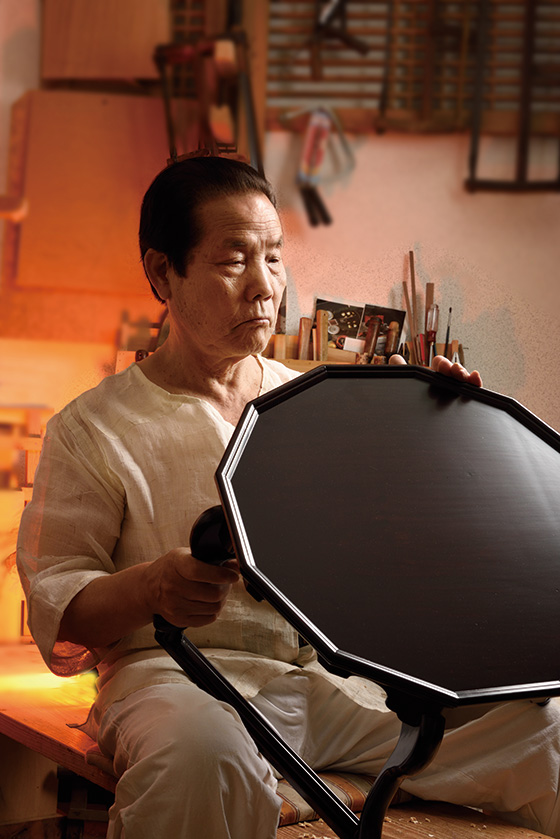
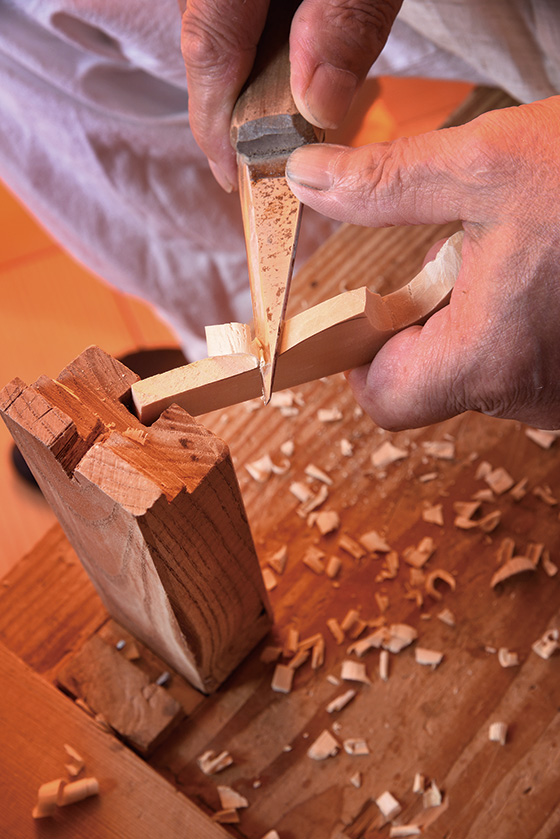
Master Kim Chun-sik has restored the Naju soban tradition after years of dedication.
Photo by Seo Heun-kang
Soban as an Underpinning of Traditional Culture
Among the surviving regional soban-making traditions are three distinctive styles, respectively based in Naju in Jeollanam-do Province, Tongyeong in Gyeongsangnam-do Province, and Haeju in Hwanghae-do Province (in North Korea). While soban tray tables from Tongyeong and Haeju are distinguished by splendid mother-of-pearl decoration and flamboyant carvings, versions from Naju are defined by their simplicity according to Master Kim.
“Naju tray tables are unadorned. The wood grain showing through the lacquer coating creates a natural feel. They appear simple and plain, but are both delicate and sturdy in structure. Tray tables made from ginkgo wood are traditionally considered the best since they are lightweight and easy to carry but less vulnerable to warping. With their minimalist decoration and carving, Naju soban are easy to clean, which is a key quality for an everyday object.”
Less decoration does not mean they are easy to make. Crafting a Naju soban involves a long and intricate process. First, the tabletop is joined to a separately fashioned rim. Making independent edges and attaching them to the tabletop rather than carving out a hollow to leave a rim is a unique feature of Naju tray tables, which cannot be completed without such masterful joining. Next, a decorative apron is crafted as a connector between the tabletop and legs. Legs can come in various widths and lengths depending on the overall size of the intended soban. The four legs are tightly fastened to the apron and linked in pairs by a horizontal foot at the base. After this, the four legs are connected in the middle by a box stretcher. The wooden frame is finally coated with lacquer to complete a classic Naju soban.
“The most complicated step of all is the crafting of the tabletop. Since each corner of the rectangular tabletop is cut away, it actually has eight sides. Cutting the corners, making groves for joining the edges, and the final jointing process are all decided based on my experience and, really, my gut instinct. There is no rulebook for this, and it cannot be easily copied.”
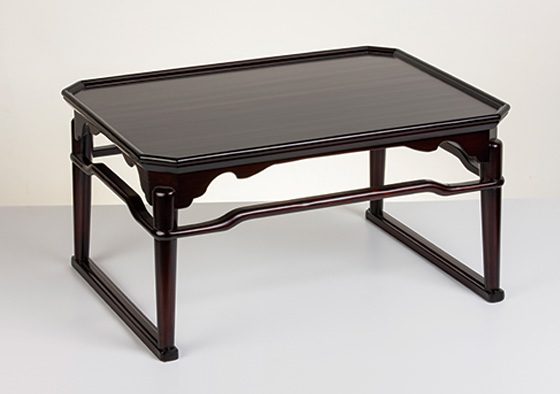
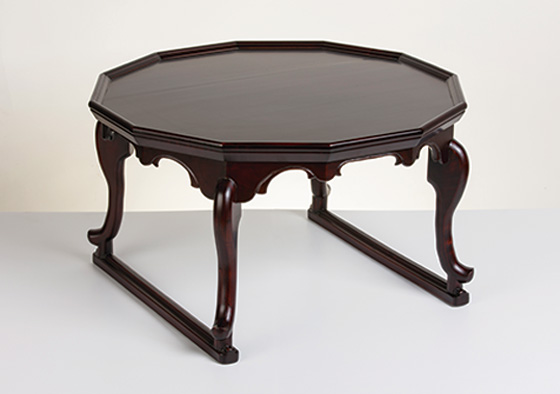
Unlike other local soban traditions, the rim of a Naju table is separately crafted and joined to the tabletop. This process requires mastery of the craft.
Photo by Seo Heun-kang
Tray tables were an essential part of the floor-sitting lifestyle traditional to Korean society. People ate food, drank wine, sipped tea, read books, and held conversations over soban tray tables while seated on the floor. The soban is an important cultural object that underpinned traditional Korean culture.
“A tray table was also a space where home education could take place. A grandfather and grandson would share a dining table, and the grandfather would naturally transmit his code of ethics and morality over meals. For example, the younger person was not supposed to start eating before the grandfather, and could not touch any shared dish before the grandfather had tasted it. It was not all one-sided, though. The grandfather would always start with the dish his grandson liked the most so that he could enjoy it freely. It was a show of unwavering love toward the grandson even while teaching him.”
In the strict hierarchical society of Joseon, all were equal in their use of soban tray tables. Royalty, aristocrats, and commoners alike ate their meals at a soban, and even beggars were provided food on a soban. The soban was a device to maintain at least a minimum level of dignify during meals and allowed an expression of human respect regardless of social status.
Kim Chun-sik, a Man of Unwavering Perseverance
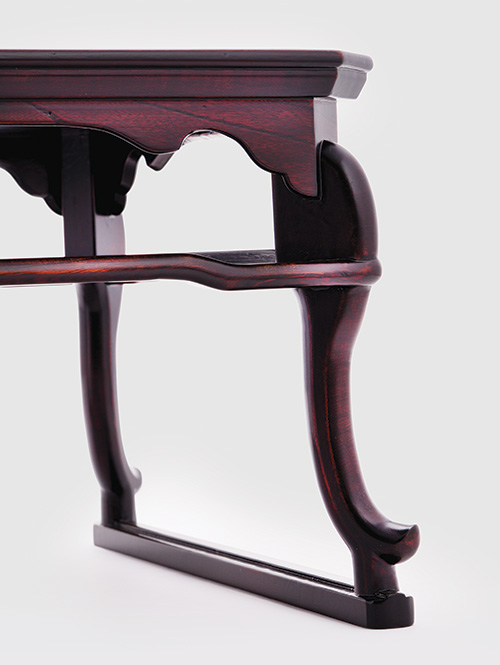
Soban, or “small tables,” from Naju are characterized by an aesthetic of simplicity.
Photo by Seo Heun-kang
Master Kim Chun-sik is the driving force behind the revival of the Naju soban tradition. While mending old dining tables for a living, Kim became expert in the sculptural details of Naju tray tables. He spared no effort in seeking out and meeting reclusive soban artisans in order to restore the authentic form of Naju soban.
“I worked repairing dining tables for 20 years. I really wanted to craft a good Naju soban, but there were few records for reference. I couldn’t just peek into other houses to find traditional tray tables either. I was left with no other option. I started working in repair and just waited for traditional Naju soban to come to me. Many of them actually did. I learned a lot as I was mending those tray tables, and I also honed my skills under the guidance of master soban makers. Finally, in 1977, I held an exhibition of tray tables I had crafted with traditional Naju forms and methods. It sparked a great deal of interest among the media and academia. I believe it was perseverance that led to this achievement.”
Kim Chun-sik was recognized as a master of soban making at the local level in 1986 by the government of Jeollanam-do Province and at the national level in 2014. He has devoted his life to restoring the Naju soban tradition and intends to spend the rest of his day dedicated to further exploring this local tradition. He is fully committed to following this tradition to the end.
“Traditional Korean culture is incomplete without appropriate etiquette. Soban are a part of this. It is my calling to keep studying the Naju soban tradition and pass it down to future generations.”
Modern lifestyles in Korea don’t revolve around the floor as they once did, and household item and furniture have shifted their form to accommodate these transformations. However, the soban stubbornly maintains both its form and function. Furthermore, it has been adopted in modern art. One of the modern artists working with soban is Ryu Jong-dae. His Digital Soban series beautifully combines state-of-the art technology with traditional soban, providing an additional artistic alternative for the efforts to preserve tradition in our rapidly-changing modern society.
Digital Soban, a New Future for Traditional Tray Tables
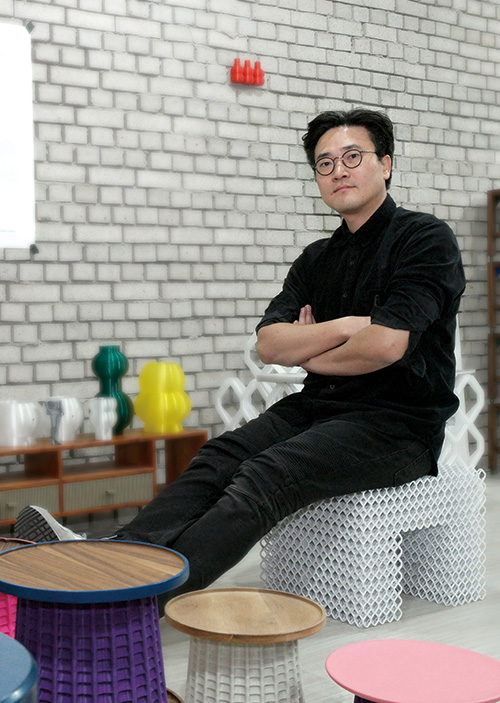
The artist Ryu Jong-dae suggests combining modern technology with
traditional craft to preserve traditional Korean culture.
Photo by Jung Meen-young
he artist Ryu Jong-dae creates “art furniture.” He is trying to bring modern art deeper into people’s lives so that they can feel more familiar with the seemingly abstract concepts of modern art. Digital Soban are the definitive showcase for his artistic world. Digital Soban artworks are traditional tray tables built using 3D printing, provoking a simultaneous sense of familiarity and curiosity in the minds of viewers.
“I first got my inspiration from rows of overlapping tiles on the roof of a building at Gyeongbokgung Palace. I thought it would be interesting to build the leg section of a soban using a layered roof tile motif. I made the leg portions of tray tables with a 3D printer and joined them with an oil- or lacquer-coated wooden tabletop.”
3D printing is a technology for creating three-dimensional objects in layers. It uses thermosetting materials like plastic. The technology is used in industry to produce prototypes or delicate parts for a ship or airplane. Ryu became aware of the artistic potential of the new technology while using it for designing yachts, and he soon found a way to link 3D printing with traditional crafts.
“When you have a design in mind, you have to sketch it out on paper and then convert it into a digital model. Next, you code it in a language that the computer can recognize. This process is critical, but tricky. Since each 3D printer has a different algorithm, experience and knowhow become very important at this stage.”
None of this is easy. The slightest error in measurements or numbers at an early stage can disrupt the whole process, and all the steps have to be repeated with more exact calculations. A great deal of time and energy are required for 3D printing. What drives Ryu to keep repeating this exhausting process is his sense of commitment as an artist. He strongly believes in the role of artists in taking untested roads and suggesting new culture and technologies to the public.
“The materials of choice for me in 3D printing are environmentally friendly options that can naturally decompose, like poly lactic acid from corn starch. I am trying to introduce a new culture and new technology to the public so I think it would undermine my message if I used conventional plastic. Poly lactic acid produces different colors and textures depending on the combination of paints and the temperature of the printing machine. A traditional feel can be added to the surface by coating the object with lacquer.”
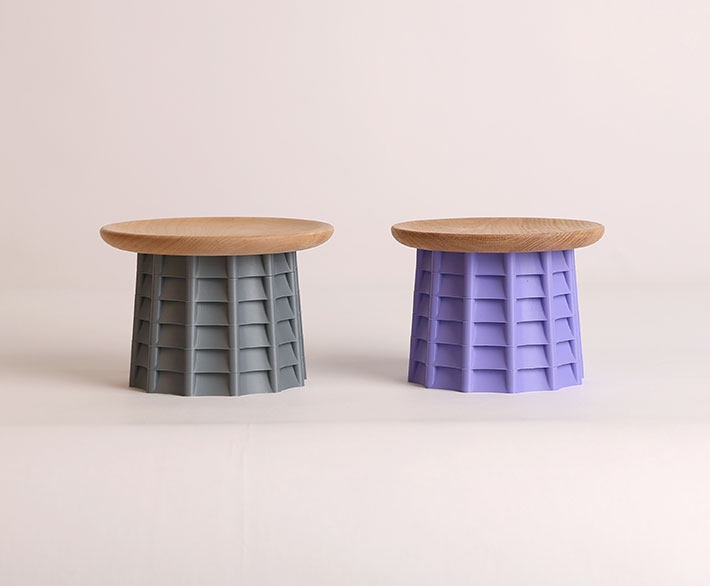
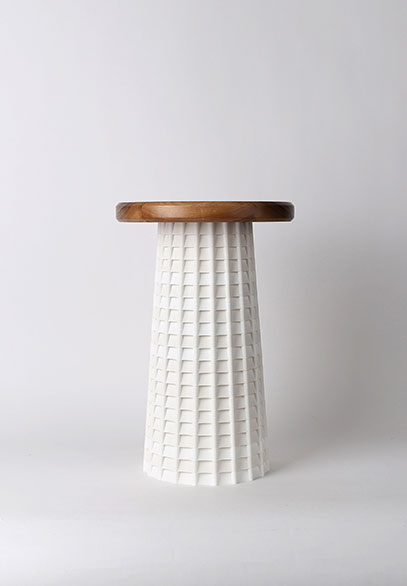
Digital Soban artworks are produced with a 3D printer using environmentally friendly materials.
Ryu Jong-dae at the Forefront of Digital Heritage Transmission
Why did Ryu choose soban as an artistic motif among the many kinds of traditional crafts? A few years ago, he started to think deeply about the long-standing presence of soban tray tables in everyday life while he was involved in setting up an exhibition on wooden crafts from the Korean Empire period (1897–1910).
“It [the Korean Empire] was a transitional period. Traditional Korean society was starting to adopt Western products and ideas. Clothes, kitchenware, and household goods underwent a gradual transformation process, but furniture such as beds, sofas, and dining tables were replaced overnight. Among the Western furniture remained one traditional Korean element, however: soban. The soban mingled well aesthetically with Western furniture, and it continued to play a role in everyday life as an object over which people ate, read, and talked.”
At an individual exhibition held in 2018, the artist Ryu Jong-dae displayed the process of a Digital Soban being created on a 3D printer. Visitors could experience the encounter between 3D printing and traditional craft first-hand. The title of this exhibition was Digital Heritage.
“Our heritage is composed of a material legacy from the past. I also think our social relationships, like those with parents, grandparents, and neighbors, are part of our heritage. The relationship between 3D printing and traditional craft that we are creating today is no different. I want to suggest a novel relationship between a new technology and an everyday object and prove that the product of this new encounter can play an actual role in people’s lives today.”
Tools have played a crucial role in sustaining and developing society throughout human history. Ryu thinks that one of the primary tools for contemporary society is 3D printing, and his job is to apply this tool to traditional craft and transmit the traditions of the past to the future. He hopes that just as soban have connected the past with the present, his Digital Soban will bridge the present and the future.
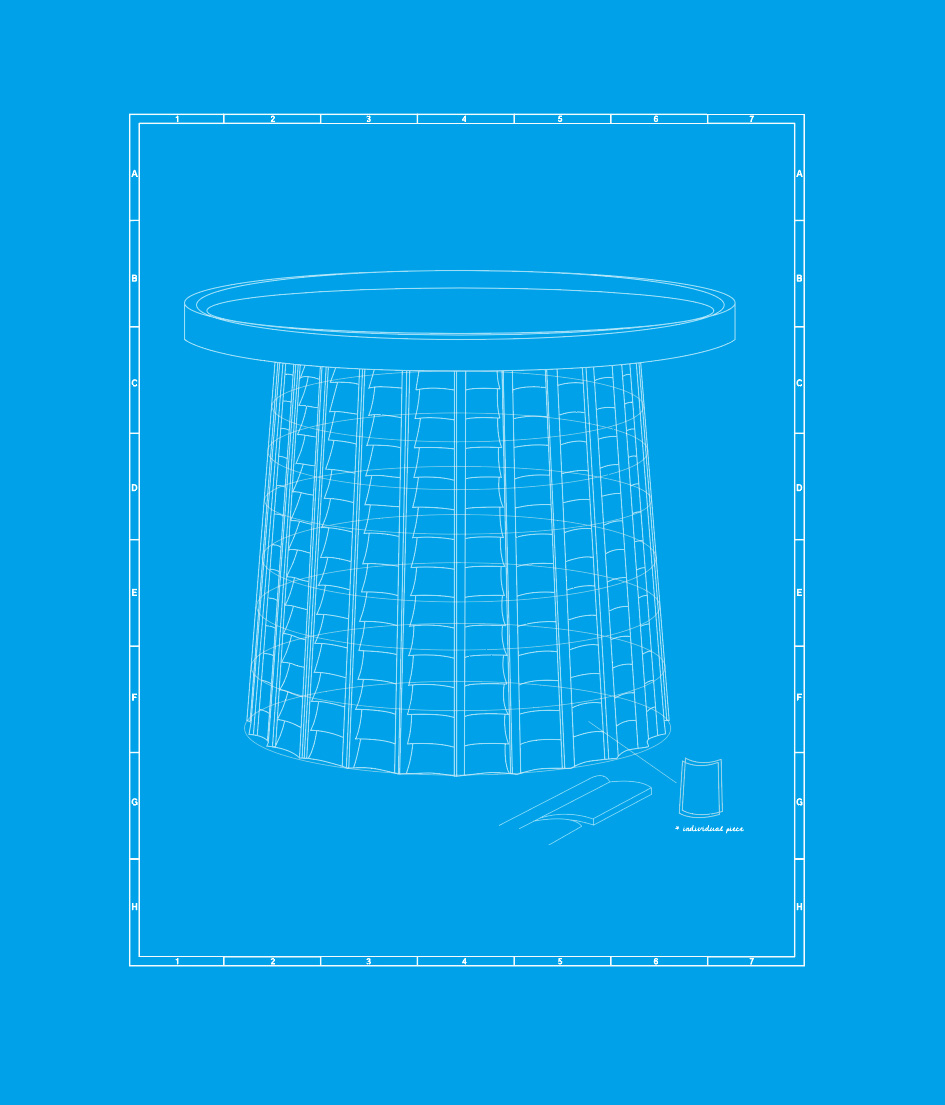
Digital Soban artworks are produced with a 3D printer using environmentally friendly materials. Precision is critical to the production of Digital Soban. One small error means the entire process must be repeated. It takes about one month to complete a single Digital Soban.
Graphic design by Lee Chung-jae
Text by Choi Min-young, Editor
Photos by Seo Heun-kang, Ryu Jong-dae and Jung Meen-young

소반, 문화가 시작되는 무형의 공간
국가무형문화재 김춘식, 아티스트 류종대
소반은 식기를 받치는 작은 규모의 상을 일컫는다. 한 사람이 먹기 좋은 정도의 밥과 반찬을 올리거나 차나 술을 마실 때에 간단한 다과를 올릴 정도의 크기이다. 조선 시대의 유교 이념에 따라 겸상보다는 독상을 주로 사용했고, 좌식생활에서 부엌에서 방으로 옮기려면 두 손에 들기 좋은 소반이 제격이라 어느 집이든 기본적으로 소반을 가지고 있었다. 급작스런 주거 형태의 변화에도 꿋꿋이 살아 남아 태연하게 전통을 유지케 하는 소반. 전통 소반을 전승하는 김춘식과 새로운 기술과 전통 공예를 결합하여 새로운 세상을 제안하는 류종대를 만났다.
소반, 사람들의 무릎께에서 문화를 지탱하다
오늘날 전해지는 전통 소반은 전라도 나주의 나주반, 경상도 통영의 통영반, 황해도 해주의 해주반이 대표적이다. 각 지역의 특성 또한 매우 뚜렷하다. 해주반은 조각이 화려하고, 통영반은 나전이 결합되어 수려하다. 나주반은 어떨까. 김춘식 선생은 나주반의 특징이자 매력으로 ‘단아함’을 꼽았다.
“나주반은 장식 없이 간결하고 단조롭습니다. 나무의 결이 들여다보이는 옻칠을 하기 때문에 자연스럽고, 색 또한 아름답습니다. 하지만 내부 구조는 매우 정교하고 튼튼하죠. 예로부터 나주반 중 최고는 은행나무로 만든 행자반이라고 했습니다. 들기에 가볍고, 뒤틀림이 적으니 관리도 편하고, 물행주로 슥슥 닦으면 그만이니 소반이 제 역할을 하는 데에는 그 이상이 없죠.”
장식이 덜하다고 만들기에 수월한 것도 아니다. 모든 제작 과정에는 저마다의 기술이 필요하다. 나주반의 상판은 변죽이라 불리는 테두리로 감싸여 있는데, 이것은 나주반에만 있는 특징으로, 상판과 변죽을 연결하는 과정은 무척 까다롭고 숙련된 기술을 요한다. 이어 상판과 다리 사이를 고정하는 운각을 만들고, 상의 크기에 따라 다리의 굵기와 길이를 정한다. 만들어진 네 개의 다리는 상판의 운각에 단단히 고정한 뒤 두 개의 다리를 각각 연결하는 족대를 붙인다. 이어서 다리 중간에 네 개의 다리를 서로 연결하는 가락지를 끼워 넣으면 소반의 형태는 완성된다. 여기에 옻칠을 거듭하여 마무리한다.
“이 중 가장 공을 들이는 부분은 상판을 만드는 일입니다. 장방형이라 해도 사실은 팔각입니다. 네 귀퉁이를 직각으로 두지 않고 작은 이음새를 넣어 한 번씩 더 꺾기 때문이지요. 이 작업에는 특별한 법칙이 없습니다. 오로지 만드는 사람의 직감이 해내는 것입니다. 쉽게 흉내 낼 수 없는 기술이죠.”
소반은 우리의 좌식생활과 그 궤를 함께 한다. 밥을 먹고 차를 마시는 일, 책을 읽거나 이야기를 나누는 일 등이 모두 바닥에서 이루어졌다. 소반은 늘 사람들의 무릎께에 머물며 문화와 역사를 지탱해왔다.
“‘밥상머리 교육’이라는 말이 있습니다. 아이들이 숟가락으로 제 밥을 먹을 수 있을 즈음 시작되는 가정교육이자 인성교육입니다. 아이가 있는 집안에서는 식사 때에 할아버지와 손주가 겸상을 합니다. 그 자리에서 할아버지는 사람이 갖추어야 할 예절과 도리를 가르칩니다. 할아버지가 숟가락을 들 때까지 손주는 기다려야 하고 할아버지 젓가락이 닿지 않은 반찬에 먼저 손을 대서도 안되죠. 할아버지는 그런 예절을 가르치면서도 기다릴 손주가 안쓰러워 손주가 좋아할 반찬들을 먼저 먹습니다. 가르침 속에서도 사랑을 숨길 수 없는 것이지요.”
우리네 삶이 그러했다. 임금도, 양반도, 서민도 모두 소반에 밥을 먹었고, 지나가는 걸인이 밥을 빌러 와도 꼭 소반에 밥을 차려주었다. 밥을 먹을 때에는 그릇을 손에 들지 않고 바른 자세로 품격 있게 먹어야 한다는 예법을 지키기 위해 적당한 높이의 소반은 반드시 필요했다. 그러니까 소반은 모든 예법이 어우러지는 장(場)이자 인격 존중의 상징이다.
김춘식, 미련한 고집불통이 사라지는 역사를 붙들다
김춘식 선생은 사라진 나주반을 되살린 장본인이다. 먹고 살기 위해 시작한 헌 상 고치는 일을 하는 동안 선생은 나주반의 구조와 제작법을 익혔고 숨어있는 장인을 찾아 다니며 나주반 원형을 복원하기 위해 애썼다.
“헌 상 수리를 20년 했어요. 나주반을 잘 만들고 싶은데 남아있는 기록은 없고, 그걸 찾겠다고 아무 집이고 들어갈 수는 없는 노릇이잖습니까. 그래서 고장난 상을 고치면서 나주반이 찾아오길 기다렸지요. 그 덕에 좋은 나주반을 많이 만나 연구했고, 장인들을 찾아 다니면서 기술을 익혔어요. 그리고 드디어 1977년에 나주반 재현 전시를 열었습니다. 죽고 없어졌다는 나주반을 다시 살려냈다 하니 학계며 언론의 관심이 대단했지요. 내 불통 같은 고집이 해낸 일입니다.”
김춘식 선생은 1986년 전라남도 무형문화재로, 2014년 국가무형문화재로 지정되었다. 자신의 인생을 걸고 이 길을 만들어 왔다. 한 마을에 미련한 사람이 한 명 있어야 그 마을의 문화가 이어진다고 했다. 그는 자신이 바로 그 미련한 사람이라고 했다. 김춘식 선생은 여전히 세상 밖으로 나오지 못한 나주반들을 끊임없이 발굴하며 살아가려고 한다. 오랜 세월에 못 이겨 틀어지고 망가진 그 나주반들이 올바른 상으로써 역할 할 수 있도록 고치고 보듬어주고 싶다.
“차 한 잔을 마셔도 예법을 알아야 하고, 소반이 어떻게 쓰이는지 알아야 합니다. 우리 전통 문화는 예절과 함께하기 때문입니다. 이것을 내일에도 잘 전하기 위해 끝없이 연구하고 그침 없이 나주반을 만들 것입니다.”
지금 한국의 거주 형태는 좌식과 입식이 절묘하게 결합된 모습이다. 좌식생활의 중심에 있던 기물들이 오늘날의 형태에 최적화 된 모습으로 탈바꿈하고 있지만 소반만큼은 변함없이 원래의 모습으로 제 역할을 하고 있다. 소반은 곧잘 젊은 예술가들의 작품에서도 등장한다. 그것은 때로 오브제로, 때로는 우리의 정체성으로 다루어진다. 그러나 류종대 작가의 Digital Soban은 결이 조금 다르다. 과거에 없던 새로운 기술과 전통 공예를 결합하는 그의 작품 속 D-Soban은 빠르게 다가오는 미래 현실 속에서 우리의 전통을 이어 나갈 새로운 방식을 제시한다.
3D 프린팅으로 태어나는 미래형 소반
류종대 작가는 목공예를 기반으로 아트퍼니처 작업을 한다. 현대미술을 어렵게 여기는 사람들에게 ‘일상’이라는 언어로 말을 걸고, 그들이 현대미술의 속으로 들어올 수 있도록 벽을 낮추고 있다. 전통적인 목가구 제작법과 3D프린팅의 디지털 기술을 혼합하여 호기심과 친근감을 동시에 제공하는 그의 작품 ‘D-Soban’이 그의 작업세계를 대표한다.br>
“D-soban은 경복궁의 기와에서 영감을 얻어 시작되었습니다. 기와를 한 장씩 쌓아 올리듯 기와 모티프를 한 줄씩 쌓아 올려 소반의 다리를 만들어보고자 했어요. 이 작업은 3D 프린팅으로 하고, 얇게 켠 상판에 천연 오일이나 옻칠로 마감하여 다리부분과 짜맞추는 것입니다.”
3D 프린팅이란 프린터로 ‘물체’를 출력하는 기술이다. 종이에 글자를 인쇄하는 기존의 프린터와 비슷한 방식이지만 결과물이 입체 모형이라는 특징에서 3D 프린팅이라는 이름을 가졌다. 일반 프린터의 잉크 역할은 플라스틱 등 경화성 소재가 한다. 현재는 주로 산업 현장에서 완성품의 실제 크기의 모형을 만들거나 비행기나 선박에서 작고 세밀하되 무게 차지를 많이 하지 않는 부품을 만들 때 사용된다. 류종대 작가도 요트 디자인을 하면서 3D 프린팅의 장점을 체득했고, 머지않아 공예부분에서의 접점을 찾게 됐다.
“먼저 머리 속에 떠오른 것을 스케치하고 3D 모델링으로 디지털 모형을 만듭니다. 그리고 3D 프린터가 인식할 수 있는 디지털 기호(G-code)로 변환해요. 이 과정이 중요합니다. 프린터가 수직방향으로 성형할 수 있게끔 데이터화 하는 과정인데 프린터마다 알고리즘이 다르기 때문에 많은 경험과 노하우를 필요로 하죠.”
이 모든 과정이 쉽지만은 않다. 정확한 수치와 계산이 들어맞아야만 오차 없이 다음 단계로 넘어갈 수 있기 때문이다. 행여 완성 단계에서 작은 오차라도 발생하면 다시 첫 단계의 수치 계산으로 돌아가 모든 오류를 수정한 뒤 동일한 단계를 거쳐야 한다. 많은 시간과 에너지가 필요한 과정이다. 그럼에도 불구하고 그가 이 작업을 거듭하는 것은 새로운 기술이나 문화를 대중에게 소개하고, 가보지 않았던 길을 대신 걸음으로써 새로운 세계를 제시하는 것이 아티스트의 사명이라 여기기 때문이다.
“제 작업은 모두 옥수수 전분 PLA나 자연 분해되는 친환경 소재를 주 재료로 합니다. 새 기술과 문화를 선보임에 있어 기존의 생산 방식과 동일한 플라스틱을 사용하는 것은 새로운 가능성을 제시하는 데에 걸림돌이 된다고 생각하기 때문입니다. 이 소재는 안료 배합과 기계 온도에 따라 색감과 질감이 다르게 도출되는데요, 이것 또한 이 작업만의 특징이 됩니다. 여기에 토칠과 옻칠을 더해 우리 전통의 맛을 보탤 수도 있죠.”
류종대, 새로운 기술과 전통의 결합 ‘디지털 헤리티지’
그가 신기술과 전통 공예의 만남에 ‘소반’을 주인공으로 하는 이유가 궁금했다. 그는 몇 해 전 대한제국 시기의 목공예에 관한 전시를 준비하며 당시의 사진과 인테리어 등을 유심히 살피다 소반의 정체성에 대해 생각해보았다고 한다.
“그 당시는 서양의 문물이 많이 유입되던 과도기입니다. 다른 소품들이 변화하는 우리의 일상에 맞게 어우러지는 과정을 거친 반면 가구들은 유예과정 없이 바로 대체되었다는 것을 알게 됐어요. 조선목가구가 있어야 하는 곳에 유럽의 가구가 있었죠. 침대, 소파, 식탁 등 우리에게 완전히 낯선 가구들 속에 유일하게 남아있는 우리 기물이 있었어요. 소반입니다. 서양 가구 속에 아무렇지 않게 섞여 있어도 어색함이 없고, 서민들의 일상에서도 변함없이 잘 쓰이고 있었습니다. 우리가 소반에 밥도 먹고, 차도 마시고, 책을 읽었던 것처럼 어떤 환경이 주어져도 제 역할을 톡톡히 해내는 기물이라는 것을 그때 알았습니다.”
2018년 그는 개인전을 통해 전시장에서 3D 프린터가 D-Soban을 만들어가는 과정을 직접 보여주었고, 사방탁자, 합 등 다양한 공예품과의 접목을 소개했다. 그곳에서 사람들은 3D 프린터와 전통 공예의 만남을 생생하게 경험했다. 이 전시의 이름은 ‘Digital Heritage’. 그의 작업 정신을 고스란히 담은 말이기도 하다.
“헤리티지란 유산, 문화유산이라는 사전적 의미를 가지고 있습니다. 물론 조선목가구나 물성이 있는 모든 것들이 유산이 될 수 있겠지만, 우리가 살면서 맺게 되는 관계들, 그러니까 부모님, 할머니, 할아버지나 주변 사람들과의 관계도 우리 사회에서 존재하는 헤리티지라고 생각해요. 3D 프린터와 전통 공예 작업도 마찬가지입니다. 우리의 일상이나 역사에 존재했던 것과 신기술의 유기적인 상호관계를 제시하고 이것이 오늘의 우리 주거 문화에서 제대로 역할 할 수 있음을 보여주고 싶습니다. 이것이 디지털 헤리티지입니다.”
인류의 발전 과정을 톺아보면 구석기, 신석기를 거쳐 농경생활 그리고 현대에 이르기까지 모든 발달 과정에는 ‘도구’가 함께 했다. 지금 우리의 삶과 걸음을 같이 하는 도구 중 하나가 바로 3D 프린터이고, 이를 전통의 제작방식이나 전통공예와 연결하는 것이 바로 자신의 역할이라고 류종대 작가는 말했다. 먼 미래에는 그때의 기술을 바탕으로 전통공예는 이어지고 있을 것이라고.
어쩌면 이것은 우리가 소반에게 기대하는 역할이기도 하다. 언제 어느 곳에서나 자신의 역할을 톡톡히 해냈듯 미래에도 과거와 오늘을 아무렇지 않게 이어주길. 누구에게나 따뜻한 차 한 잔, 밥 한 공기 내어주던 그 담담함으로.
Interview 김춘식 소반장 & 아티스트 류종대
Text by 최민영
Photos by 서헌강, 류종대, 정민영