
Visit
PyeongChang 2018 in the ‘Korean Alps’
By Yun Il-gu
From February 9–25, 2018, eyes around the world will be drawn to Pyeongchang, Korea for the 2018 Winter Olympics. About 60 percent of the total area of Pyeongchang is composed of mountainous areas rising as high as 700 meters above sea level. Brimming with both natural and cultural resources, Pyeongchang offers a colorful array of things to see and experience. The county hosts a number of seasonal festivals drawing uponlocal nature and cultural specialties, and also serves as a hub for winter sports throughits multiple ski resorts.
Pyeongchang, a Historic Korean County
Human settlement in the Pyeongchang area began about 100,000 years ago in the Paleolithic era and continued through the following historic periods into the present. The administrative status of the area was elevated to gun, or “county,” in the early years of the Joseon Dynasty (1392–1910), based on the fact that it was the hometown of the wife of a fifth-generation ancestor of King Taejo, the dynastic founder of Joseon. With the incorporation of neighboring Daehwa, Bongpyeong, and Jinbu townships in 1906, the county took on the form by which it is known today.
Located in the middle of the eastern section of the Korean Peninsula, Pyeongchang belongs to the province of Gangwon-do. The area is surrounded by soaring mountainson three sides: the lofty Taebaek mountain range than runs the length of the peninsula to the east, Mt. Charyeong to the west, and Mt. Odaesan and Mt. Gyebangsan to the north.
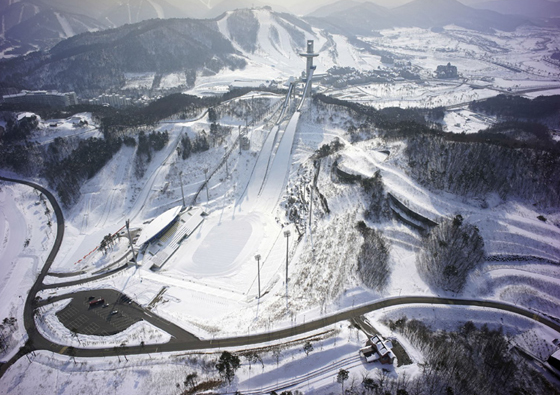
Alpensia Resort, one of the arenas for PyeongChang 2018
The Pyeongchang administrative area is 1,463 square kilometers, ranking third among the nation’s county-level districts, and is populated by about 43,000 residents. Endowed with superb natural conditions, Pyeongchang boasts thriving agriculture, forestry, and livestock industries. It is also rich in cultural destinations and thematic festivals, which combine with the pristine natural environment to attract tourists from around the country. The area’s long-established ski resorts, including the Alpensia Resort, Yongpyong Resort, and Phoenix Pyeongchang, will provide an area for athletic competition during the 2018 Winter Olympics.
Cultural Treasures of Pyeongchang
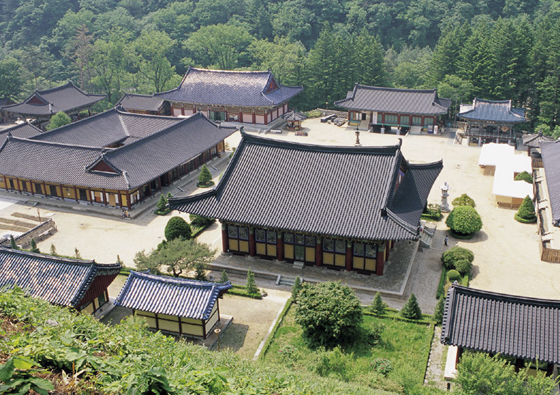
Situated on Mt. Odaesan, Woljeongsa Temple is noted for its octagonal
nine-story stone pagoda and seated stone bodhisattva, respectively
designated National Treasure No. 48-1 and Treasure No. 139.
Situated on the slopes of Mt. Odaesan, Woljeongsa Temple is a classic Pyeongchang Buddhist monastery. The Buddhist temple originated from the makeshift hermitage of Master Jajang in 643. Upon his return from Tang China, Master Jajang believed Mt. Odaesan to be a sacred residence of Manjusri Bodhisattva (Bodhisattva of Great Wisdom) and constructed a shelter in the hopes of gaining a personal audience.
Situated on the slopes of Mt. Odaesan, Woljeongsa Temple is a classic Pyeongchang Buddhist monastery. The Buddhist temple originated from the makeshift hermitage of Master Jajang in 643. Upon his return from Tang China, Master Jajang believed Mt. Odaesan to be a sacred residence of Manjusri Bodhisattva (Bodhisattva of Great Wisdom) and constructed a shelter in the hopes of gaining a personal audience.
The original temple buildings were reduced to ashes during the Korean War (1950–53), but were later reconstructed. The road leading up to the temple is lined with rich needle firtrees, offering a pleasant experience for visitors. A number of highly valuable cultural properties are found inside the temple compound.
Among these is the octagonal nine-story stone pagoda(National Treasure No. 48-1) standing in front of the main hall, Jeokgwangjeon (Hall of Great Peace and Light). It is a definitive example of the multi-sided, multi-story stone pagodas that were in great vogue during the Goryeo era (918–1392). Estimated to have been erected in the early Goryeo period around A.D. 1,000, the pagoda rises 15.15 meters, showing a harmonious structural balance from top to bottom. When it was dissembled and reassembled for conservation purposes in October 1970, a cluster of Buddhist ceremonial treasures (Treasure No. 1375) were found inside the body stone of the first story and from the roof stone of the fifth.
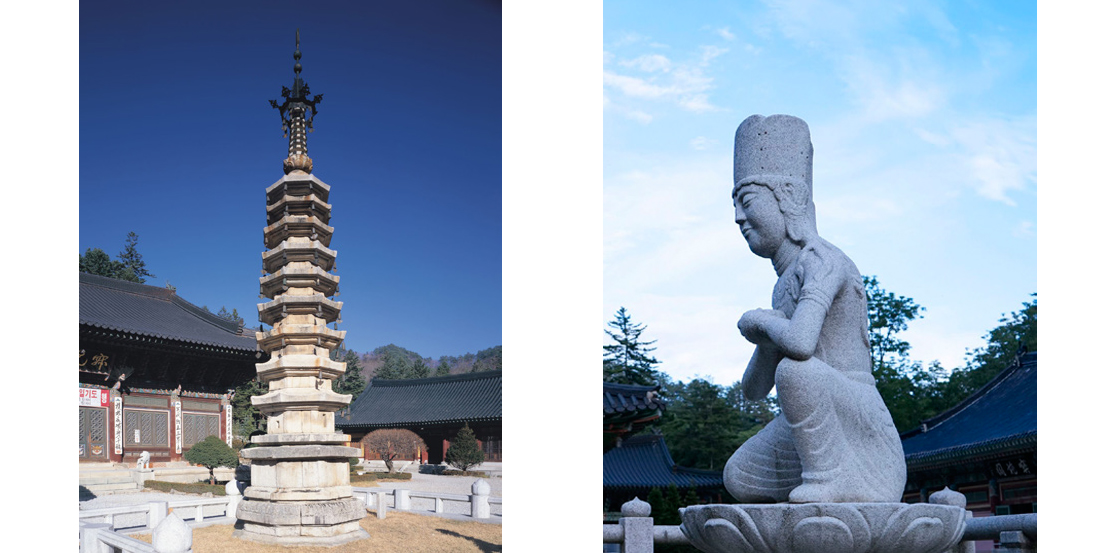
(left)The nine-story octagonal stone pagoda in front of the main hall of Woljeongsa Temple is a definitive exampleof early Goryeo stone pagodas.
(right)A stone bodhisattva sits in front of the nine-story stone pagoda in a position of presenting devotional offerings.
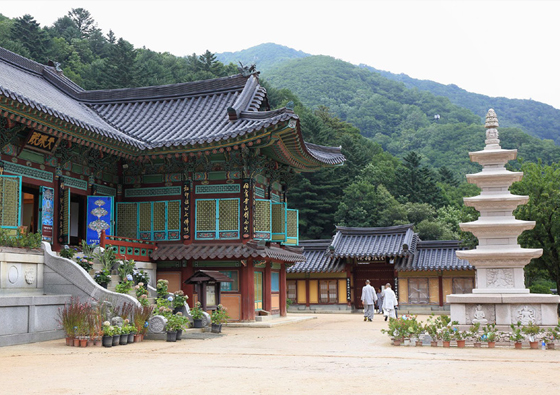
Sangwonsa, an affiliate of the main temple at Woljeongsa, was established in 724 by Master Jajang.
In front of the pagoda is a stone seated bodhisattva. The one on-site is a reproduction, and the original(National Treasure No. 48-2) is preserved within the compound in the temple’s museum. The bodhisattva assumes a seated position with the left knee raised and the right down, seemingly presenting offerings to the pagoda. Wearing a high-rising cylindrical crown, the eyes, nose, and mouth of the bodhisattva are relatively small compared to the long and voluminous body. Gazing straight ahead, the face features a natural smile. This 1.8-meter-high stone bodhisattva is estimated to date from the early11th century.
About 10 kilometers away from Woljeongsa is an affiliate temple named Sangwonsa. Sangwansa Temple is popularly associated with King Sejo (r. 1455–68), the seventh monarch of Joseon. After ascending to the throne, King Sejo, who had been plagued by ill health, ordered the reconstruction of the Sangwonsa buildings that had been destroyed in a fire. He personally participated in the ceremony celebrating thecompletion of the reconstruction.
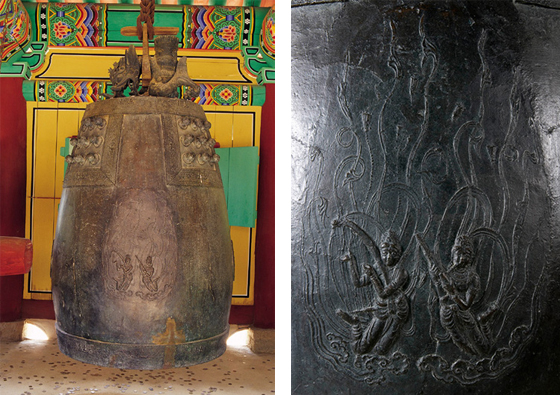
(left)Fashioned in 725, the bronze bell at Sangwonsa Temple is the oldest in Korea.
(right)The bronze bell at Sangwonsa is recognized for its superb
aesthetic expression of heavenly
beings playing musical instruments.
Sangwonsa Temple is home to the country’s oldest bronze bell (National Treasure No. 36), dating all the way to the Unified Silla period (668–935). It is a superb example of traditional Korean bells, embodying exceptional sculptural and casting skills. The bell is 1.67 meters high and 91 centimeters wide. While its original site is unknown, the bell was transferred from the Gyeongsangbukdo Province city of Andong to Sangwonsa in 1469 during the early Joseon period. The heavenly beings rendered on its surface epitomize Silla aesthetics in the expression of the voluminous clothes flying up towards heaven and their natural posture in playing musical instruments.
Festivities in Pyeongchang
Pyeongchang hums with happy occasions year-round. Winter is heated by the excitement of the Snow Festival and the Cherry Salmon Festival. The sweltering weather of summer in the lowlands can be escaped while enjoying the International Music Festival, Summer Cool Festival, and Odaesan Culture Festival. Autumn offers events featuring zinnia blossoms and a celebration of the renowned Korean novelist Lee Hyo-seok. Held at Bongpyeong, a township within Pyeongchang, the Lee Hyoseok Culture Festival is inspired by the native’s son’s novel When Buckwheat Flowers Bloom. During the time of the festival, long stretches of buckwheat flowers are in blossom, which evokes the well-known image of Bongpyeong presented by Lee Hyo-seok in his novel, “Hillsides scattered with buckwheat blooms like grains of salt scatted all around…”
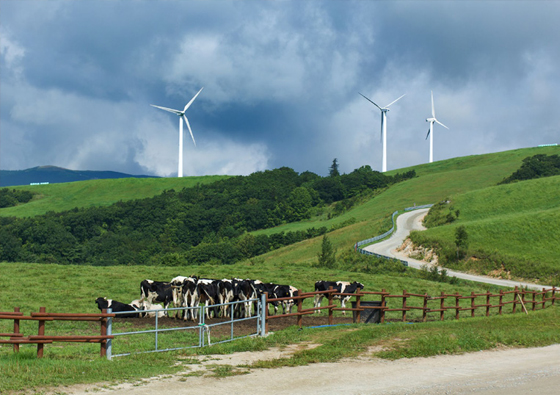
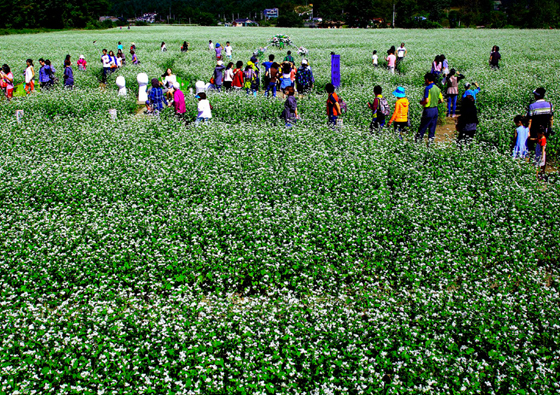
(left)Rising 832 meters above sea level, Daegwallyeong Pass is located to the eastern end of the Yeongdong Expressway, which connects the eastern
and western sections of the Gangwon region with the Taebaek Mountain Range running down the middle.
(right)Lee Hyo-seok’s novel When Buckwheat Flowers Bloom is set in Bongpyeong, which is currently organizing diverse autumn
events drawing on the novel and the scenic local buckwheat fields.
It is hoped that the 2018 Winter Olympics will serve as a chance to put these diverse charms of Pyeongchang on the global map. With all of its cultural and natural attractions and well-established infrastructure, Pyeongchang is ready to embrace people from around the world at the games, and has the potential to advance even further. The grand sporting event early next year is expected to leave an unforgettable memory among the international community.
Text by Yun Il-gu, Culture and Arts Division, Pyeongchang County
Photos byCultural Heritage Administration and Topicimages