Visit
Getbol, One of the Most Important and Meaningful Habitats for Biodiversity
By Moon Kyong-o
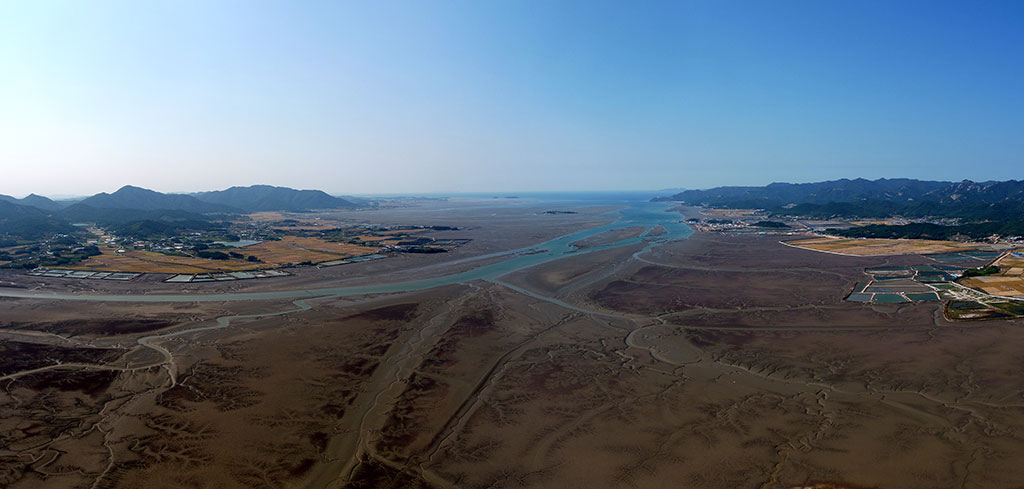
Gochang Getbol
A Special Place Created by Natural Coincidences
There is a mysterious place on Earth that can only be seen twice a day. It is a tidal flat. Tidal flats refer a flat topography formed by sediments such as sand and mud accumulating along the coast by sea current. Tidal flats develop in low-sloped coast, such as continental shelf, which account only for eight percent of the area covered by oceans worldwide. Surprisingly, the topography of the archipelago formed along the coast is very rare around the world. Macrotidal ranges are another important factor for the formation of large scaled tidal flat area. There are only 19 coastal wetland areas in the world with a tidal range of greater than five meters. The "Getbol, Korean Tidal Flats (hereafter Getbol)," inscribed on the World Heritage List in 2021 as a World Natural Heritage, is a very special place where these rare natural factors happened to meet in one place. The Yellow Sea including Getbol area is located in an eastern margin of Eurasian continent. About 12,000 years ago when the Last Maximum Glacial was ended, this continental margin became a sea by sea level rising and mountainous areas located in the southwestern part of the Korean Peninsula became an archipelago.
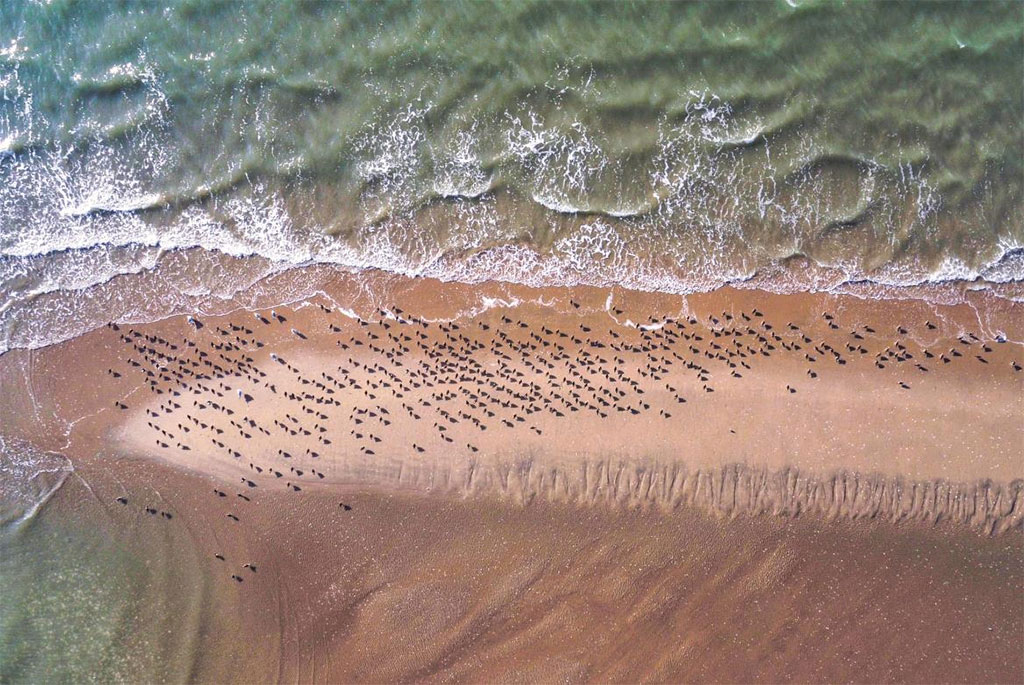
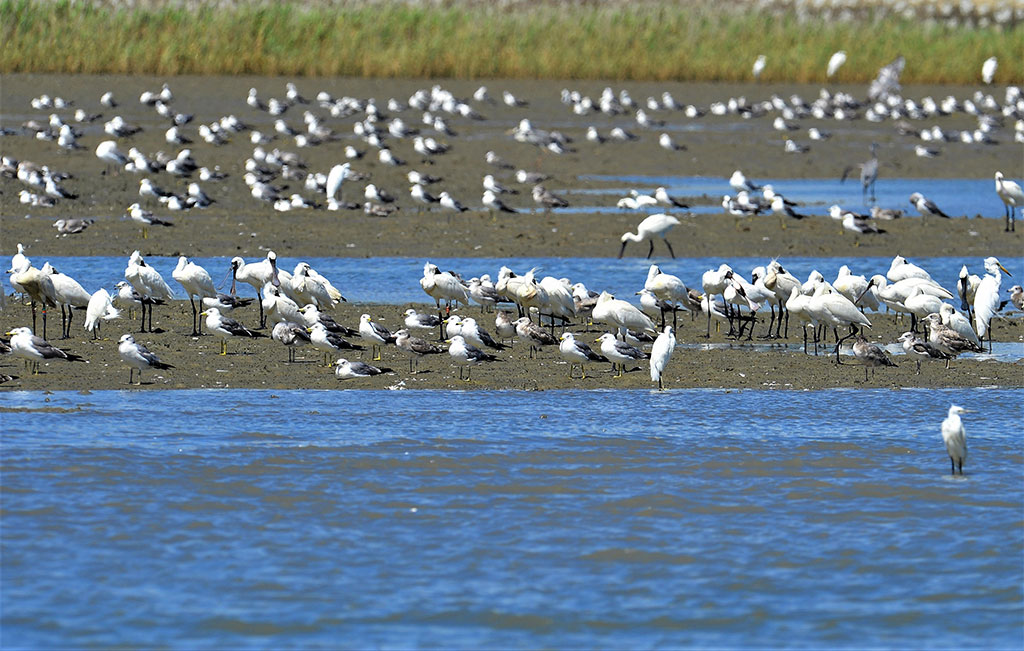
Shorebirds resting on a sandbar in the midst of their long journey
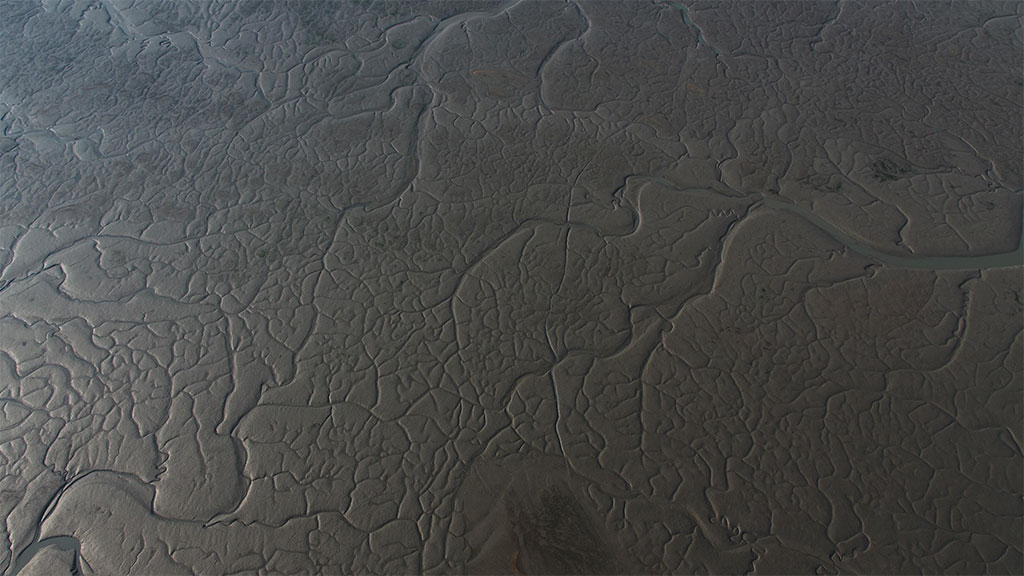
Complex tidal gullies carved by tidal action
A Formation of Getbol with Geodiversity
There are four locations in the Yellow Sea that have no tidal amplitude, called amphidromic points. These four points are far from the southwestern coasts of the Korean Peninsula. With this reason, the difference between high and low tide in the Getbol area can reach to over six meters, equivalent to a three-story building. It has to be an astonishing experience to see this big tidal difference, for example, tidal flat area before meals turns into the sea after meals. In general, sediments transported by tidal current from the sea are deposited to the coast in the order of large and heavy particles like sand, a mixture of sand and mud, and fine and light mud. However, when a rocky island is located in front of the coast, this generality changes into a special pattern of sedimentation because a rocky island prevents strong winds and sea currents from the outer sea. While sand flats are formed at a side of the rocky island where wave and wind energy is strong, mud flats are deposited on the opposite side as the energy is weakened due to the protection of the island. To either side of the island mixed flats with sand and mud are developed. You can look down these various types of tidal flats at the peak of the island. It will bring you added pleasure to enjoy watching beautiful seascape with geometric-patterned tidal gullies created by rapid sea currents with macrotidal range flowing between more than 1,000 islands. Up to 40 meters of mud sediment layer has been forming in Getbol area since 8,500 years ago. It is one of the thickest tidal sediment layer in the world. Considered that the average annual deposition in this area is about 1mm, the Getbol is a space of time and also the Earth’s history. The thick mud flats, which are revealed at low tide, go beyond flatness and looks like a tidal hill. In this sense, the Getbol might more accurately be called tidal mounds rather than tidal flats.
Marvelous Habitats of Lives
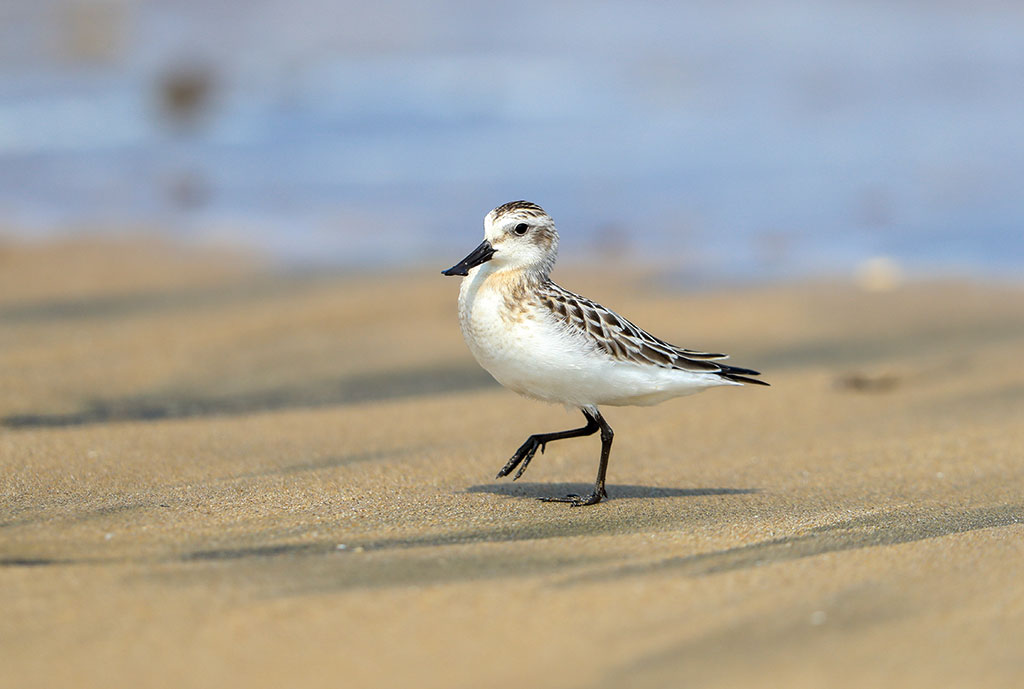
Tidal flats, which are generally submerged and then exposed twice per day, do not offer wildlife as stable an environment as purely terrestrial or marine systems. Nevertheless, the Getbol supplies habitats for various kinds of organisms over 2,000 species including mollusks, polychaeta, crustacean, fish and shellfishe, etc. The number of species supported by the Getbol is higher than that of the whole intertidal area of the Wadden Sea World Heritage (Netherlands, Germany, and Denmark) where is bigger size of 12 times than the Getbol area. This is because the Getbol encompasses all kinds of tidal-flat habitats on Earth. The diversity of habitat means that it can provide more kinds of organisms with their home. Moreover, abundant organic matter in terrigenous sediments supplied from rivers serves as a good food source for many organisms living in and on tidal flats. In addition, the Getbol has deeper oxidized layers than other tidal flat areas in the world. This means that the Getbol can provide tidal flat organisms with more space of habitat even if it is the same unit of area, just like apartment. Eventually, the Getbol supports 857 species of macrobenthos, 375 benthic diatoms, and 152 marine macroalgae, which the number of species is in the best level of the world. The rich diversity of species is one of important reasons for migratory birds to visit the Getbol area. Intertidal areas of the Yellow Sea including the Getbol area take a role of internationally important stopover site in the East Asian-Australasian Flyway (EAAF). It is like a rest area that relieves fatigue and hunger and refuels gas during a long trip. The Getbol area is a place for migratory birds to stop and take a rest only once during their long journeys of more than 15,000 kilometers from wintering sites like New Zealand and Australia to breeding sites like Siberia and Alaska. More than 100 migratory bird species use the Getbol annually, and the Getbol functions as an indispensable space for their survivals. Especially, 27 species of internationally threatened waterbirds lean on the Getbol and among them, spoon-billed sandpiper (Critically Endangered species on IUCN Red List) is included and its global populations are estimated to be just 400 to 600 individuals. Without conserving the Getbol, the next generation might be able to see these biodiversity and waterbirds only in a museum, no more in a real wild. With the international importance and urgency of conservation, on July 31, 2021, the World Heritage Committee decided “Getbol, Korean Tidal Flats” to be inscribed on the World Heritage List as a property of humanity to be handed down for future generations.
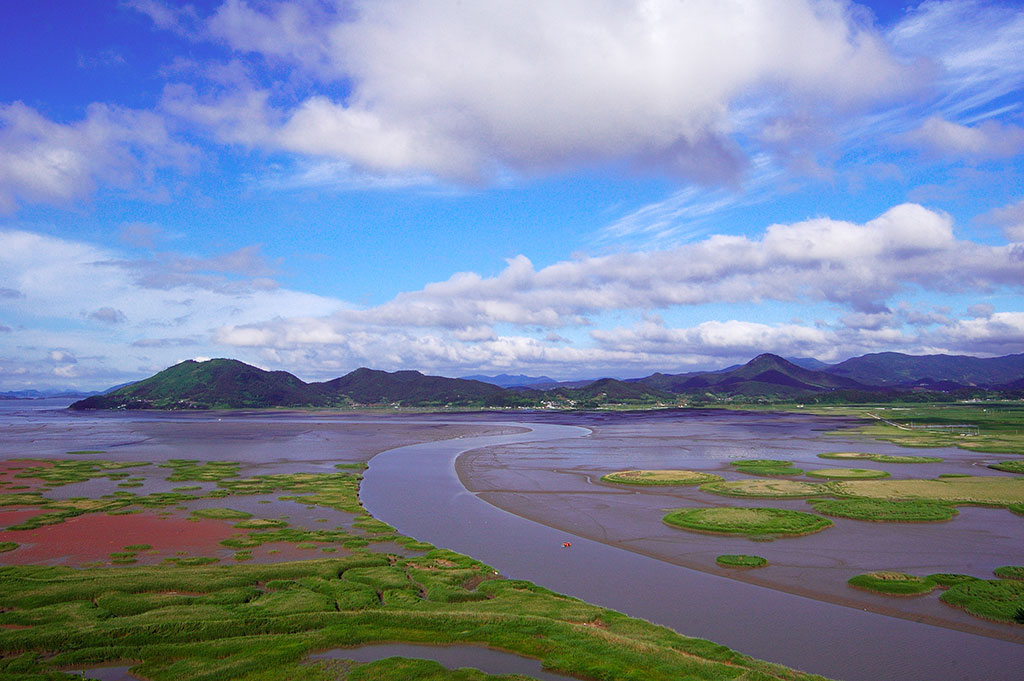
Tidal flats at Suncheon Bay in spring
Getbol tidal flats offer a home to a wide range of wildlife
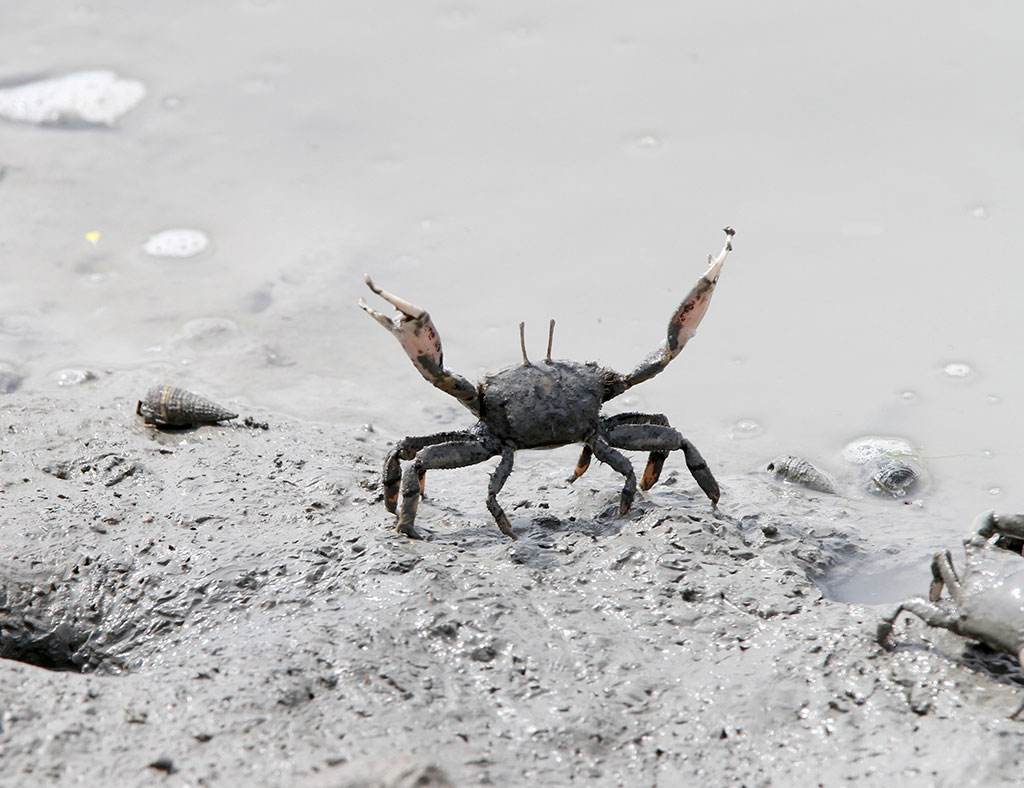
A Stimpson's ghost crab at Shinan Getbol
A spoon-billed sandpiper, a critically endangered species
Conservation and Management for the Future Generations
The central governments like the Cultural Heritage Administration and the Ministry of Oceans and Fisheries take a role to conserve and manage the Getbol World Natural Heritage. Under integrated governance system, they are making an effort to set up plans and secure budgets for projects of monitoring, heritage tourism and education, raising awareness, etc. The local governments take a role to manage each site directly on-site. They prepare to implement various kinds of practical use programs which meet international standards for transmitting the Outstanding Universal Value of the Getbol to the next generations.
The Features of Each Site
The "Getbol, Korean Tidal Flats" is a serial property consisting of four component sites spanning five local governments: Seocheon County, Gochang County, Shinan County, Boseong County, and Suncheon City. Each of these four components has attribute to contribute to the Outstanding Universal Value respectively. The features of each component are as below.
Seocheon Getbol : Vistiors can enjoy watching many kinds of shorebirds including endangered waterbird species like spoon-billed sandpiper, especially in Yubudo Island.
Gochang Getbol : Visitors can experience to observe the order of
tidal sedimentation with their own eyes and also to watch endangered species like oriental stork and endemic species like tiger crab.
Shinan Getbol : Visitors can see all kinds of tidal flats in the world and also enjoy watching the highest level of biodiversity in the world.
Boseong-Suncheon Getbol : Visitors can enjoy watching breath-taking scenic view of beautiful salt marsh as well as various kinds of halophytes. This area also provides habitats for the greatest number of hooded cranes among the four components.