Visit
Baekje Cultural Festival: A Lively Reincarnation of Baekje Culture
By Lee Sung-yeoll
Located along the course of the Geumgang River, Gongju and Buyeo each once housed the seat of government for the ancient kingdom of Baekje (18 B.C.–A.D. 660). Highlights of splendid Baekje culture and art remain all around this area. As a venue for showcasing the ancient kingdom’s cultural aesthetics, the Baekje Cultural Festival has been held every year in Baekje’s two capital cities of Gongju and Buyeo, known at the time as Ungjin and Sabi. This year, the 63rd annual event will be held from September 28–October 5 in Gongju and Buyeo, Chungcheongnam-do Province.
Baekje, the Cultural Hub of Ancient East Asia
Baekje existed as an ancient Korean kingdom for nearly 700 years from its
establishment in 18 B.C. to its fall in 660, maintaining control of the middle-western
section of the Korean Peninsula. Throughout its seven long centuries of history, it
adopted cultural objects and concepts from China, adapted them into a refined form
of indigenous culture, and disseminated it to neighbors such as Japan and Southeast
Asian polities. This process of cultural exchange with Baekje standing in the center
made a significant contribution not just to the advancement of Korean culture, but to
the development of the overall ancient East Asian cultural sphere.
The global significance of the legacy of Baekje culture testifying to these cultural
processes was recognized with its entry into the UNESCO World Heritage List in July
2015. Collectively inscribed as the Baekje Historic Areas as the 13th World Heritage Site
in Korea, the eight component sites speak volumes about the central role Baekje played
in cultural interchanges within ancient East Asia. Gongju and Buyeo accommodate six
of the eight inscribed sites, which is why these two areas have gained a reputation as
an outdoor museum.
The Baekje Cultural Festival takes place at the very heart of Baekje culture, and is
set against a background of its physical remains—and sometimes even inside them. It
offers an ideal chance for visitors to turn back the clock 1,400 years and experience the
special charms of the ancient kingdom’ culture, religion, and art.
Baekje Culture Transformed into a Festival
The Baekje Cultural Festival is intended as a public representation of the splendors
of Baekje culture aimed at enhancing its transmission and boosting the cultural pride
of local communities. Since the first event was held more than 60 years ago, the festival
has developed from a local gathering to a global venue for commemorating the
cultural glories of the Baekje Kingdom.
One of the oldest regional festivals in Korea, the Baekje Cultural Festival was
initiated in Buyeo in 1955 as the Great Baekje Ritual. It was a ceremonial rite carried out
for consoling and pacifying the spirits of three Baekje officials, Seongchung, Heungsu,
and Gyebaek, who sacrificed their lives in their fierce loyalty to their nation when the
kingdom fell in 660. Any other vengeful spirits that could remain were also included.
From the first, it could be understood that the festival is rooted in a local effort to
maintain a cultural identity and revive Baekje culture. The annual ritual event was
renamed the Baekje Cultural Festival in 1965, and in 1966 Gongju joined the effort. Ever
since Gongju first took part in 1966, the Baekje Cultural Festival has been held in the
twin capital cities of Baekje on a yearly basis.
During its initial phase, the event was organized as yet another comprehensive art
festival encompassing a range of folk, arts, and sports programs to complement the
central ritual event. There was at this time a lack of physical remains, expert capacity,
and research results able to present Baekje culture. However, in 1971 the royal tomb
of King Muryeong (the 25th ruler of Baekje) and his queen was excavated, followed by
the successive discovery of numerous Baekje sites. These archaeological findings were
accompanied by a growing body of academic research revealing the pivotal role of
Baekje as a cultural medium in the ancient East Asian sphere. As new archaeological
evidence and research came to light, the Baekje Cultural Festival started to redefine
its identity into a more cultural and historic event. The World Heritage inscription of
the Baekje Historic Sites in 2015 served as an opportunity to add an international
dimension to the festival by emphasizing Baekje’s contribution to the culture and
heritage of humanity.
This Year’s Event
The 63rd Baekje Cultural Festival is being held from September 28–October 5, 2017 in Gongju and Buyeo. Under the theme Meeting Baekje, the Origin of the Korean Wave, this year’s event is designed to explore and accentuate the adventurous, accepting, and ingenious nature of Baekje culture. Set in and around the six archaeological sites inscribed as World Heritage—Gongsanseong Fortress and Songsan-ri tombs in Gongju; and the site of Jeongnimsa Temple, Busosanseong Fortress, Neungsan-ri tombs, and Naseong Wall in Buyeo—this year’s festival offers more than 100 component programs from which any visitor can find events to suit their taste.
Festival Programs in Gongju
The highlight of the festive programs offered in Gongju is the opening ceremony to be held in Geumgang Singwan Park on September 29. The opening features diverse performances and, above all, large-scale fireworks which will light up the night sky of Gongju with a colorful array of illuminated patterns. Throughout the period of the
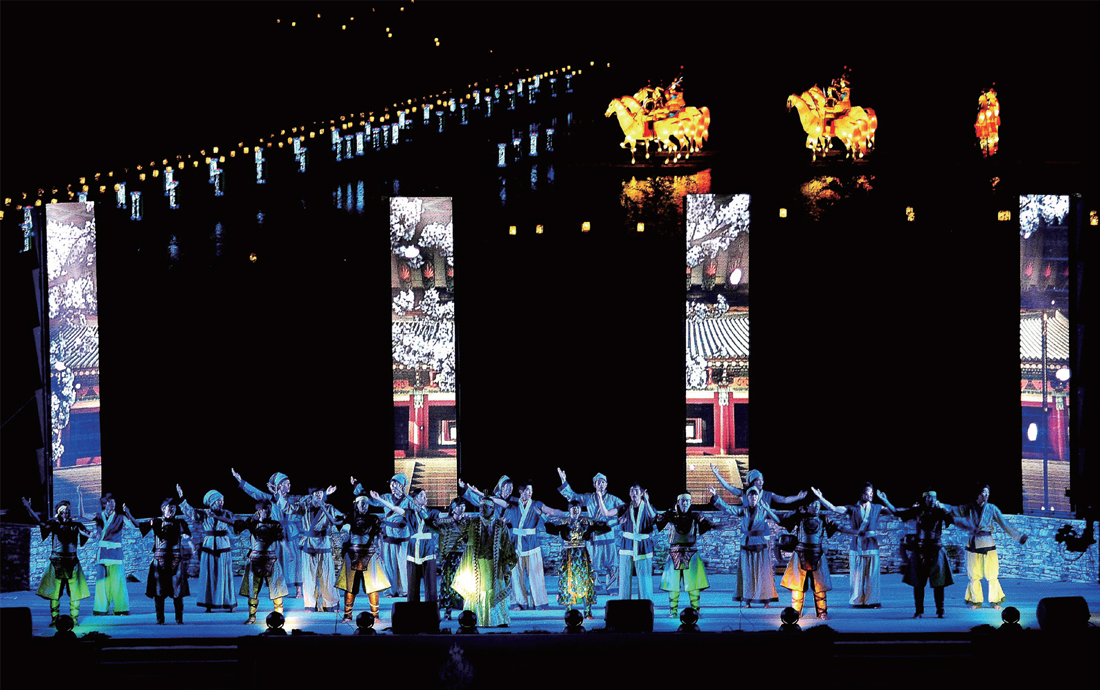
The opening ceremony of the Baekje Cultural Festival in Gongju
festival, lanterns in diverse forms drawing on the culture and history of Baekje will be on display along the Geumgang River, sparking a fantastic atmosphere for the entire festival arena. It is well worth a walk on the romantic floating bridge temporarily installed as a link between the Geumgang Singwan Park and Gongsanseong Fortress. In addition, there will be a lot to see, enjoy, and experience during the festival, including the interactive public procession “Ungjinseong Parade” and nighttime performance “Ungjin Fantasia.”
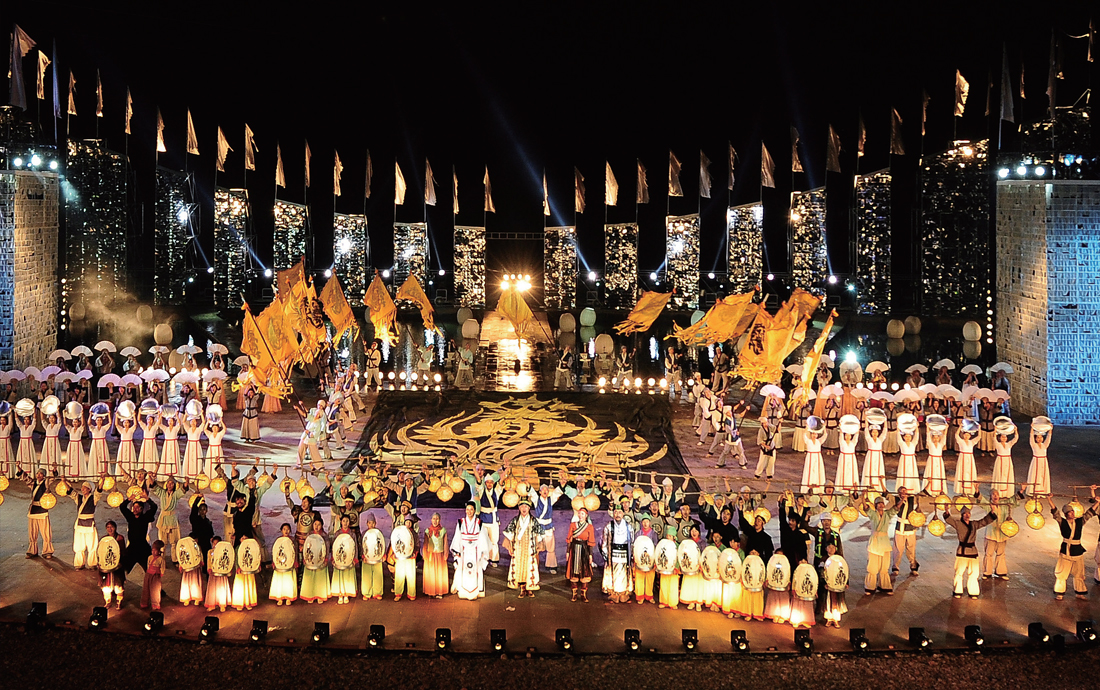
Performance of the Story of Sama (King Muryeong, the 25th ruler of Baekje) in Gongju
Festival Programs in Buyeo
While events in Gongju are noted for their harmonious combination of traditional
and modern elements, Buyeo has steadily adhered to tradition and offers programs
focusing on the presentation of Baekje history and culture. One of the definitive events
in Buyeo, the “Baekje Cultural and Historical Parade” is an interpretation of the culture
and history of Baekje in the form of a street festival. Beginning in 1965, the parade has
been beloved by visitors into the present. There are ritual programs that have been
performed as long as the festival itself: the Samchungje (Ritual for the Three Loyal
Officials) and Surykjae (Water and Land Ceremony) have been conducted since 1955.
The five-story stone pagoda standing at the former site of Jeongnimsa Temple,
the main venue of the Buyeo event, is celebrated for its architectural excellence, but
it is also notable for its tragic representation of Baekje’s fall. The body of the pagoda
still bears an inscription carved by Su Tingfang, the commander of the invading Tang
troops, describing his military achievements. Appreciating diverse cultural events in
this historic space conveying the memory of the kingdom’s last days, visitors can better
relate to the culture and history of the ancient kingdom of Baekje.
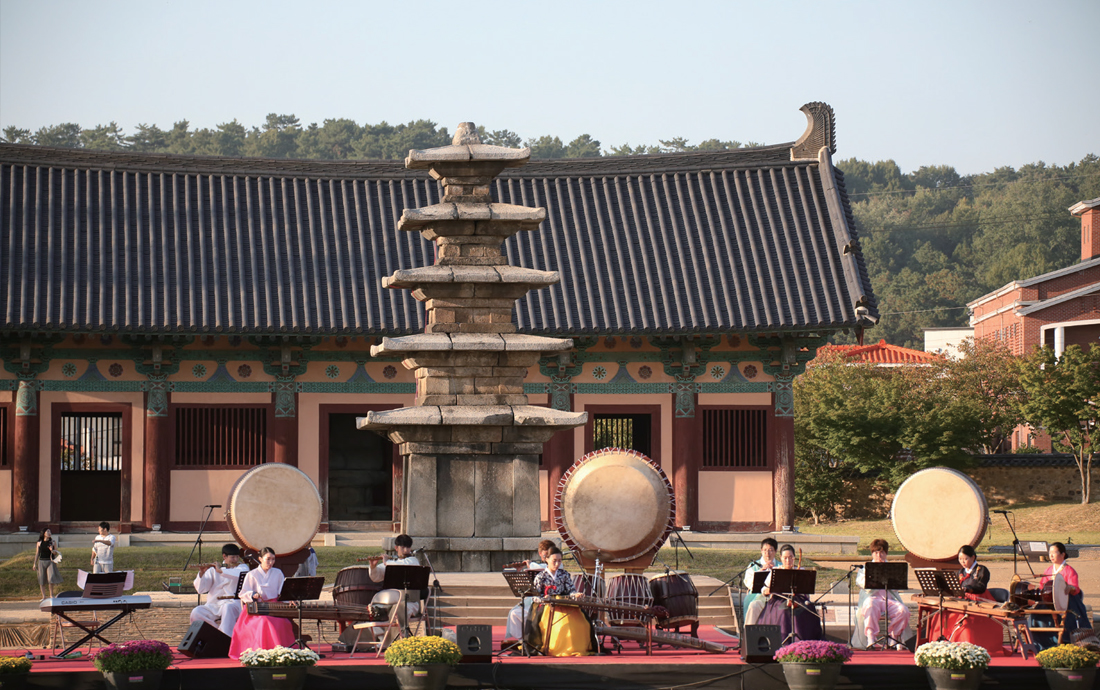
Performance of the Story of Sama (King Muryeong, the 25th ruler of Baekje) in Gongju
Visitor Information.
Tel: +82 41 856 7700 (Gongju), +82 41 830 2330 (Buyeo)
Webpage: http://www.baekje.org