Visit
Seoul Gyeongdong Market, The Heritage Value of a Dynamically Changing Traditional Market
By Lee Hee-jun (Traditional market docent)
Gyeongdong Market is considered the central hub for cooking in Seoul. You can find any last-minute ingredients you need, even those unavailable in department stores or supermarkets. The market offers a wide range of fresh and diverse ingredients. It’s a well-known place to any Seoulite who is even slightly interested in cooking. Nowadays, even tourists from overseas visit Starbucks located inside Gyeongdong Market or buy quality fruits at the green market. Gyeongdong Market, as its name suggests, is a marketplace representing the east side of Seoul. It began to take shape when residents from Gyeonggi-do and Gangwon-do started selling their local specialties. Located near Jegi-dong and Cheongnyangni, the market was always bustling with people looking to buy medicinal products as well as fresh agricultural, livestock, and fishery produce. This was possible due to the traffic network that revolved around the now-defunct Seongdong Station. Nowadays, the market is known as a general market where people visit to buy various goods, but Gyeongdong Market is primarily known for its medicinal products. Although the medicinal herb market is separately designated as the Seoul Medicine Market, it is often grouped with the Gyeongdong Market. It is home to hundreds of Korean clinics and herbalists and supplies 70% of the nation’s medicinal herbs.
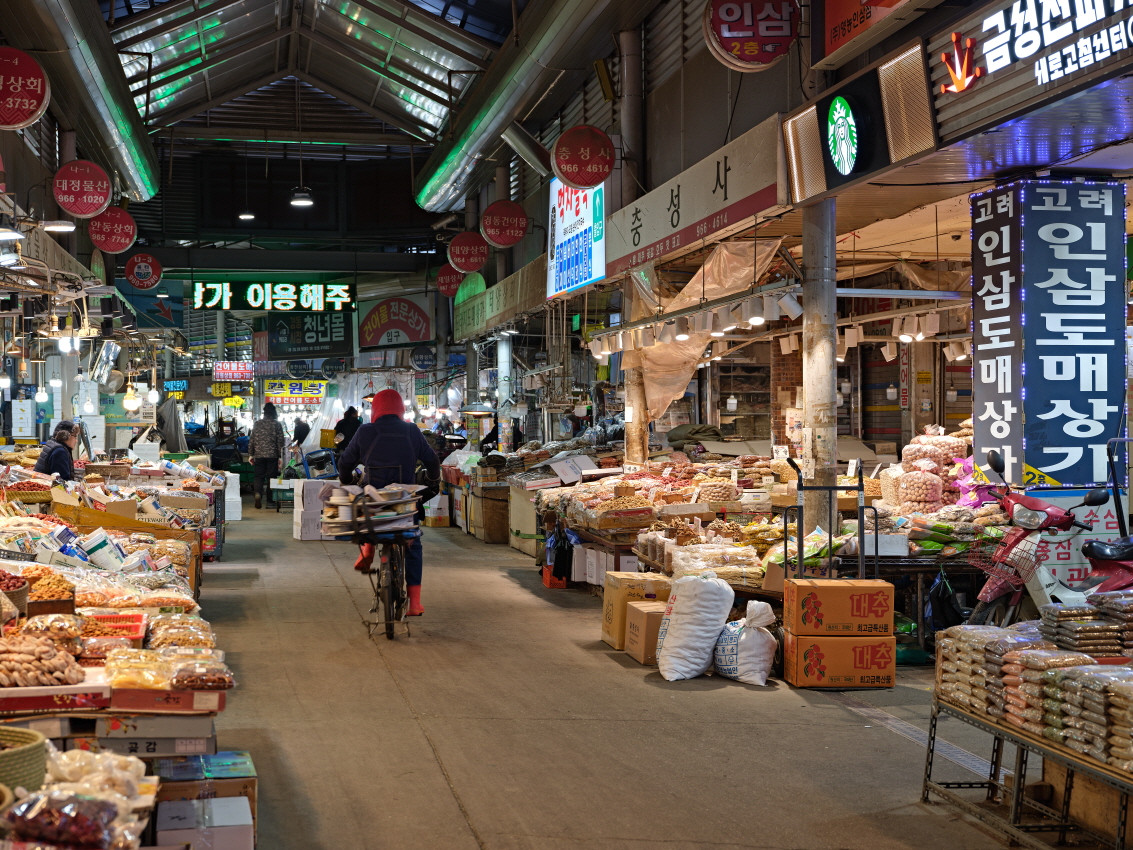
During the Joseon Dynasty, the royal command created a centralized gathering place for herbalists, yangnyeongsi, to collect valuable herbal medicines. The purpose of this market was to tackle the problem of people losing their lives due to the regional unavailability of different medications in emergency situations. Yangnyeongsi was initially established in Daegu, Wonju, and Jeonju, respectively, in Gyeongsangbuk-do, Gangwon-do, and Jeolla-do, where medicinal herbs were mainly grown. This seasonal market was held twice a year in the spring and fall to coincide with harvesting medicinal herbs. The Seoul Medicine Market, in conjunction with the Gyeongdong Market, emerged in the 1960s, when Cheongnyangni Station and Majang-dong Intercity Bus Terminal became more accessible, drawing more people towards it. With time, herbalists from Jongno migrated to Jegi-dong, a neighborhood that welcomed more visitors. The market flourished and evolved into an herbal market. In 1995, the Seoul Metropolitan Government officially named the market ‘Seoul yangnyeongsi.’ Jegi-dong is significant for its historical significance; it was once the home of “bojewon,” a place that provided shelter to travelers and cared for the sick about five centuries ago. The spirit of aiding and nurturing others still lives on in the community today.
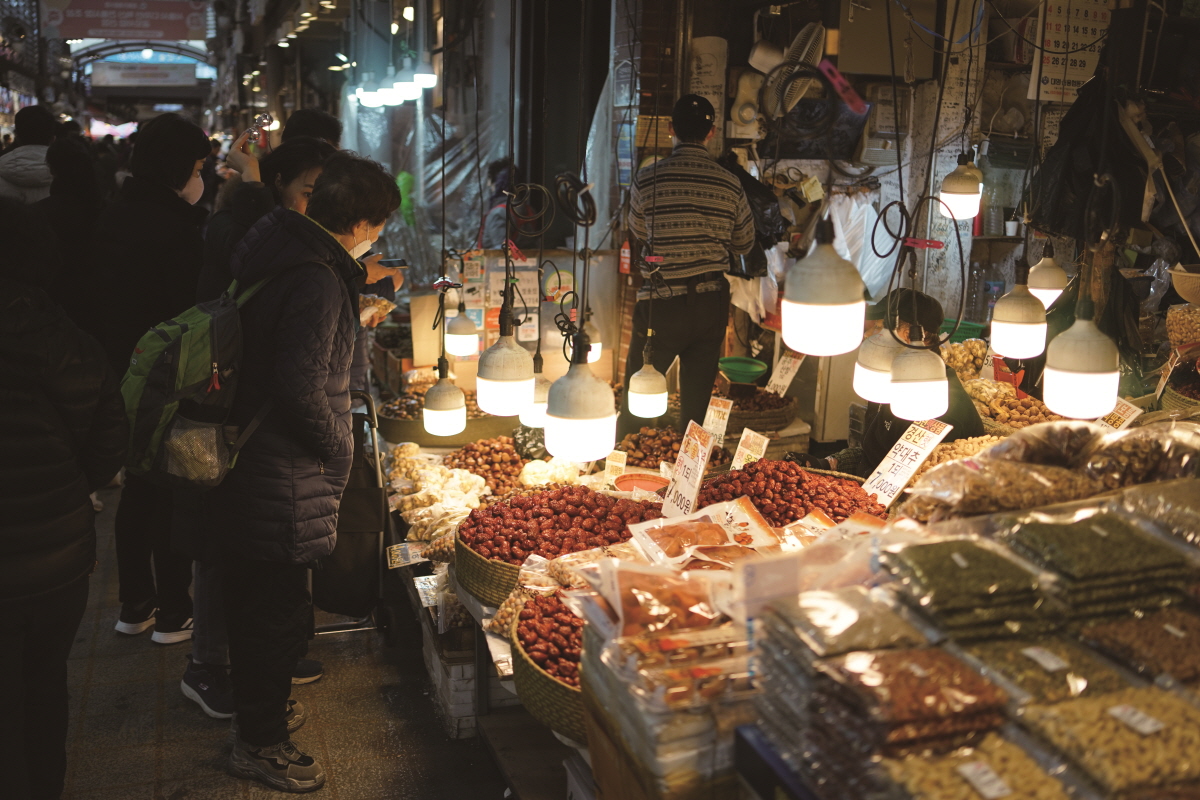
Recently, Western medicine has overshadowed the prominence of Korean medicine and folk remedies. However, despite this shift, there is still a certain charm in visiting Gyeongdong Market. This market has gained attention and popularity in recent years, particularly among foreign visitors, setting it apart from its counterpart, Gwangjang Market. The most coveted item among these visitors is insam (ginseng), yet other things are available, such as frogs, terrapins, and freshwater shrimps, ingredients for various folk remedies. Furthermore, you can even handpick your own ingredients to create your own herbal medicine at the apothecary. Thus, making Gyeongdong Market an exceptional destination not only for shopping but also for sightseeing.
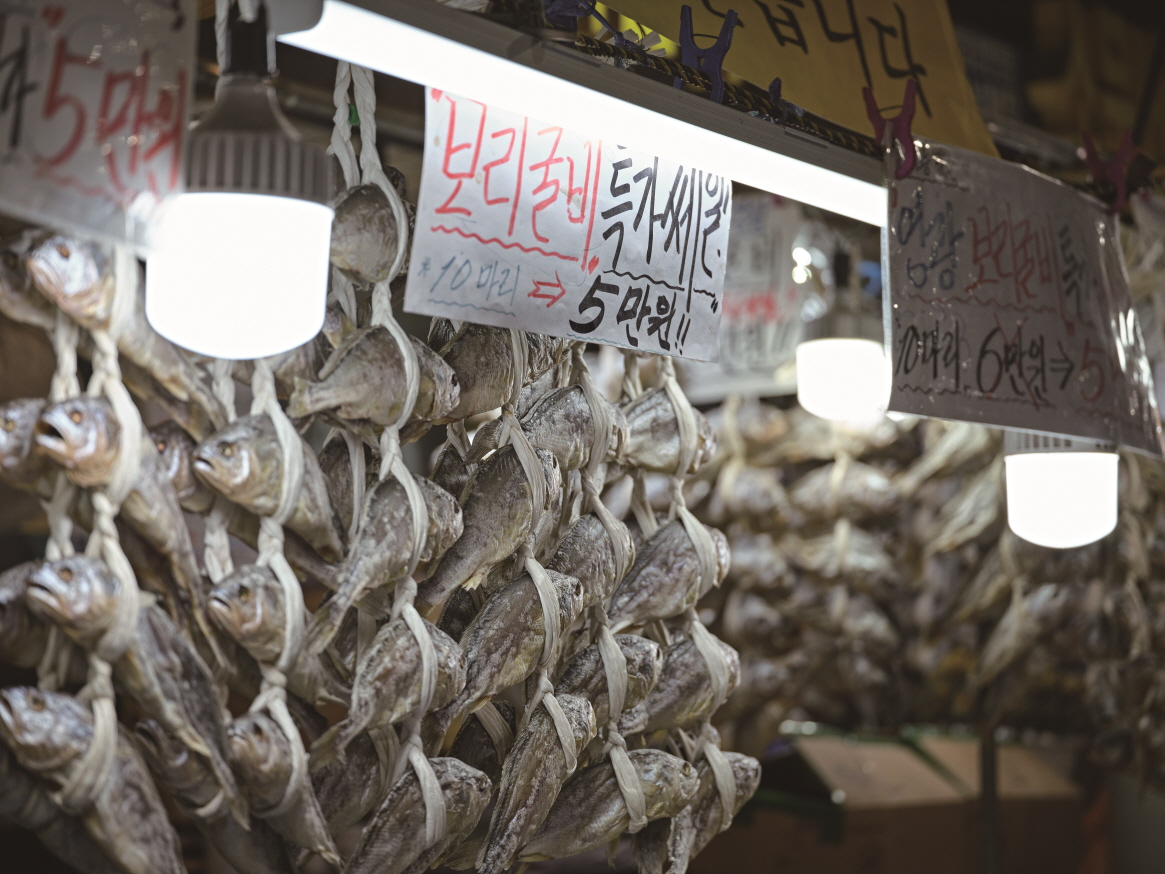
Gyeongdong Market has been a hub for medicinal herbs for decades, its reputation growing as its scale and trade volume flourished. Yet, limiting its charm to a sole facet would be a disservice. The market’s scenic variety has, in recent years, earned it the status of a beloved traditional market, beckoning visitors from near and far. For those fond of flowers, the Gyeongdong Market of the 1970s will always be a memorable sight. The market was a visual masterpiece, with many colorful flower shops that could rival even the ones found at the Gangnam Express Bus Terminal today. At its prime, an astounding 123 flower shops were catering to clients from all over the country. Only two original shops, the Gyeongdong Flower Shop, and the Gaeseong Flower Shop, remain evidence of the market’s rich history. Beneath the market’s surface is a hidden gem: a fish market home to an impressive array of fish species from various parts of the world. It is a treasure trove that could effortlessly furnish an aquarium at the heart of the bustling city. Vendors with 40 to 50 years of experience claim that even decades-old customers would only procure essential items at a market. It’s no wonder many people are unaware of the flower shop in the market or a fish market in the basement. Back above ground, the bustling Jongno Green Market is within close proximity.
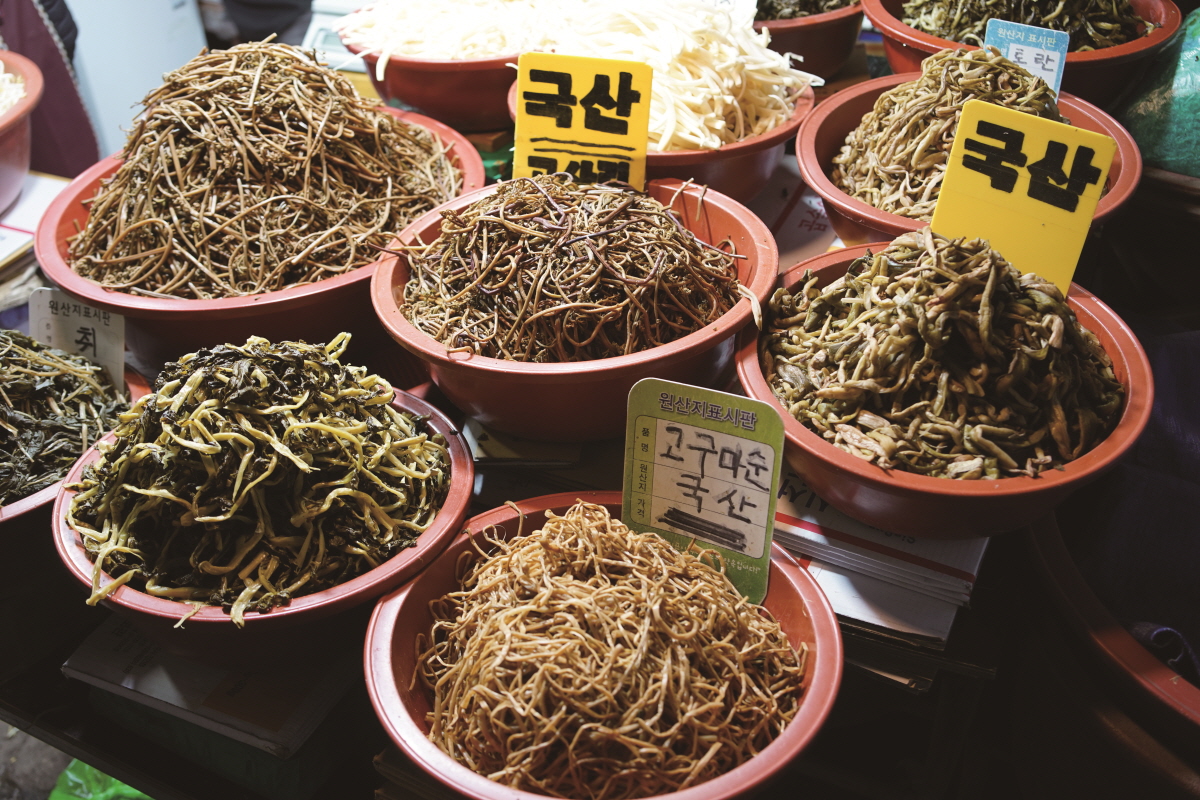
The prices here differ when you enter and leave, keeping you waiting at the market. Crates of fruit blanket the entire market at dawn, and the remaining produce goes on sale as the sun falls. Visitors from abroad may indulge in the unique experience of free tastings. As a traditional market docent, I highly recommend visiting the market during this hour to experience purchasing the most affordable but highest-quality fruits. During the holiday season, Gyeongdong Market is a popular destination for people who want to gift healthy medicinal products to their loved ones. Despite the current situation, many people are still looking to buy medicinal ingredients, and this year, there has been an increase in the number of people searching for wild pine mushrooms. Pine mushrooms are in high demand this year and are selling quickly, with their prices being half of what they were last year. So, if you couldn’t afford natural pine mushrooms before, you can now get them reasonably priced. As Seattle boasts of the iconic Pike Place Market, London flaunts the Borough Market, Tokyo takes pride in the Tsukichi Market, and Bangkok houses the bustling Chatuchak Market - Seoul has the Gyeongdong Market. Though it may not be located near the city’s “hip” spots, this market is a treasure trove of authentic delights that will leave any visitor in awe. So, if you’re seeking an experience that will satiate your wanderlust and ignite your senses, visiting the Gyeongdong Market is a must.
Photographed by Kim Gi-young