Visit
The Korea Furniture Museum
By the Korea Furniture Museum
Mission of the Museum
The Korea Furniture Museum is designed to showcase the Korean lifestyle of the past by displaying traditional wooden furnishings and houses. Situated on the skirts of a hill in Seongbuk-dong, Seoul and endowed with a bird’s-eye view of the capital, the Korea Furniture Museum was founded in 1993 by Chyung Mi-sook. This passionate aficionado of traditional wooden furniture began collecting in the 1960s. The wooden furniture and elements of traditional housing exhibited at the museum effectively deliver to visitors the classical Korean lifestyle that cherishes harmony with nature and spiritual satisfaction.
Characteristics of Traditional Furniture
The permanent exhibition hall displays about 550 pieces of wooden furniture out of the total collection of roughly 2,000 items. As well as discovering the localized characteristics of furniture from different parts of the country, visitors can gain an understanding of the general features of traditional Korean furnishings: their aesthetics emphasizing the intrinsic beauty of the raw materials over artificial decorations, thoughtful design taking into consideration the natural contraction and expansion of wood, the overall distribution of weight, and practical structure which makes full consideration of the human scale.
Traditional Architecture Scaled for Humans
The rooms of traditional houses collected at the museum are fully decorated with furniture and fittings as if people were still living within. These furnished rooms illustrate not only the beauty of traditional furniture but also its practical applications. In the space furnished as an aristocrat’s room, for example, furnishings are designed to remain below seated eye level so that the master of the room can lean on them without being intimidated by their height. The furnishings are also sized in consideration of the width of the space between two columns and the height of the windows.
Nature-centered Architecture
At the museum, visitors can also experience chagyeong, or “borrowed scenery,” one of the definitive characteristics of traditional Korean housing (hanok). Koreans of the past enjoyed the extensive landscapes visible through their windows as if they were private gardens. This traditional technique illustrates a receptive attitude toward nature and, at the same time, a macroscopic view of architecture. People of the time valued geomantic principles and accommodated natural geographic features into their architecture, but they also applied this creative technique of borrowed scenery as a means to not confine the human quarters to within the walls, but expand it as far as the eyes can reach in order to embrace nature.
Traditional Handicrafts on Display
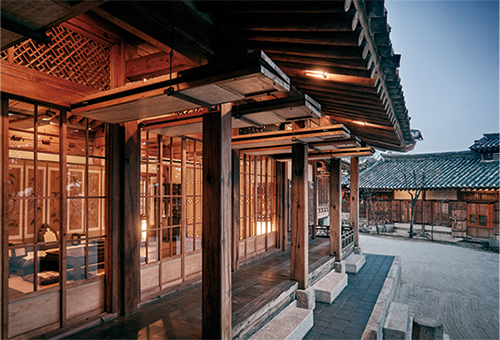
An aristocrat’s house on display at the Korea Furniture Museum
The special exhibition hall at the museum is dedicated to the display of traditional crafts. Genre paintings, bronze and wooden utensils, and artifacts with silver or mother-of-pearl inlay have been presented to public view in this space, and a special exhibition has even been organized in cooperation with the Italian luxury brand Gucci to showcase the harmony between Gucci accessories and Korean traditional furnishings. Currently, traditional Korean clothing, including royal ceremonial robes, is on exhibit in the hall, demonstrating to the public the dignified and elegant beauty of traditional Korean attire.
Global Reputation
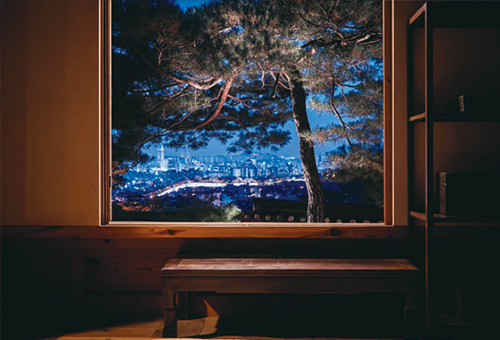
The “borrowed scenery” technique embodied in one of the traditional Korean houses at
the Korea Furniture Museum
The Korea Furniture Museum was featured by the American television channel CNN (Cable News Network) on its webpage in 2011 as the “most beautiful museum in Seoul.” Furthermore, the museum has been visited by a number of prominent international figures, including the heads of states of China, Germany, Hungary, and Singapore, the actor Brad Pitt, celebrity Victoria Beckham, musician Quincy Jones, and architects Frank Gehry and Zaha Hadid. They visited the museum and gained a chance to experience a traditional Korean lifestyle. Now, the museum is widely recognized among people from abroad as a must-visit place for gaining a genuine understanding of a traditional Korean lifestyle.
Museum Tour
The museum offers guided tours to visitors upon reservation. A docent takes visitors through the museum for one hour to help them gain a better appreciation of Korean furniture and architecture. Visitors can enjoy an overall experience of a traditional Korean lifestyle that accommodates nature from indoors, but always puts humans at the center.
Visitor Information
Address : Korea Furniture Museum, 121 Daesagwan-ro, Seongbuk-gu, Seoul, South
Tel : +82(0)2 745 0181
Homepage : www.kofum.com
Text & Photos by the Korea Furniture Museum
Photos bythe Korea Furniture Museum and Graphickorea