Visit
Traditional Korean Trade
at Oiljang
By Lee Gyeong-deok
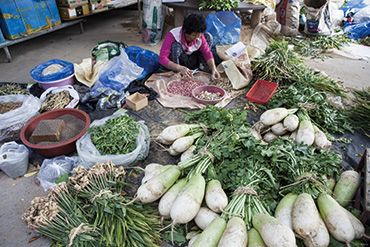
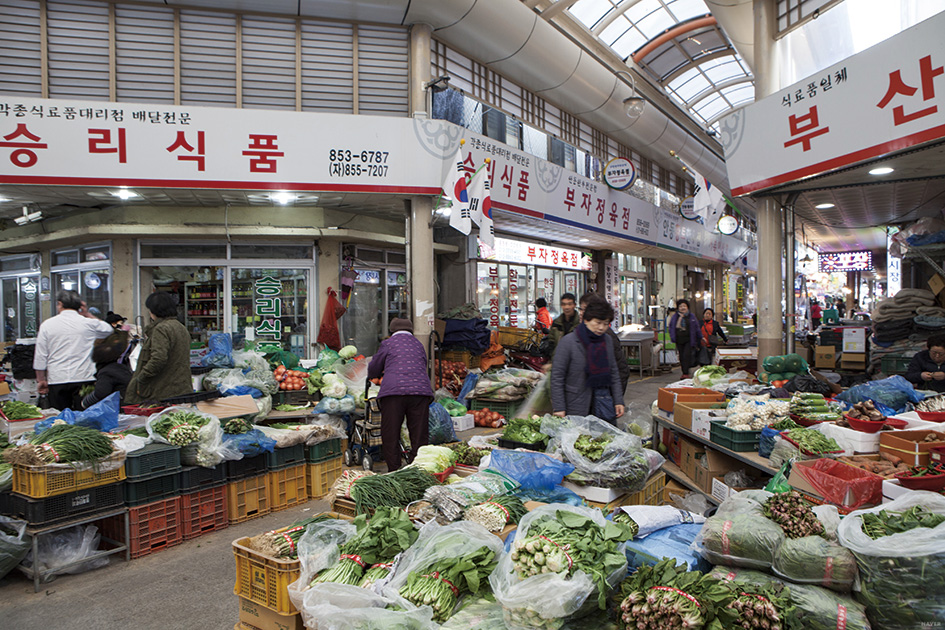
While markets are a universal feature wherever people gather, one peculiar form of market has long been common in Korea. Oiljang, literally “five-day market,” refers to a regular gathering of merchants and customers taking place at five-day intervals. Different oiljang meet respectively on the days of the month ending in 1 and 6, 2 and 7, 3 and 8, 4 and 9, or 5 and 0. One oiljang, for example, would be held on the 1st, 6th, 11th, 16th, 21st, 26th, and 31st days of a given month. Oiljang traditionally served as local concentrations of goods where commerce could take place and information be exchanged among locals and between different regions. Such five-day markets were considered the best sites to secure regional specialties, and travelling salesmen known as bobusang crisscrossed the country visiting oiljang to buy local products in one location and sell them in others. With today’s modern distributions systems, oiljang markets are not as necessary a trading platform as in the past. However, there remain some thriving examples across the country that still serve as a showcase of local charms. Selected markets that reflect their region’s oiljang culture are presented below.
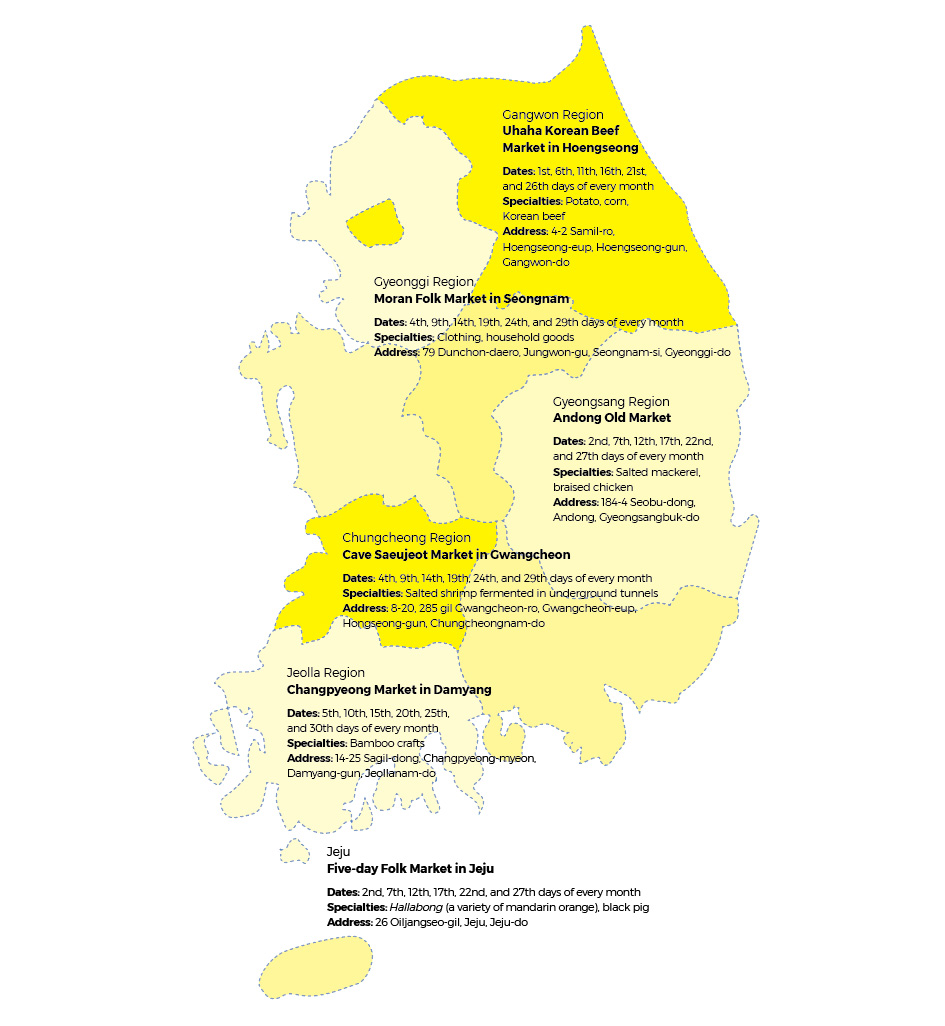
Gyeonggi Region
Moran Folk Market in Seongnam
- Dates: 4th, 9th, 14th, 19th, 24th, and 29th days of every month
- Specialties: Clothing, household goods
- Address: 79 Dunchon-daero, Jungwon-gu, Seongnam-si, Gyeonggi-do
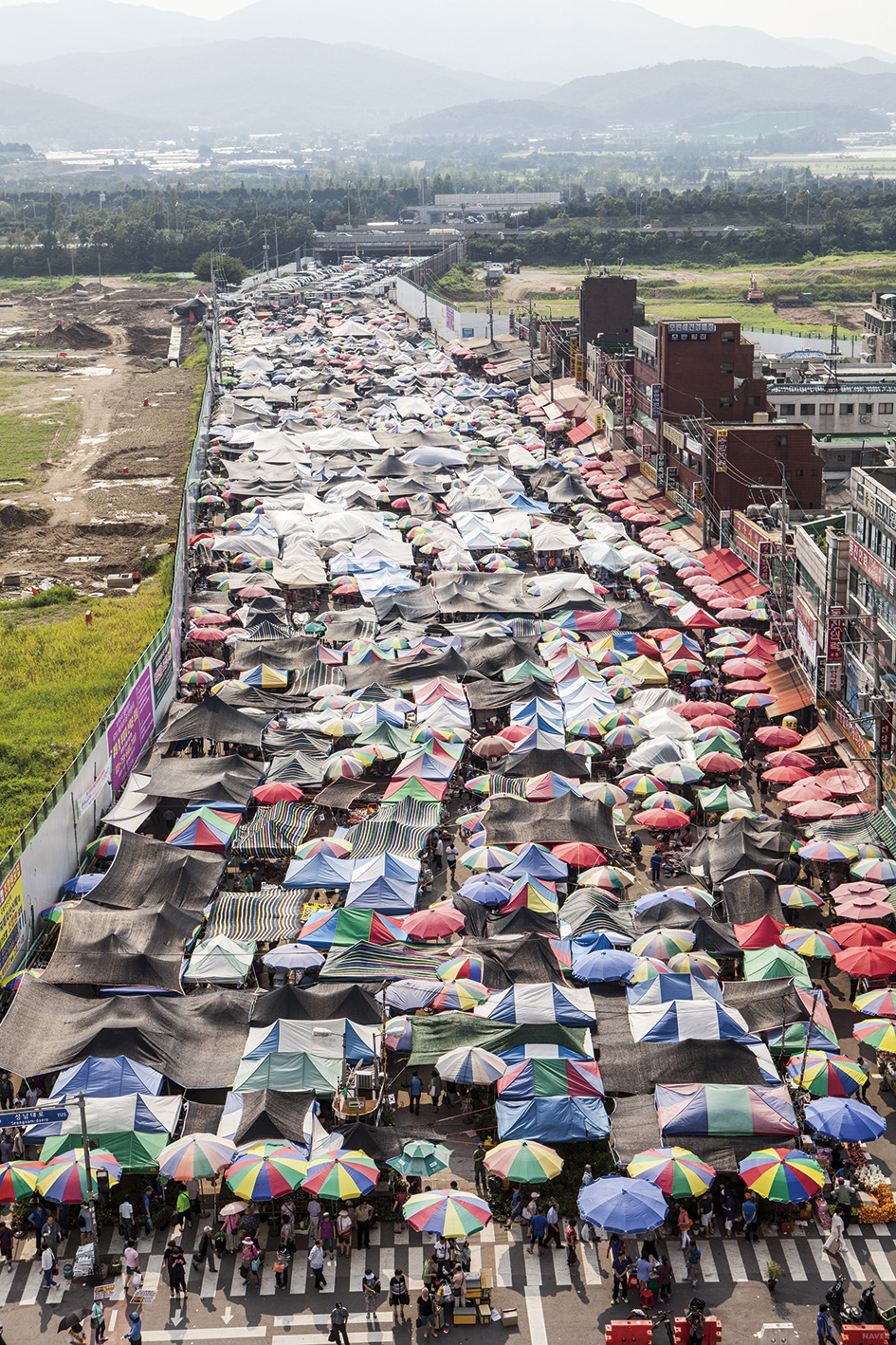
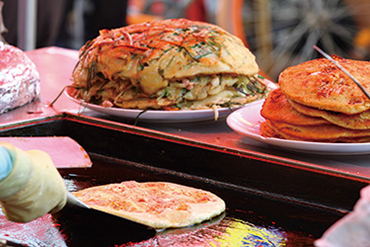
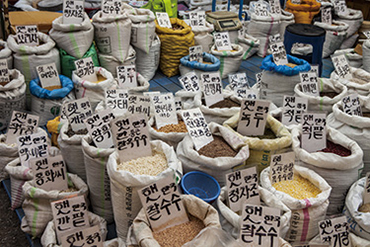
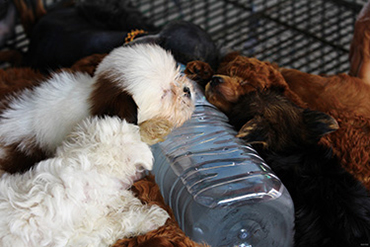
The Moran Folk Market is located in Seongnam in Gyeonggi-do Province, an extension of the Seoul metropolitan area. Compared with other five-day markets dating back to the Joseon era or even earlier, this oiljang developed much later in the 1950s–60s. Refugees from the north fleeing the Korean War in 1950 began to settle in Seongnam, and the urban redevelopment of Seoul in the post-war period drove people into this area and other surrounding districts. With people crowding in, local markets soon followed, including the Moran Folk Market. Up to the 1970s the market mainly served outside buyers who came for local agricultural produce and firewood. With the drastic expansion in the urban space in Seongnam, however, the Moran Folk Market became a trading space for local residents specializing in clothes and a wide range of household goods. In contrast to the general decline in the popularity of oiljang, the market has been expanding steadily with a growing number of vendors and consumers coming together every five days. Traditional performances and a colorful array of street food add to the pleasures of shopping at the Moran Folk Market.
Gangwon Region
Uhaha Korean Beef Market in Hoengseong
- Dates: 1st, 6th, 11th, 16th, 21st, and 26th days of every month
- Specialties: Potato, corn, Korean beef
- Address: 4-2 Samil-ro, Hoengseong-eup, Hoengseong-gun, Gangwon-do
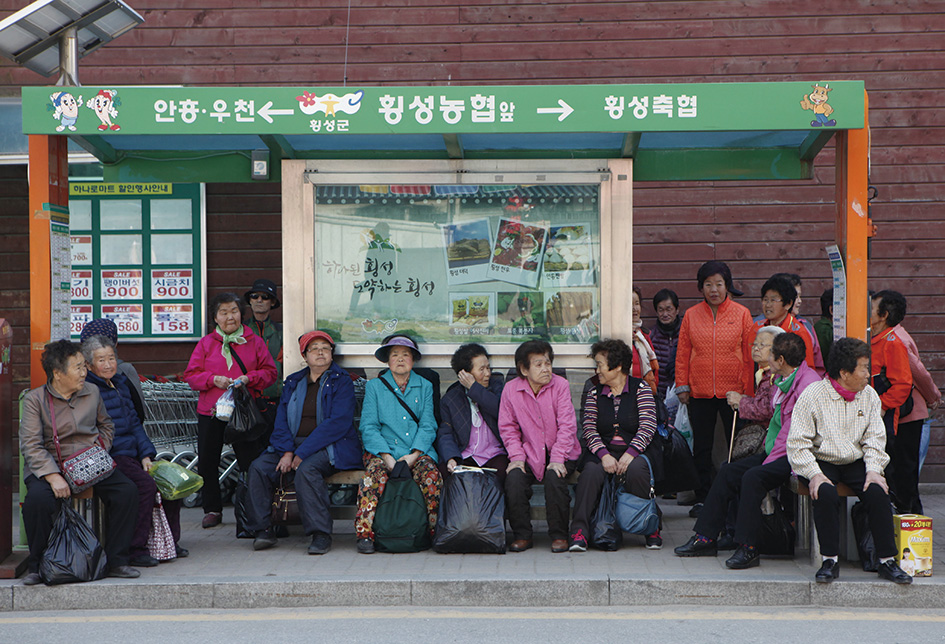
The Uhaha Korean Beef Market is located along the route from Seoul into the Gangwon region, traditionally attracting a great volume of human and commercial traffic. It has been nicknamed “the largest market outside the East Gate of the city wall.” Today, it is positioned at the crossroads of two highways and continues to draw a regular flow of attendees. In the shadows of the Taebaeksan range of mountains, Hoengseong has traditionally been popular for the production of field crops such as potatoes and corn. The rich forest environment is also favorable for raising cattle, giving rise to an active trade in beef. This explains the inclusion of the phrase “Korean beef” in the name of this oiljang in Hoengseong. The other component in the name, “Uhaha,” is an onomatopoeic sound associated with loud laugher, delivering a strong desire for happiness. Alongside local specialties, the Uhaha Korean Beef Market currently offers a youth-focused flea market as a gathering place for young merchants and customers. Anheung-style steamed buns with a red bean paste filling (anheung jjinppang) and millet pancakes (susu bukkumi) are popular here as well.
Chungcheong Region
Cave Saeujeot Market in Gwangcheon
- Dates: Cave Saeujeot Market in Gwangcheon
- Specialties: Salted shrimp fermented in underground tunnels
- Address: 8-20, 285 gil Gwangcheon-ro, Gwangcheon-eup, Hongseong-gun, Chungcheongnam-do
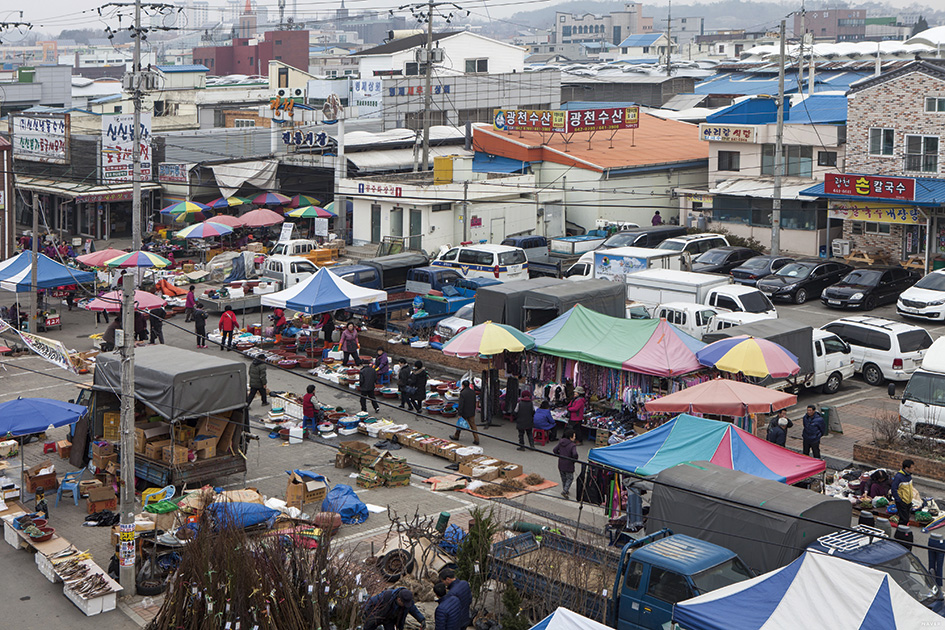
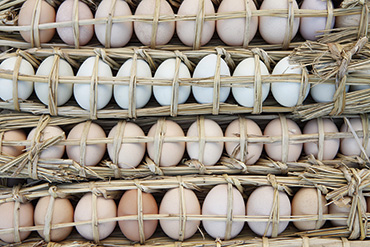
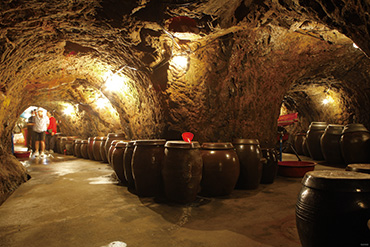
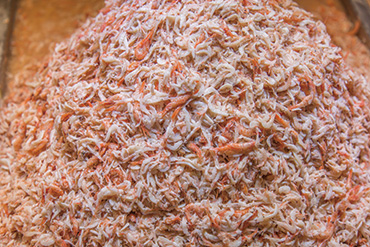
Gwangcheon is renowned for its saeujeot (fermented salted shrimp), a popular seasoning essential to the making of kimchi and other dishes. With both a local fishery and salt production, Gwangcheon was traditionally a center for saeujeot, but the development of a novel fermentation technique taking advantage of nearby abandoned mines has made it even more popular. Underground tunnels with a constant temperature provide an optimum environment for the fermentation of shrimp. There remain vendors selling crops, earthenware, and salt, but it is predominantly a trade center for saeujeot today. When the season for making kimchi draws near, the Cave Saeujeot Market in Gwangcheon becomes packed with customers from across the country. A Cave Saeujeot Festival is held every October and the underground tunnels are opened to allow visitors to observe the fermentation process. The market offers a rich supply of prawns in autumn, and the wide stretches of nearby wetlands produce a range of clams in winter.
Jeolla Region
Changpyeong Market in Damyang
- Dates: 5th, 10th, 15th, 20th, 25th, and 30th days of every month
- Specialties: Bamboo crafts
- Address: 14-25 Sagil-dong, Changpyeong-myeon, Damyang-gun, Jeollanam-do
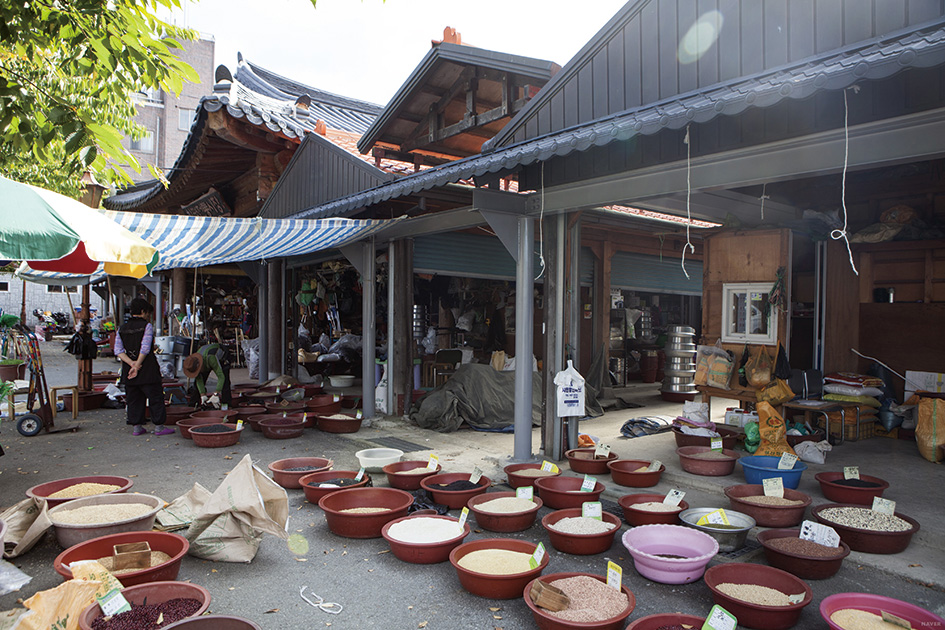
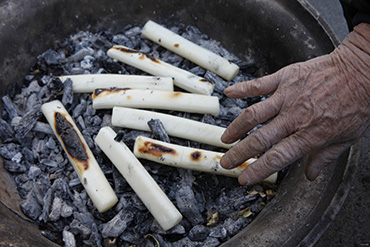
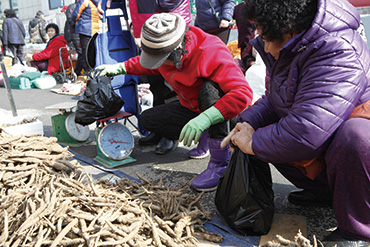
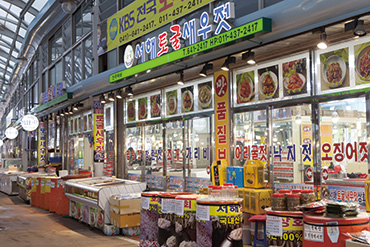
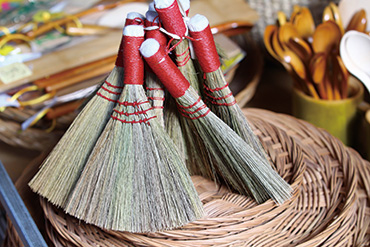
This is a traditional market located in the Changpyeong area of Damyang, a region famous for its rich bamboo forests. Jungnogwon, a local bamboo garden, accounts for a whopping 25 percent of the nation’s bamboo forests. This explains how the Changpyeong Market came to specialize in bamboo crafts. Trade in bamboo products, which once attracted buyers from as far as China, faced a near-fatal downturn with the emergence of popular plastic products. However, growing public interest in environmentally-friendly products and traditional crafting has turned things around and people are heading back to the Gwangcheon Market once again. The area gains its greatest vitality in May during the Damyang Bamboo Festival. In tune with the traditional architecture of Damyang, home to a number of well-preserved hanok (traditional Korean houses), the Changpyeong Market is also rendered in hanok style. Korean cookies (hangwa), rice taffy (ssal yeot), and grilled meat patties (tteok galbi) delight visitors as they stroll the market.
Gyeongsang Region
Andong Old Market
- Dates: 2nd, 7th, 12th, 17th, 22nd, and 27th days of every month
- Specialties: Salted mackerel, braised chicken
- Address: 184-4 Seobu-dong, Andong, Gyeongsangbuk-do
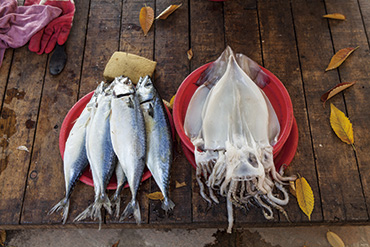
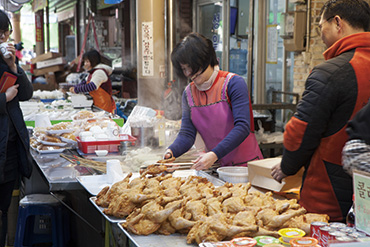
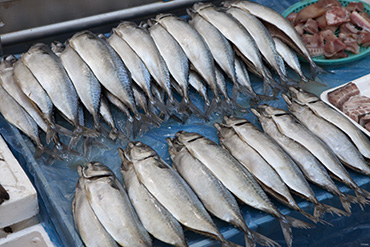
Andong is an historical region that includes Hahoe Village, a well-preserved traditional Korean community inscribed on the UNESCO World Heritage List. Andong Old Market, the most time-honored market in the area, traces its history back to the late-Joseon Andongjang Market. As a prominent Confucian center, Andong experienced a high demand for ritual foods for use in ancestral rites. Located well inland along a tributary of the Nakdonggang River, Andong had a good supply of general goods but lacked provisions for the seafood dishes required on a Confucian ritual table, including octopus, shark, and croaker. In response, salting techniques developed early on in this area, and the geographically unlikely product of salted mackerel was established as the foremost local specialty. Another food that is closely associated with Andong is braised chicken, or jjimdak. One street in the Andong Old Market is fully lined with restaurants specializing in this dish. On the occasion of its selection as a Culture and Tourism Market in 2013 by the Ministry of Culture, Sports and Tourism, the Andong Old Market added multi-cultural food stalls to its existing traditional mix of merchandise, offering a special market experience combining Korean traditions with foreign cultural elements.
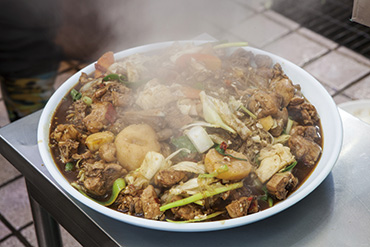
Jeju
Five-day Folk Market in Jeju
- Dates: 2nd, 7th, 12th, 17th, 22nd, and 27th days of every month
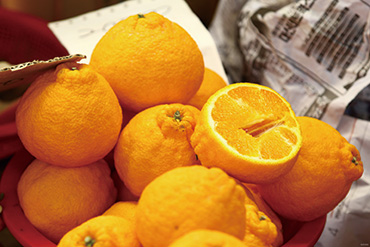
- Specialties: Hallabong (a variety of mandarin orange), black pig
- Address: Hallabong (a variety of mandarin orange), black pig
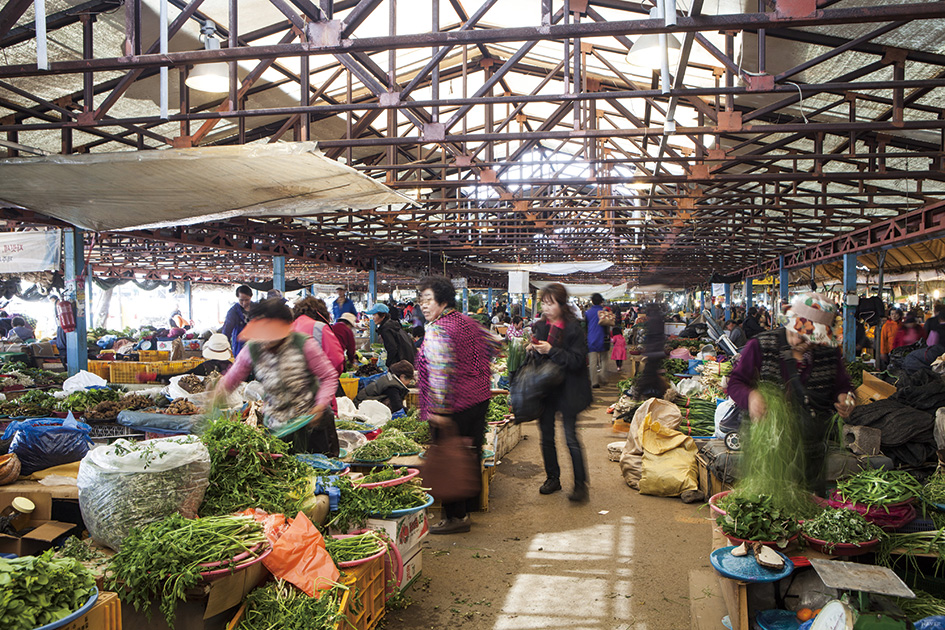
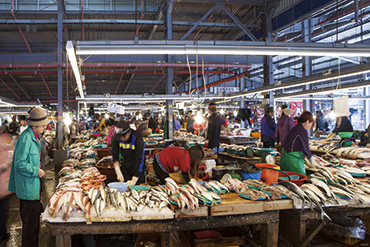
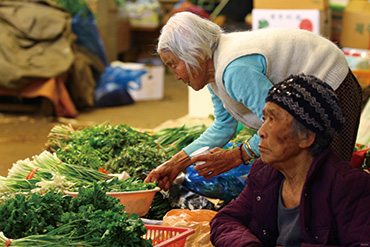
Markets seem to form naturally anywhere people cluster. However, in spite of its large population and active production of goods, traditional markets did not develop on the island of Jeju. This is perhaps due to its traditionally self-sufficient lifestyle drawing on farming, animal husbandry, and fishing. Markets only started to emerge after 1906 when institutional efforts were exerted to create markets on the island to improve the distribution of goods and boost the economy. As Jeju started to evolve into a popular tourist attraction with the development of transportation, local markets attained vitality as well. The Five-day Folk Market in Jeju presents seafood, fruit, and persimmon-dyed clothing and bedding typical of Jeju. There is also a separate market area which trades in mountain herbs and agricultural products produced by women aged 65 or over.
* This text is derived from The Encyclopedia of Korean Markets , an online dictionary co-produced by the internet content service company Naver, the Small Enterprise and Market Service, and the publishing company Guardianbooks.
Text by Lee Gyeong-deok, PhD in Cultural Anthropology
Photos by Park Jae-yeong, professional photographer

한국의 지역별 전통 5일장
시장이란 자고로 사람이 모여 사는 곳이라면 어디든 있게 마련이지만, 한국에는 조금 독특한 시장문화가 이어져오고 있다. 바로 5일장 문화이다. 5일장은 5일마다 서는 큰 장터로, 1·6, 2·7, 3·8, 4·9, 5·10의 다섯 가지 형태로 열린다. 가령 1·6 장은 매달 1, 6, 11, 16, 21, 26일에 열리는 것이다. 예로부터 5일장은 교역의 중심지이고 산물의 집산지이며 지역간 정보 교환이 일어나는 단위 지역 사회 핵심지로서의 역할을 수행하였다. 각 지역에서 특정 시기에만 나는 특산물을 구하기 위해서는 그 지역의 5일장을 찾는 것이 가장 용이하였으며 전국의 장터를 돌며 다른 5일장에서 사들인 특산물을 또 다른 지역에서 되파는 상인인 ‘보부상’도 함께 성행했다. 유통 체계가 발달한 오늘날에는 5일장이 예전과 같은 힘을 발휘하지 못하지만, 여전히 남아있는 굵직한 5일장에서 그 지역만의 매력을 느끼기에는 부족함이 없다. 지금부터 지역을 대표할만한 전국의 5일장을 소개한다.
경기도_ 성남모란민속시장
- 매월 4, 9, 14, 19, 24, 29일
- 의류, 잡화
- 경기도 성남시 중원구 둔촌대로 79
성남모란민속시장은 서울과 가까운 경기도 성남시에 위치하고 있다. 다른 지역 5일장이 조선시대 혹은 그 이전에 개설된 것에 비해 비교적 최근에 이루어진 장터이다. 1950년 한국전쟁 이후 성남에 정착한 피난민들이 터를 잡고, 1960년대 서울시가 도시를 정비하는 과정에서 성남에 조성된 택지에 인구가 몰리면서 곳곳에 시장이 형성되었고, 그중 가장 큰 시장이 모란시장이다. 1970년대까지는 주민들이 재배한 농산물, 땔감 등을 모아 타 지역에서 온 상인에게 판매하는 형태였으나 급격한 도시의 확장으로 성남시에 거주하는 주민들을 위한 물품을 판매하는 시장으로 변화했다. 그래서 의류나 잡화, 생활용품들을 쉽게 구할 수 있다. 점차 축소되는 5일장의 행보와 달리 시간이 흐를수록 시장의 규모는 커져 여전히 장날이면 소비자뿐만 아니라 상인들도 대거 몰린다. 장날이면 상설공연장에서 우리 전통문화를 담은 공연도 열리고, 칼국수, 전을 비롯해 먹거리가 다양하고 풍부하므로 시장을 구경하면서 이것저것 먹는 재미도 있다.
강원도_ 우하하횡성한우시장
- 매월 1, 6, 11, 16, 21, 26일
- 감자, 옥수수
- 경강원도 횡성군 횡성읍 삼일로 4-2
횡성은 수도권에서 강원도로 들어가는 길목에 자리하고 있어 예부터 사람들과 물자의 왕래가 많았고, ‘동대문 밖 가장 큰 시장’이라는 별칭을 얻을 정도로 그 규모가 컸다. 현재에도 두 개의 고속도로가 교차하는 지점에 있어 여전히 사람들의 발길이 끊이지 않는다. 횡성은 태백산맥의 영향으로 농토보다 임야 면적이 훨씬 넓어서 감자와 옥수수와 같은 작물이 많이 재배된다. 이러한 환경은 소가 자라기에도 좋아 예로부터 소의 거래와 소비가 활발했던 것 또한 횡성 한우가 유명해진 이유 중 하나이다. 우하하횡성한우시장의 이름에 ‘한우’가 들어있는 것도 횡성의 특산물이기 때문이다. ‘우하하’는 사람들의 커다란 웃음소리로, 장터를 방문하는 사람들의 행복을 기원하는 의미를 담고 있다. 현재는 지역 특산물뿐만 아니라 청년 프리마켓을 개설하여 젊은 상인과 젊은 소비자층이 함께할 수 있는 공간으로 확장하여 운영된다. 안흥찐빵, 수수부꾸미 등의 먹거리도 유명하다.
충청도_ 광천토굴새우젓시장
- 매월 4, 9, 14, 19, 24, 29일
- 토굴새우젓
- 충청남도 홍성군 광천읍 광천로 285번길 8-20
광천은 새우젓으로 유명하다. 새우젓은 새우를 소금에 절인 발효식품으로, 김치를 만들 때 넣거나 기본 양념 등으로 널리 사용된다. 광천은 수산업과 제염업이 발달한 지역으로, 광천새우젓은 오래 전부터 유명했으나 폐광된 토굴에서 새우젓을 숙성, 발효시키는 방법이 개발되면서 더 많은 사랑을 받게 됐다. 토굴은 4계절 내내 일정한 온도가 유지되기 때문에 새우젓을 발효시키기에 최적의 조건이다. 이 영향으로 곡물, 옹기, 소금 등이 주로 판매되던 광천장에는 새우젓을 파는 상인이 늘었고, 결국 광천토굴새우젓시장이라는 특화시장으로까지 발달하게 됐다. 오늘날에도 김장철이 되면 새우젓을 사기 위해 전국각지에서 몰려든 인파로 발 디딜 틈이 없다. 10월 중순이면 광천의 특산물인 새우젓과 김을 내세운 ‘광천토굴새우젓축제’와 ‘재래맛김축제’가 열린다. 축제 기간에는 토굴이 개방되어 새우젓의 발효과정을 직접 눈으로 확인할 수도 있다. 새우가 유명한 지역인만큼 가을이면 대하를 마음껏 즐길 수도 있고, 갯벌이 발달하여 겨울에는 새조개 등의 조개류도 맛볼 수 있다.
전라도_ 담양창평시장
- 매월 5, 10, 15, 20, 25, 30일
- 죽세공품
- 전라남도 담양군 창평면 사동길 14-25
담양창평시장은 대나무로 유명한 전라남도 담양군 창평면에 위치한 전통시장이다. 담양의 명소인 대나무숲 ‘죽녹원’은 전국 대나무숲 면적의 25%를 차지할 정도로 대나무 자원이 풍부하고, 이를 활용한 죽세공품 산업이 발달하여 이곳의 특산품으로 자리매김 했다. 담양의 죽세공품이 한데 모여있던 죽물시장은 국내는 물론 중국의 상인들이 찾아올 만큼 크게 성행했으나 플라스틱 제품이 등장하면서 위기를 맞기도 했다. 그러나 친환경 소재와 전통 공예에 대한 관심이 커지면서 다시 주목을 받기 시작해 이곳을 찾는 사람들의 발길도 늘었다. 특히 담양대나무축제가 열리는 5월에는 더욱 활력 넘치는 시장을 경험할 수 있다. 이 지역은 여러 채의 전통 한옥이 잘 보존되어 있는데 시장 역시 한옥을 모티프로 장옥을 꾸며 전통미를 함께 느낄 수 있다. 창평국밥, 한과와 쌀엿, 떡갈비를 맛보며 시장을 거닐어 보자.
경상도_ 안동구시장
- 매월 2, 7, 12, 17, 22, 27일
- 안동간고등어, 안동찜닭
- 경상북도 안동시 서부동 184-4
안동은 유네스코 세계문화유산으로 등재된 하회마을이 위치한 전통 도시이다. 안동구시장은 조선후기에 형성된 안동장의 명맥을 잇는, 안동시에서 가장 오래된 전통시장이다. 안동은 유교문화가 깊이 뿌리내린 지역으로 제례가 잦았기 때문에 시장에서는 제수의 유통이 많았다. 낙동강 자락에 위치한 안동은 예로부터 물산이 풍부했으나 제례에 꼭 필요한 문어, 상어, 조기 등의 바다의 산물들은 구하기 어려웠다. 그래서 해산물을 오래 보관하는 염장법이 일찍이 발달했는데 덕분에 바다가 먼 지역임에도 불구하고 ‘안동간고등어’가 이곳의 특산품으로 자리매김 했다. 간장을 기본 양념으로 하여 갖가지 재료와 함께 찐 닭요리인 ‘안동찜닭’ 또한 유명하다. 시장 안에 찜닭 골목이 있을 정도로 특화되어 있다. 2013년 문화관광형 시장으로 선정되면서 다문화 먹을거리 마차 등 한국의 전통 문화와 외국 문화를 결합한 새로운 형태의 시장을 체험할 수 있다.
제주도_ 제주시민속5일시장
- 매월 2, 7, 12, 17, 22, 27일
- 한라봉, 흑돼지
- 제주특별자치도 제주시 5일장서길 26
사람이 많이 모여 사는 곳에는 자연적으로 시장이 형성되지만, 제주도는 사람도 많고 생산되는 풍물도 많았음에도 불구하고 시장이 발달하지 못했다. 섬이라는 지리적 특성상 농업과 목축, 수산업 등 자급자족의 생활을 해왔기 때문이다. 1906년 지역의 물자 유통과 경제 활성화를 위해 의도적으로 시장을 형성한 정책을 펼치면서 비로소 시장이 처음 생겨났고, 교통의 발달로 제주도가 관광지로서 급부상하고 이용객이 많아지면서 시장 또한 활기를 띠기 시작했다. 제주시민속5일장은 제주도에서 나는 다양한 산물을 만날 수 있는 공간이다. 제주바다에서 나는 옥돔, 은갈치 등의 해산물과 한라봉 등의 과일, 감물을 들인 의류와 침구류 등 육지의 시장에서는 좀처럼 볼 수 없는 것들을 만날 수 있다. 또 ‘할망장터’라 이름 붙인 만65세 할머니들이 직접 생산한 나물이나 농산물 등을 판매하는 공간도 마련되어 있다.
* 이 글은 네이버, 소상공인시장진흥공단, 가디언출판사가 공동 연구 개발한 <국내시장백과>를 기반으로 하였습니다.
Text by 이경덕 | 문화인류학 박사
Photos by 박재영